Living
Bangkok Is Now in the Top 10 Most Expensive Cities for Rich People
Bangkok breaks into the global top 10 most expensive cities for the ...


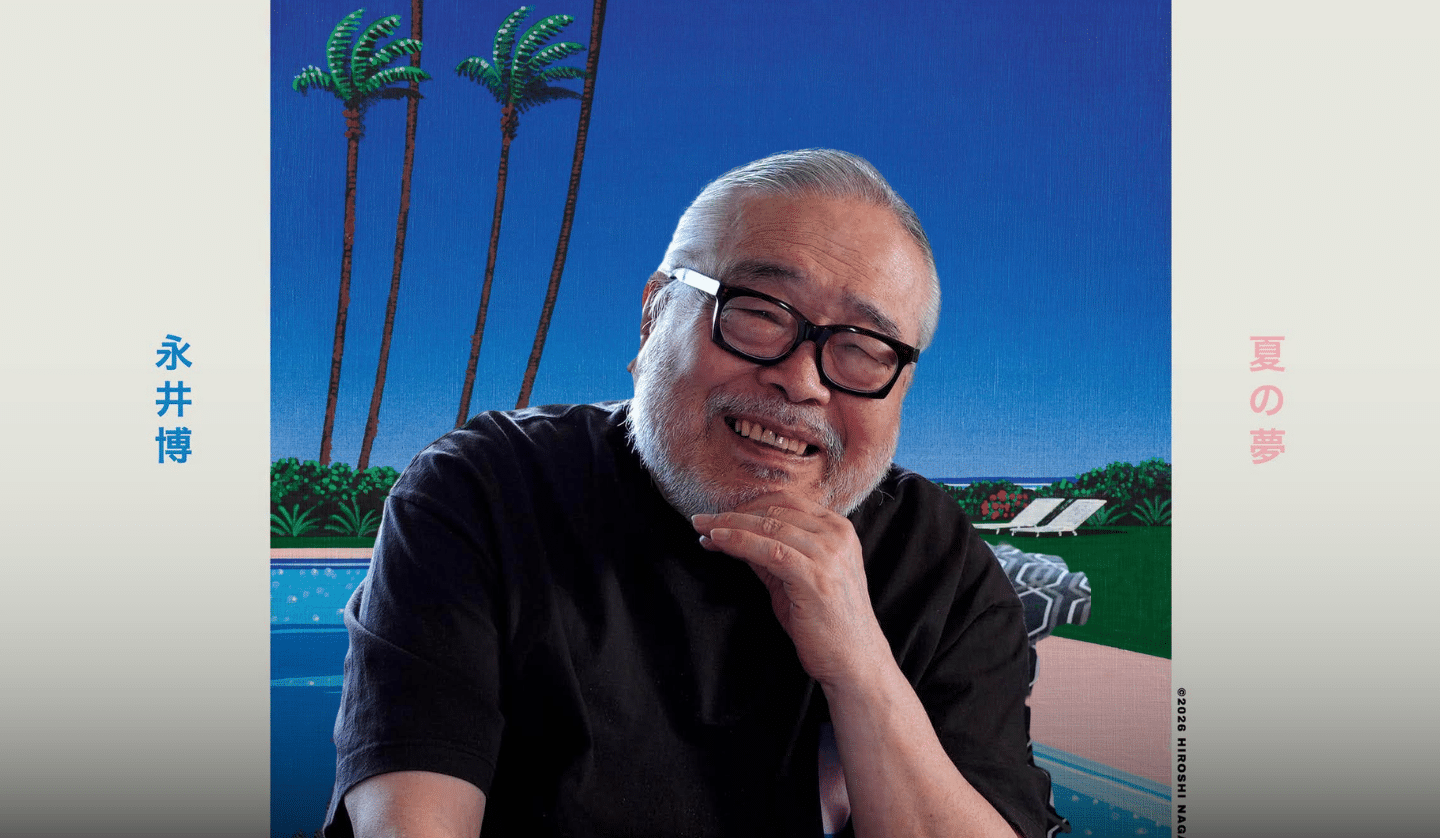

Get in, we’re going back in time…
Hiroshi Nagai: Summer Dreaming, running 4 August to 4 September at RCB Galleria 1 (2nd Floor, River City Bangkok), celebrates the visual language of City Pop album covers. Set to a soundtrack of groovy tracks, the exhibition brings together Nagai’s sun-bleached pools and fading skylines with three rare archival finds from the 1980s to 2010s, plus four exclusive new works created specifically for Bangkok.
Ahead of the exhibition’s arrival, Koktail takes a closer look at Nagai’s style, examining it in relation to his life, influences and the retroactively defined genre of City Pop itself.
Hiroshi Nagai was born on 22 December 1947, in Tokushima Prefecture, Japan. His first creative spark came from his father, who worked with landscape oil paintings. From a very young age, Nagai was drawn toward landscapes more than people, which is why his artwork often features desolate but dreamy, unpopulated spaces.
Post-war Japan was a time to branch out and explore as the nation sought new directions after the war left it directionless. This era brought a strong wave of Americanisation including rock n roll, rockabilly, greaser subculture and the psychedelic movement. Some of these influences were anachronistic but Japan adapted them and made them entirely its own.
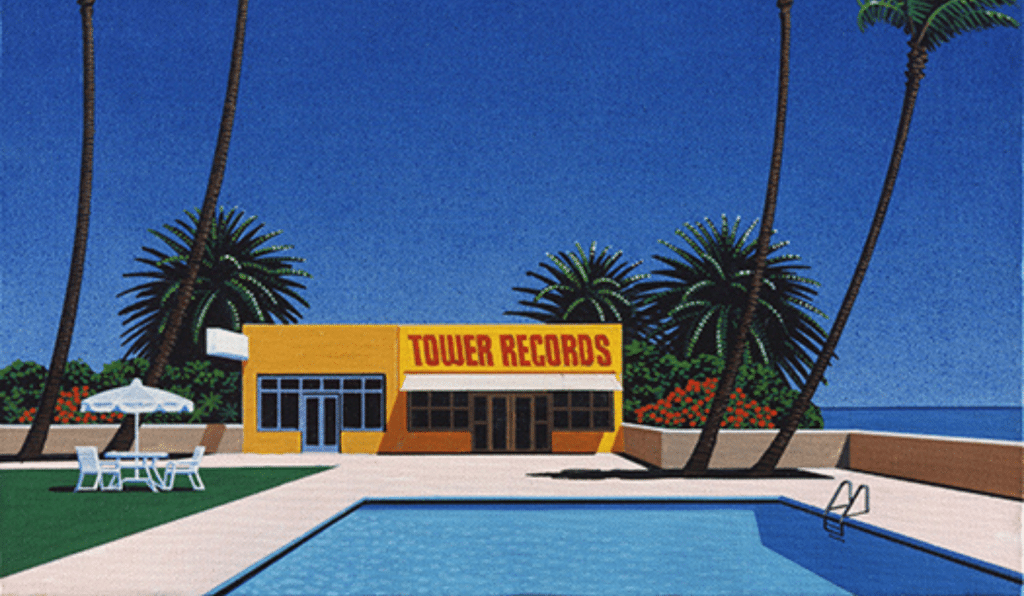
Fine art was initially Nagai’s first choice, but he soon pivoted to graphic design rather than continuing with the formal discipline of painting. He studied at Musashino Art University in Tokyo, where he received an education in both fine art and graphic design. After working as a graphic designer from 1970, he met Teruhiko Yumura in 1975, whose guidance inspired him to become an illustrator rather than an oil painter, leading him to turn full-time freelancer in 1978.
Having defined the visual sleeve art for dozens of Japanese artists, Nagai achieved lasting fame through his album covers for Eiichi Otaki’s A Long Vacation and Niagara Song Book. Otaki belonged to the band Happy End, a formidable lineup comprising himself, Haruomi Hosono, Takashi Matsumoto and Shigeru Suzuki, and this monumental collaboration placed Nagai at the centre of Japan’s art scene.
It was not called “City Pop” back then. It was simply Japanese pop music. However, its characteristic, big-city vibe enabled its digital revival, most notably when vaporwave producers pitched down and sampled its smooth grooves. Westerners falling in love with Japanese music that was initially borrowed from Western music creates a bizarre, ironic cultural feedback loop, making the “City Pop” tag feel like manufactured nostalgia.
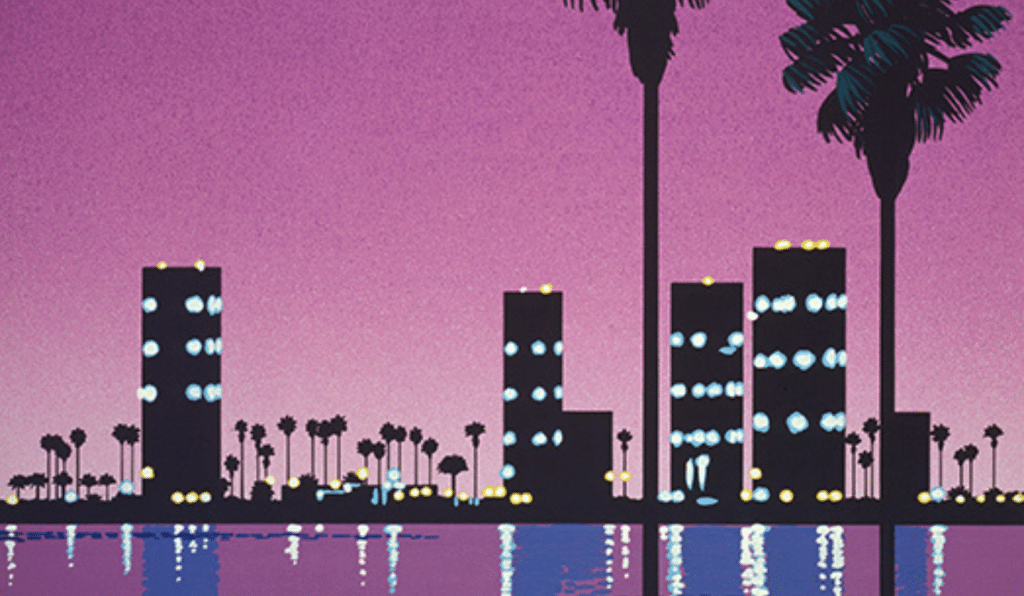
Nagai has admitted that the airbrushed America in his paintings might not have actually existed. Nagai’s visual world and City Pop walk hand in hand, both built on artificially constructed planes and a longing for a past that never was – a fascinating aspect present in Nagai’s artwork.
Nagai’s visual world was informed by a 40-day stay in the United States in the summer of 1973 and a trip to Guam in 1974, sojourns which instilled a lifelong obsession with Pop art, vibrant colours, mid-century Americana and his favourite motif: palm trees. But the greatest influence, which becomes obvious the moment one sees his paintings, is perhaps the late British Pop master David Hockney.
Nagai’s sun-bleached palettes and poolscapes pay clear homage to Hockney, yet the two artists frame loneliness differently. Hockney sometimes captures emotional alienation through human figures – like the swimmer in Portrait of an Artist (Pool with Two Figures), trapped beneath the blue water, never quite breaking the surface. Nagai instead paints solitude as presence in absence. His empty classic cars, abandoned surfboards, faraway city lights and oppressive horizontal planes create landscapes where human presence is swallowed whole.
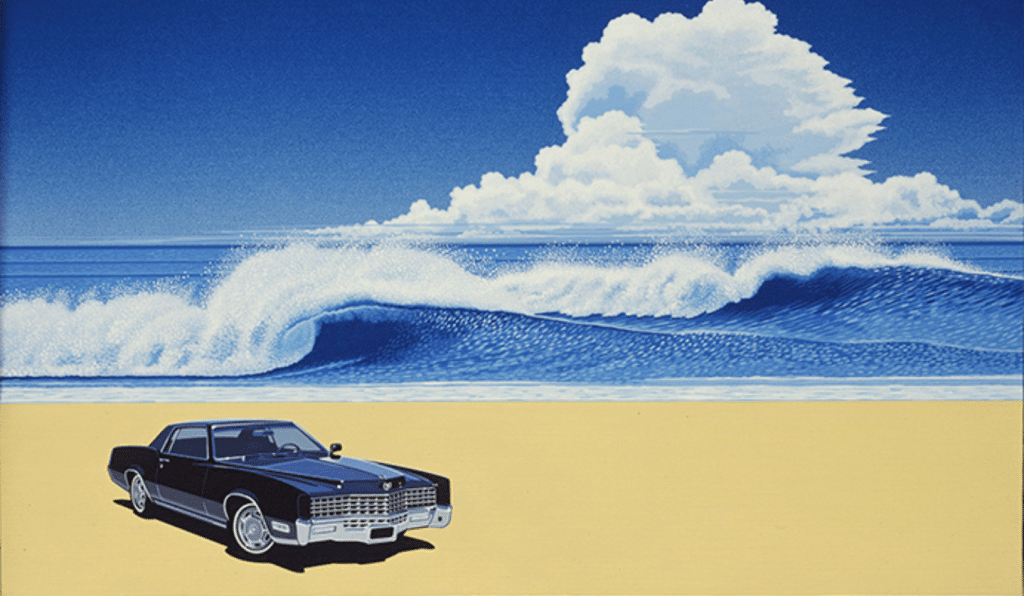
Like Hockney, who was also not an American, Nagai latched onto a broader American zeitgeist – an era apprehended in both the Southern California mythos and the world of Miami Vice or the films of Michael Mann, which drew parallels not just in visual style, but in how America was examined and deconstructed. There is a kind of cross-cultural exchange between the West and Nagai. If the retroactive genre of City Pop is Japan borrowing and adapting Western music such as the Motown sound and jazz fusion, then Nagai did the same in relation to mid-century America.
Bangkok breaks into the global top 10 most expensive cities for the ...
Applications are now open for Netflix REEL LIFE Season 4, offering free ...
Discover 7 exceptional culinary happenings in Bangkok worth ruining your hair for, ...
From Sampheng market to Roblox, the squishy toy craze is taking over. ...
Siam Repertory Theatre Company’s Paul Ewing talks to Koktail about staging King ...
Escape Bangkok for Thailand’s 7 best national parks. Discover wildlife, culture and ...
Wee use cookies to deliver your best experience on our website. By using our website, you consent to our cookies in accordance with our cookies policy and privacy policy

