
Living
Bangkok Is Now in the Top 10 Most Expensive Cities for Rich People
Bangkok breaks into the global top 10 most expensive cities for the ...


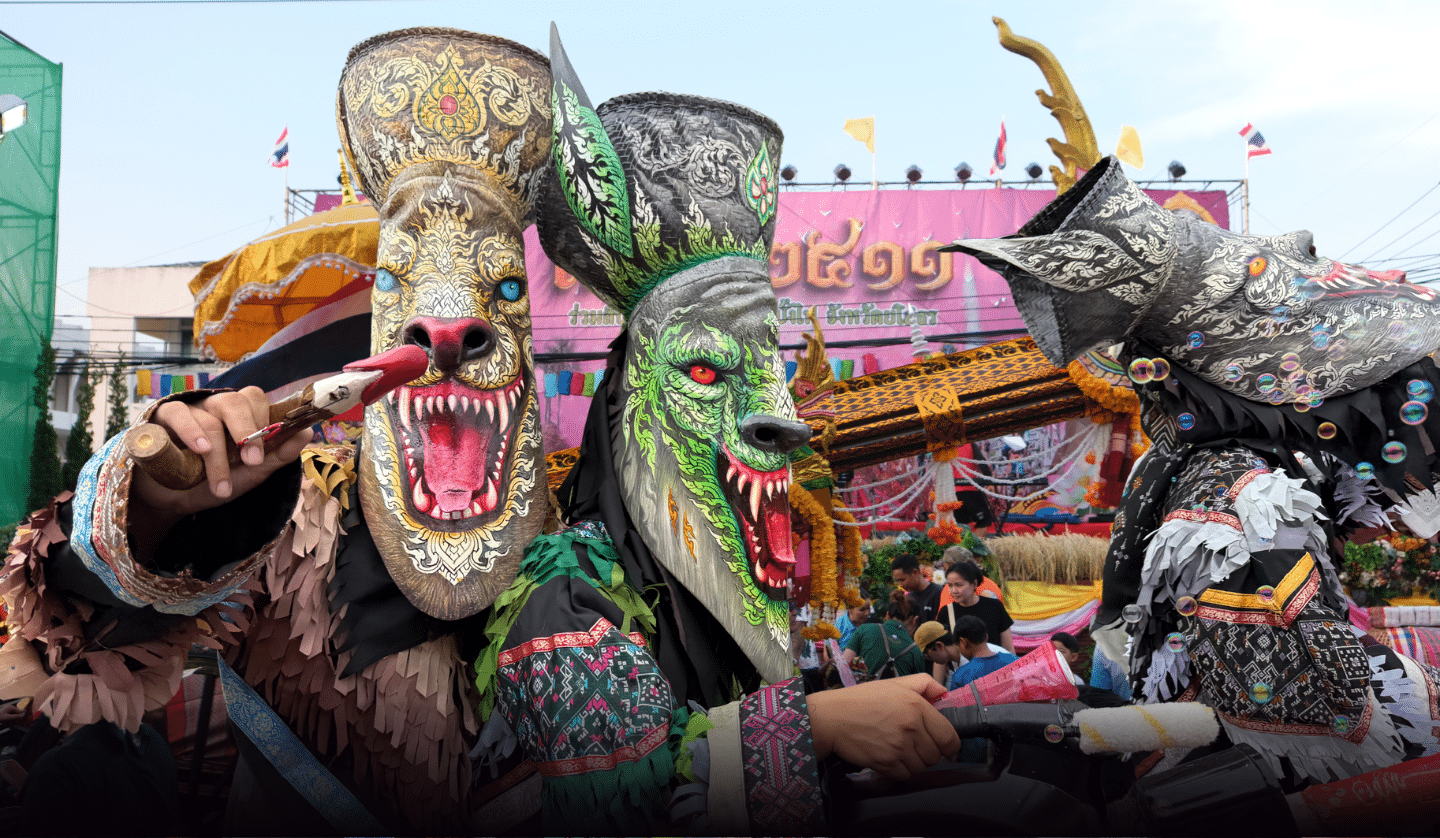
VERY THAI: In this periodic column, author Philip Cornwel-Smith explores popular culture and the topics covered in his best-selling books Very Thai and Very Bangkok. Here he revisits major Isaan festivals to see how they’ve withstood being wrenched from local folk rite into national showcase.
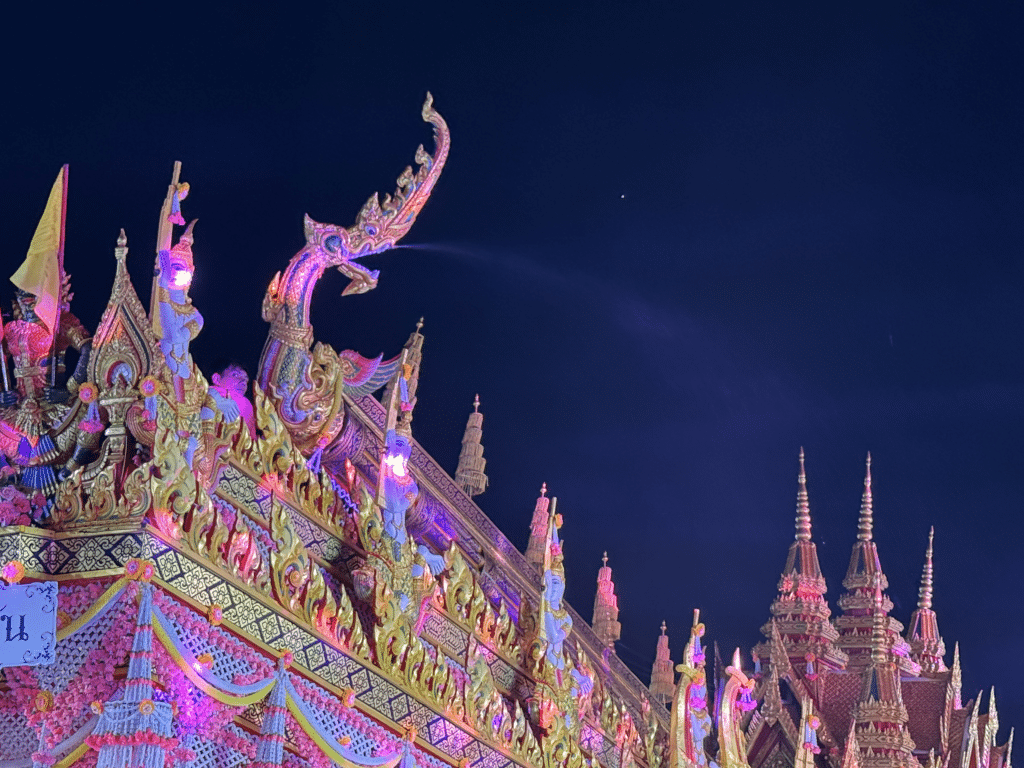
Khao Phansaa Day on 30 July opens the Buddhist rainy season ‘lent’ retreat. It heralds a spate of tetsakan (traditional festivals) across Isaan. One of the candle festivals marking Khao Phansaa, at Chokchai in Khorat, has drawn headlines for a giant wax candle being sculpted to resemble pop superstar Lisa Manobal. Last year’s Nakhon Phanom Fireboat Festival, which closes phansaa, was promoted into an international mega-jamboree like Songkran. As local culture goes inter, are tetsakan getting diluted, debased or reinvigorated?
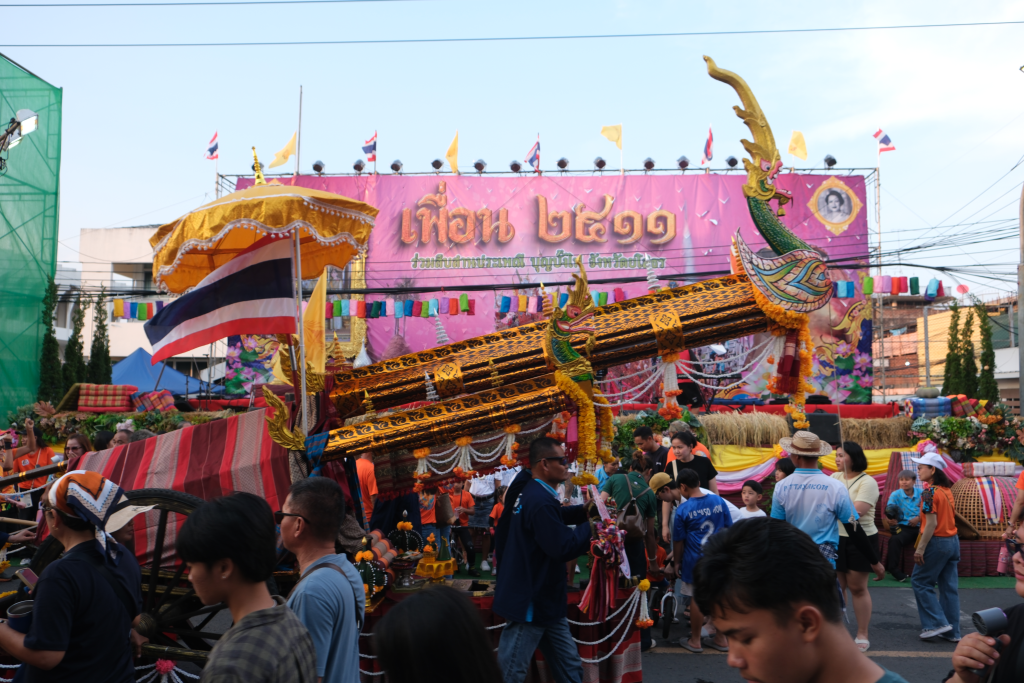
After two decades, I’ve recently revisited two uproarious Isaan tetsakan – Boon Bang Fai rocket festival in Yasothon and Phi Ta Khon ghost fest in Dansai, Loei. I wanted to see their resilience in the face of sweeping change.
I also wanted to have fun. Into a typical three days, Isaan tetsakan cram in parades and partying, costumes and contests, food and music, reverence and raunch.
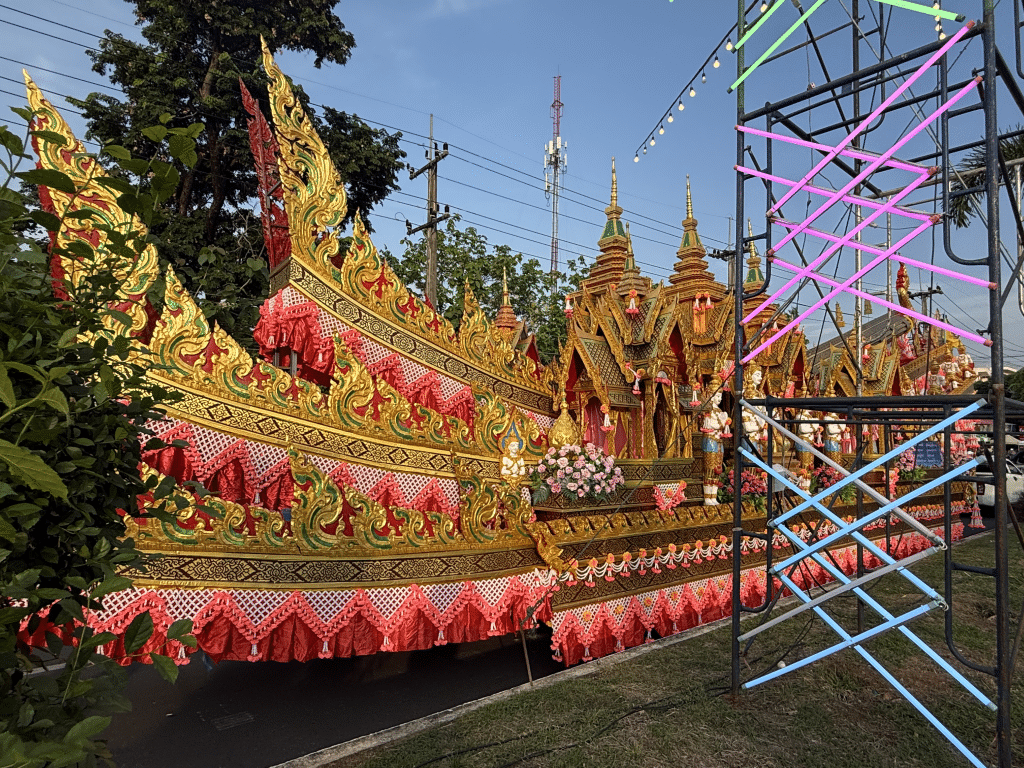
Yasothorn hosts the biggest of many rocket festivals held over the late hot season across Isaan and Laos to spur the rain god, Phra Taen, to water the rice crop. Rockets also get fired at the end of Phi Ta Khon. It’s a seasonal impulse, like gifting candles to monks to aid their study during their monastic retreat, or the northern Than Kuay Salap festivals in September that encourage monks to complete their study.
Each rocket gets an auspicious name and is blessed with garland, scarf, yantra spell and sticks of incense lit inches from the dynamite. Stalls sell mini-rockets that lads fire as a lark.
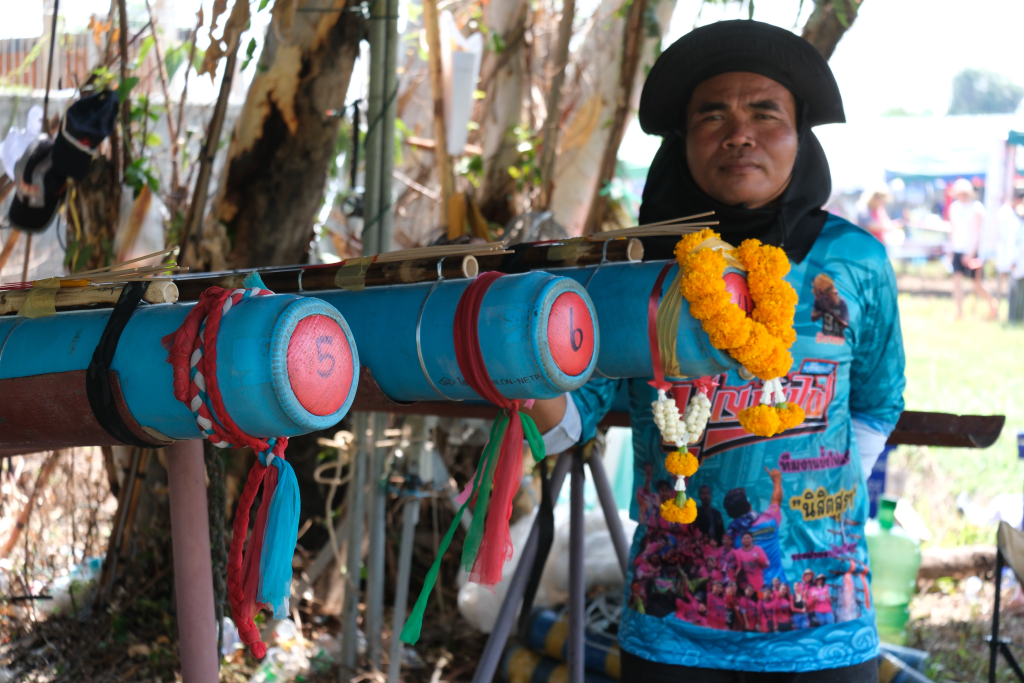
In 2006, I joined a team that made their rocket in a field workshop from plentiful parts like bamboo, glue and blue PVC water pipes. The morning after the parade, we hauled the rocket up one of the towering gantries that aim across open fields. Once the fuse gets fitted, each team withdraws to gawp as the DIY pipe launches skyward. Judges with binoculars count the minutes till it starts to drop. Pity whatever it lands on.
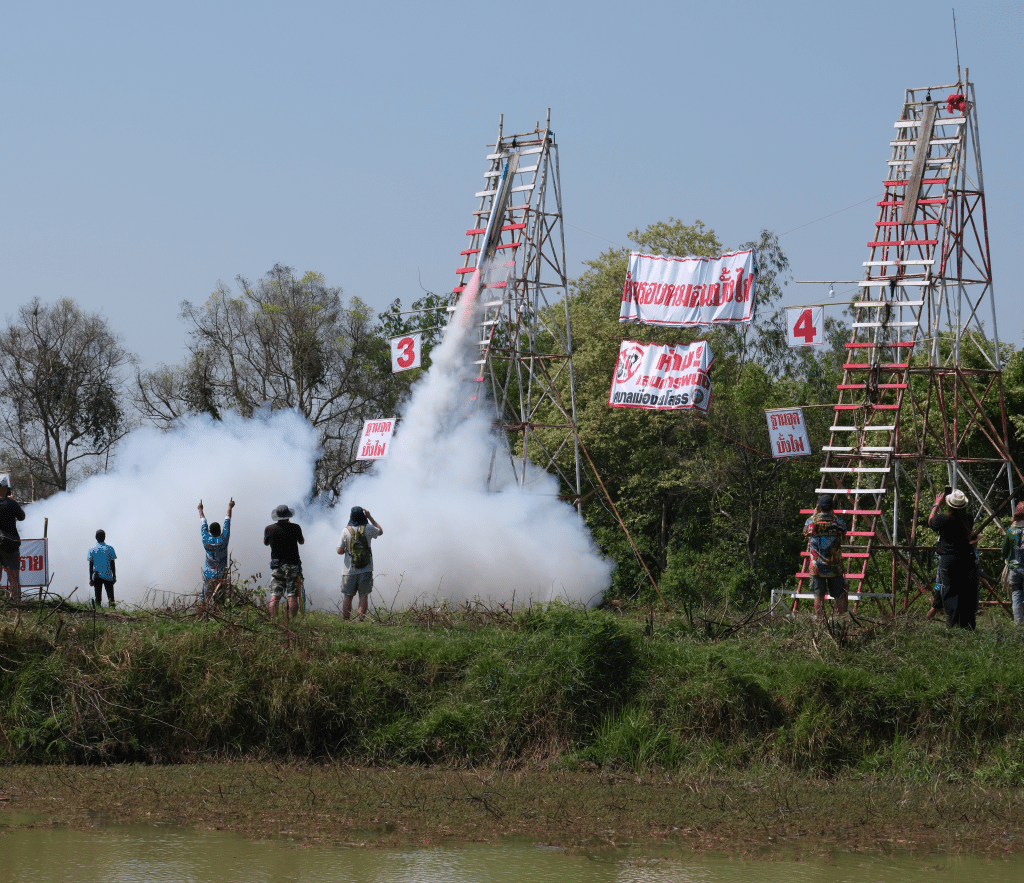
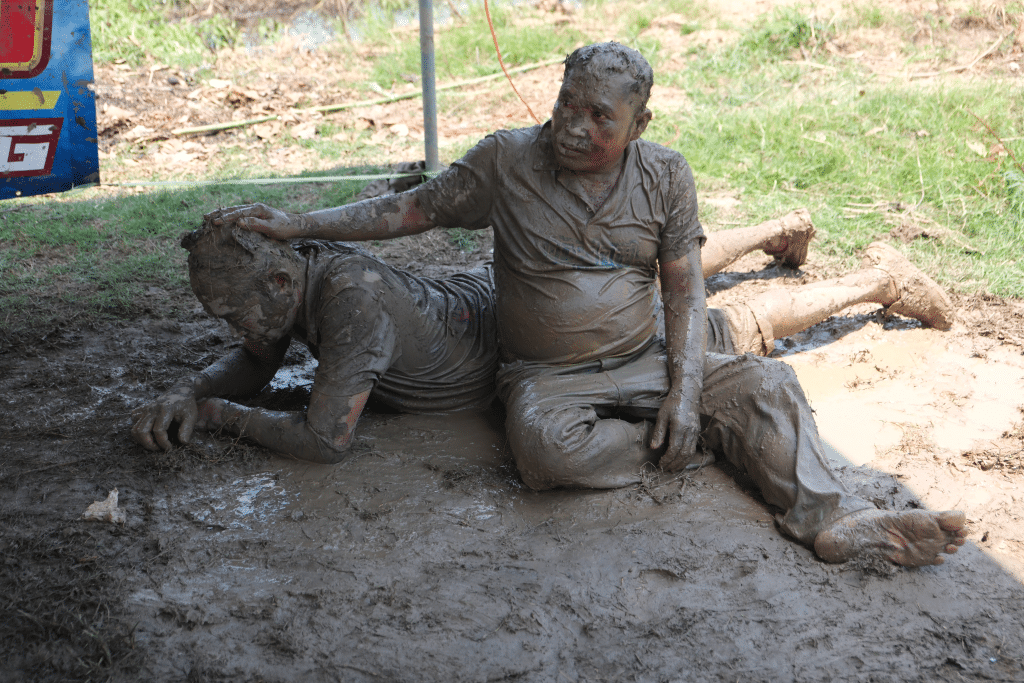
A rare failed launch gets that team dumped in a mud pit, where some wallow, getting ever more drunk on lao khao rice liquor and cheekily daubing revellers with mud. Given some past fatal explosions, I’d expected even more safety this year, but the mud banks topped with barbed wire had gone, and the smaller command bunker was sheltered not by steel but canvas. The rockets seemed more reliable, which in turn reduced the mud wrestling.
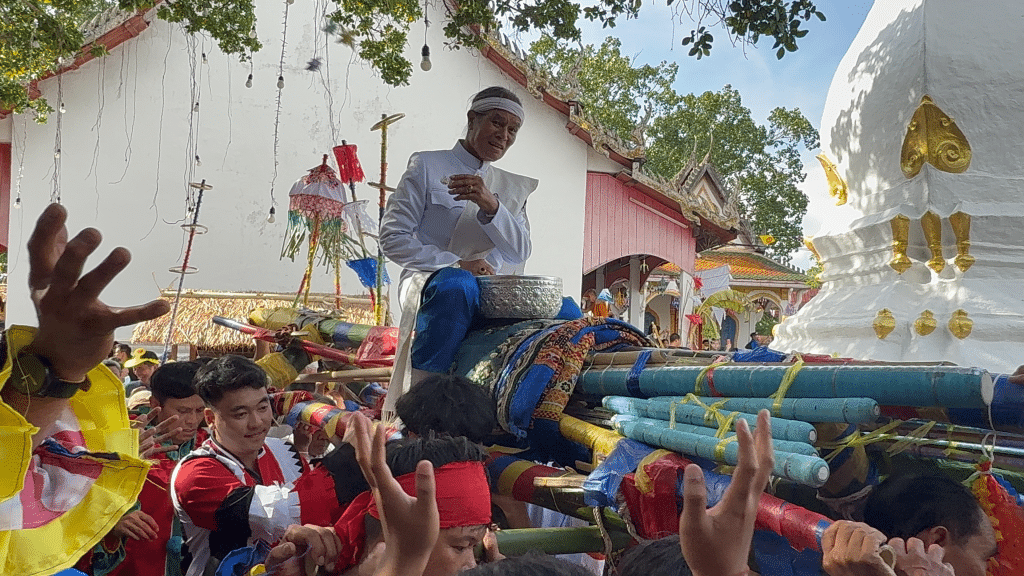
At Phi Ta Khon, the ponytailed shaman Chao Pho Kuan officiates the rites in his wooden house with his wife. They co-lead several processions, whether on foot, riding a model horse on the lead float or circling Wat Pornchai on a roped raft of rockets that gets lurched around by revellers dressed as scary spirits. No change there.
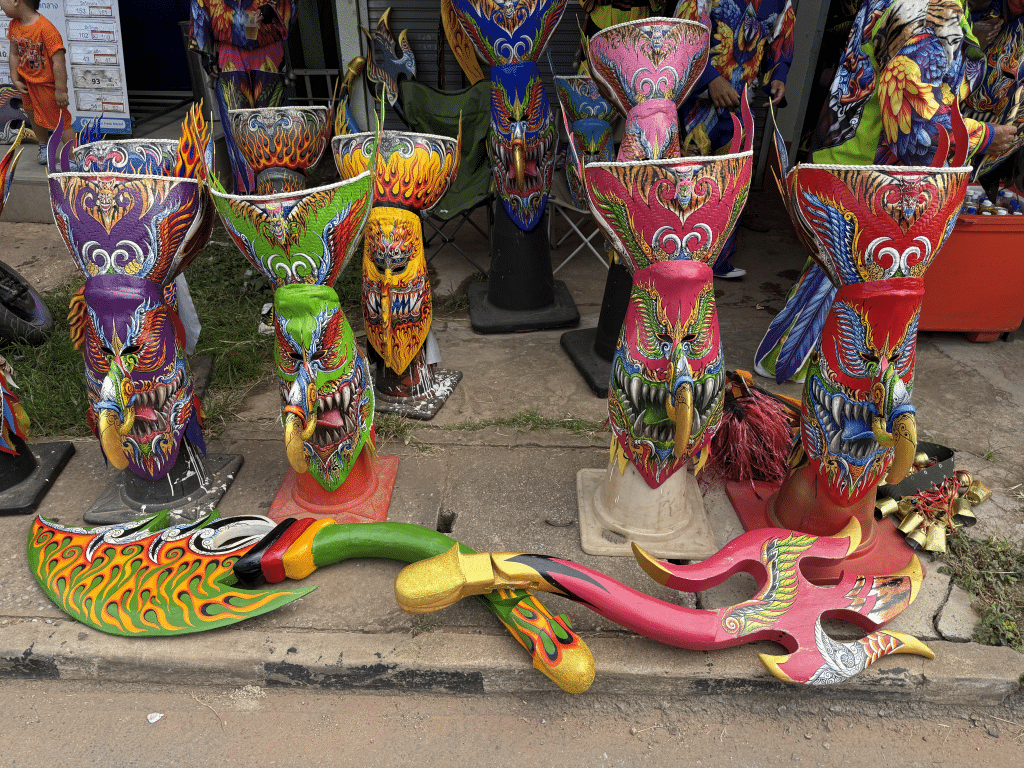
Phi Ta Khon is one of many Isaan rites that celebrate the Buddha’s previous incarnation, Prince Vessandorn. His return from forest exile sparked such joy that even the spirits danced. Hence the demonically fanged faces painted onto coconut sheaths that are stitched to masks made from rice-steaming baskets with pointy horns and a carved wooden nose. Over decades, their design has elevated from naive folk art to exquisite craft.
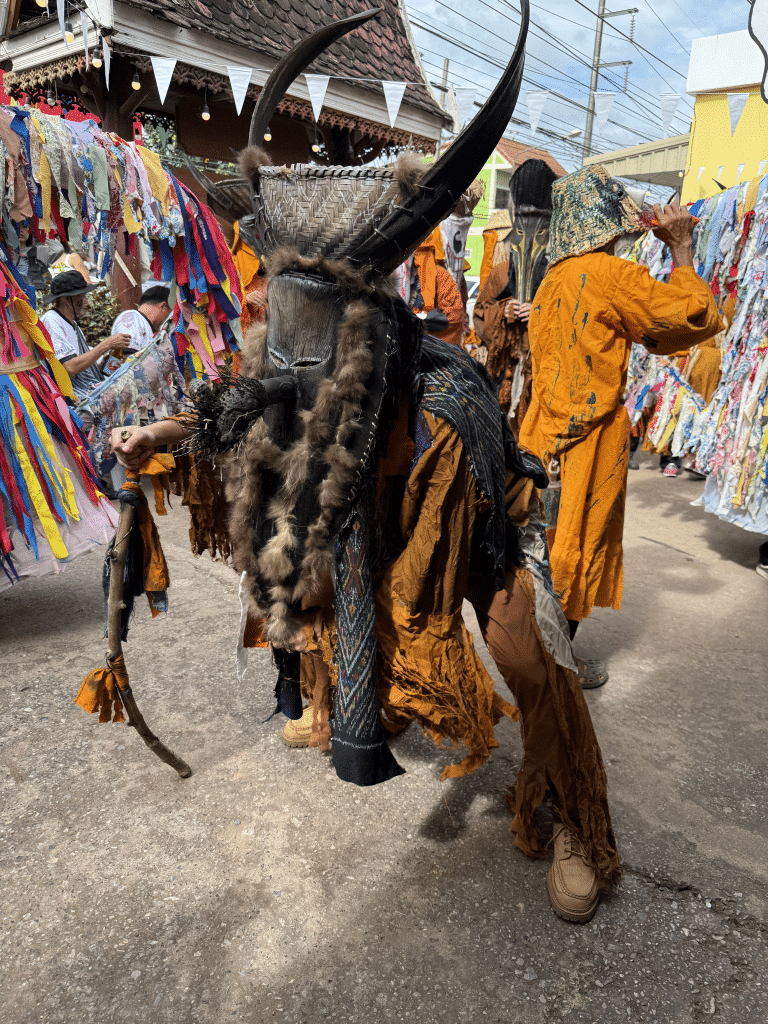
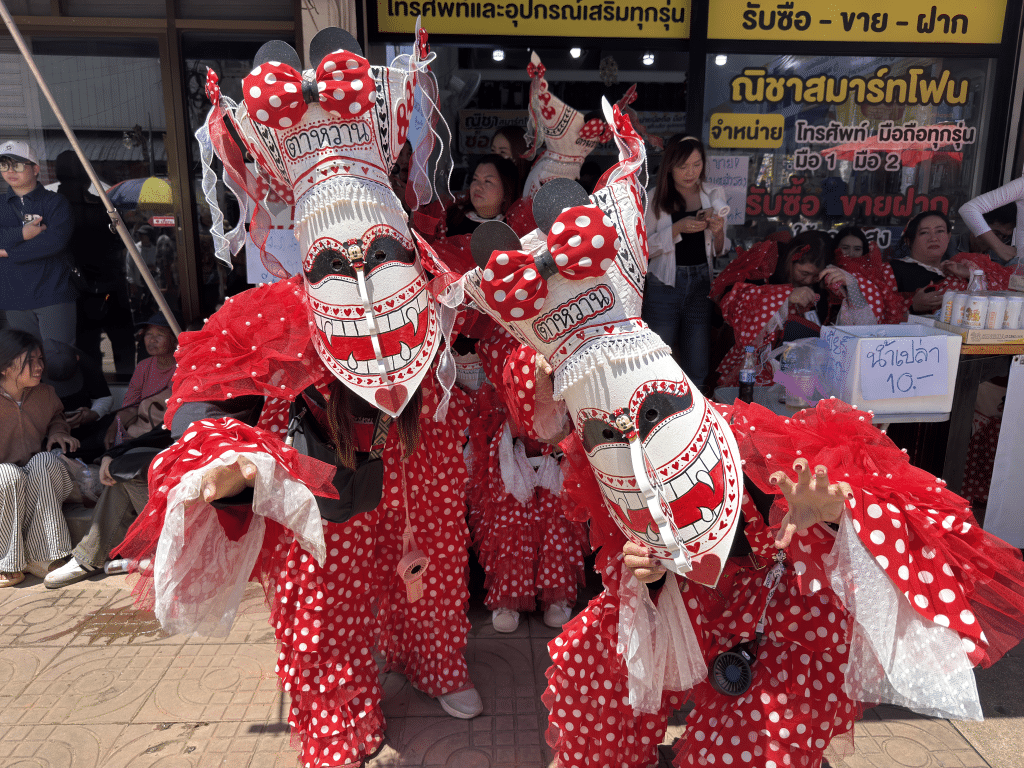
A rougher ogre mask made from slathering paint, mud, glue or fibres over an inverted rice steamer began in the 1990s with one man who couldn’t afford to paint a proper mask. Now this style is beloved of children, or misfits wearing torn monk-like robes. Spirit costumes used to be shaggy jumpsuits of shredded old clothes. Teams today theme their outfits with creativity and wit.
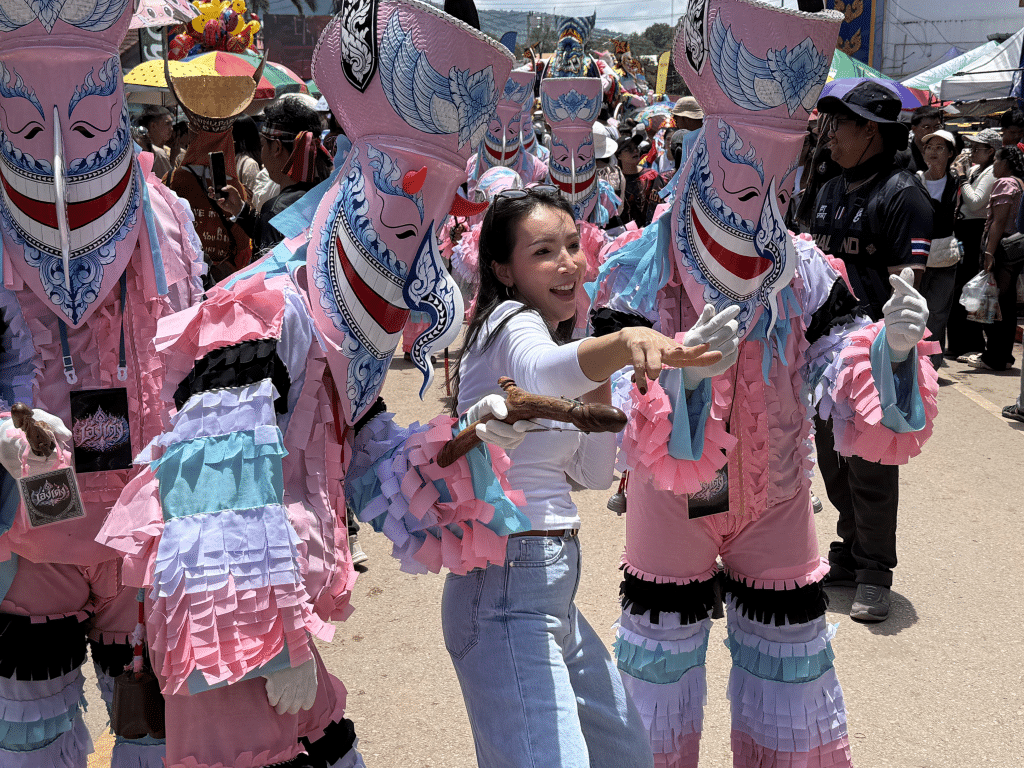
Candles carved like K-pop stars aren’t unusual; Isaan festivals have always been hybrid. The fireboats have topical scenes, while tetsakan floats may resemble pirate ships or Max Max vehicles. Back in 2000, Phi Ta Khon masks were silvery and futuristic given the topical Y2K meme. One group wore outfits sewn from factory sheets of fake Levi’s bandanas.
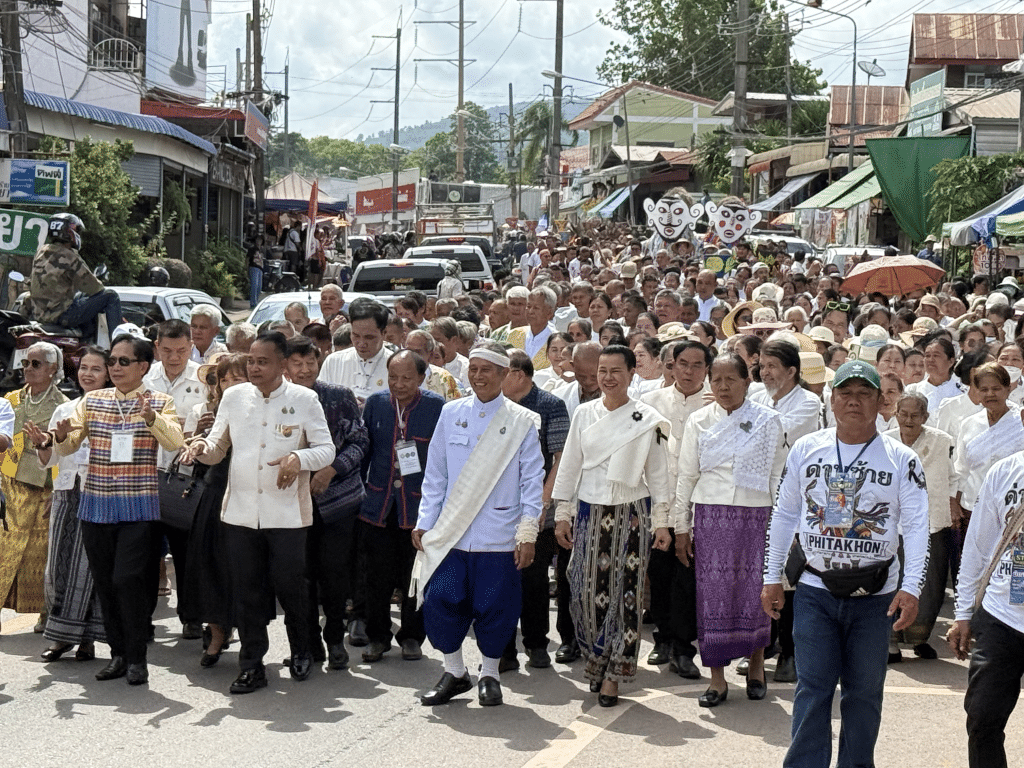
Three other villages hold smaller ghost fests around this time. Back in the 1990s, processions cavorted in on foot from villages at whatever time it took in the morning cool. By 2000, that informality had been corralled by officialdom, with festival dates thereafter set by “the shaman and TAT.” Participants then had to wait in lines for hours in the sun, until VIPs decanted from limousines into the new grandstand. The paraders now had to pay homage to state power, which coopted the festival’s focus. Phi Ta Khon has since showcased foreign mask culture, and this year was opened for the first time by the prime minister, who attributed his election to the spirit in the mask he acquired there in 2024.
Tetsakan in borderlands often hold sound-and-light shows that dramatise local history as part of the national narrative, as I saw recently in Songkhla. At Dansai in 2000, a son-et-lumière re-enacted the alliance of Ayutthaya with a ruler of Vientiane that founded Dan Sai as a frontier garrison town settled by Thai and Lao communities known as Na-Thai and Na-Wieng.
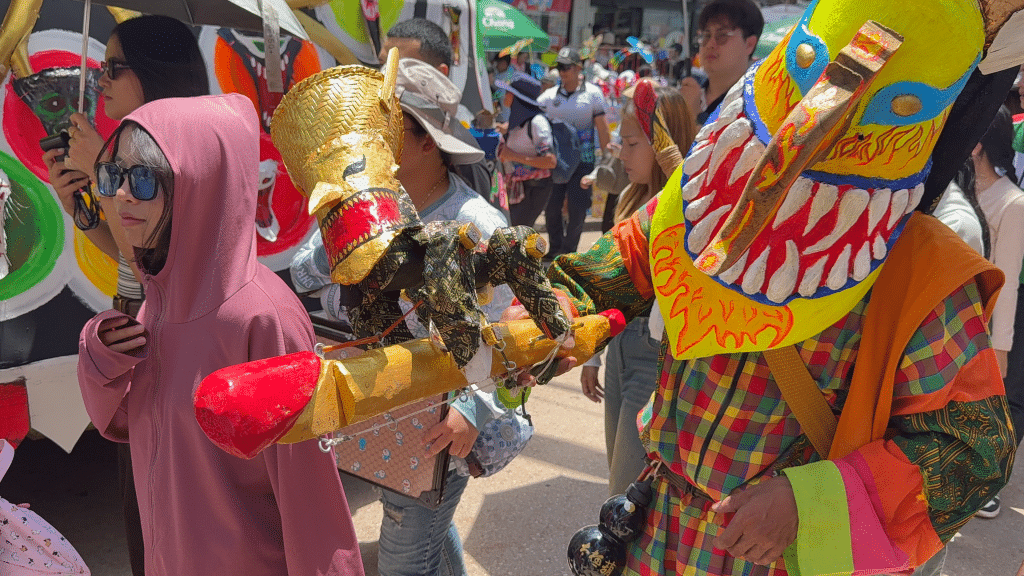
Between the Phi Ta Khon festivals of 1998 and 2000, the advent of tourism promotion tried to censor the traditional fertility rites. PR pictures still show the spirits wielding swords or guns. In reality, then and now, they brandish giant palad khik (phallic charms). Some are carved and painted; other mechanical phalli hinge back and forth, while long mock pistols have a trigger that lifts the scarlet tip. Some paraders dangle wooden palad khik on fishing lines that women with fish traps try to catch. Sacred effigies of a giant mother and father jiggle their outsize genitalia for two days until the shaman submerges the fertile couple into the river.
This phallic joshing also features at Yasothon and other Isaan festivals. Revellers drag wheeled turtles that have bobbing glans heads, or ride mock buffalos that have boisterous undercarriage. To all except prudes, this fertility symbolism rouses laughter and saucy selfies.
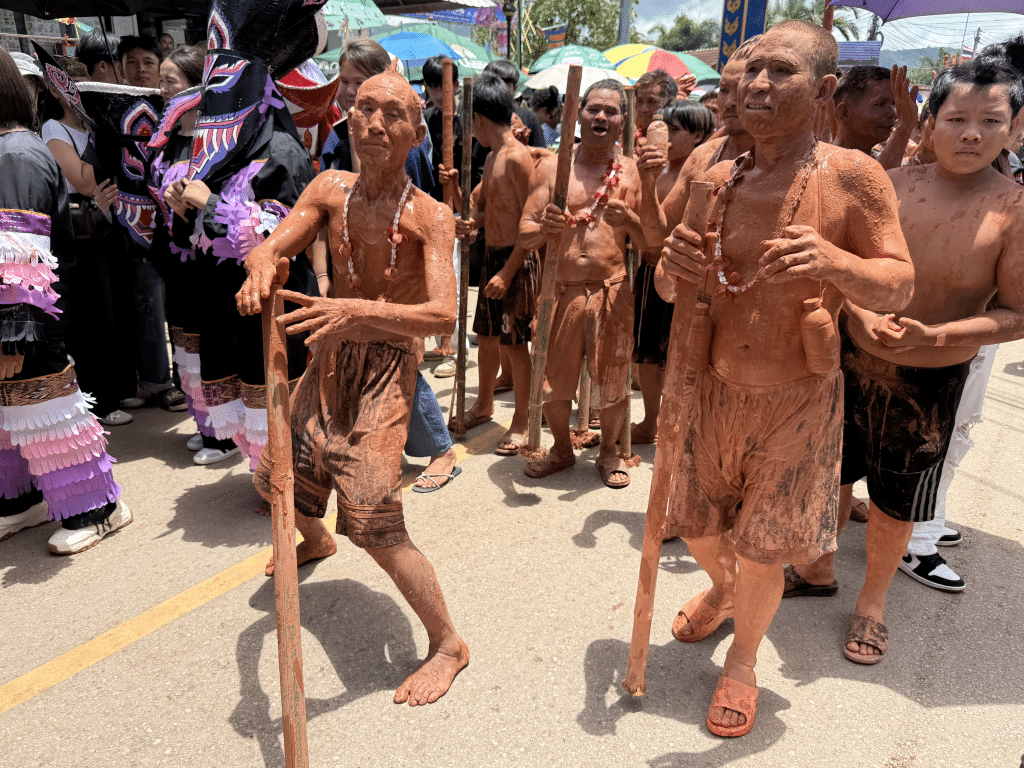
Other controversial paraders in Isaan fests are groups of khon thang bang (bamboo poles-stomping people), who are slathered in mud, or blackened with cooking soot and an afro wig. Westerners misread them as racist, but they represent indigenous farmers or forest folk.
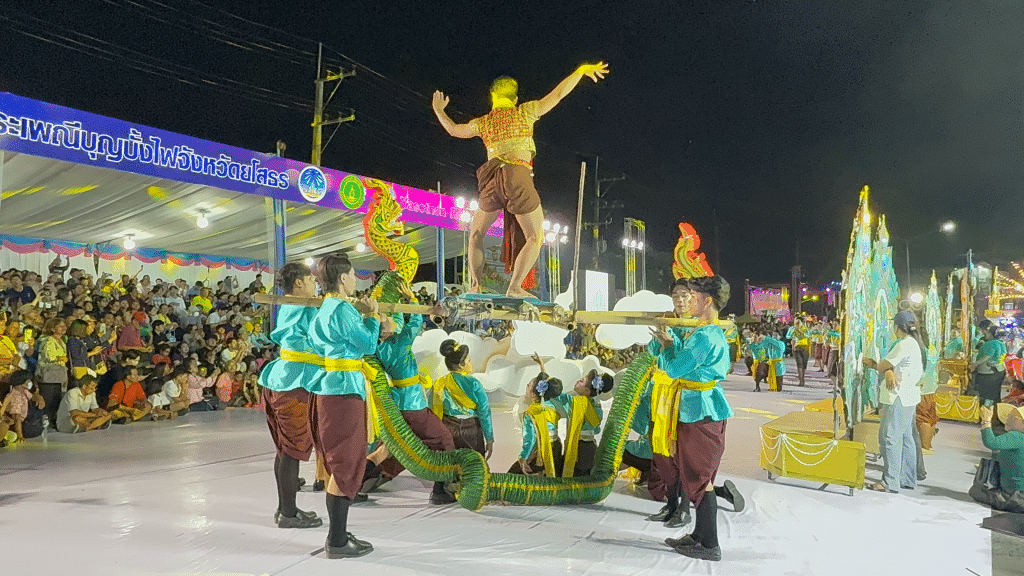
A day or two before a tetsakan’s main event, side activities include contests for the best float, costume or beauty. Juries anoint a demure female Nang Thida and dashing male Theppabutr to lead the parade. Yasothon held an emotive contest of chanting to live music and dance. Dansai awarded prizes for best masks, with a red-carpet runway. Every festival has its speciality.
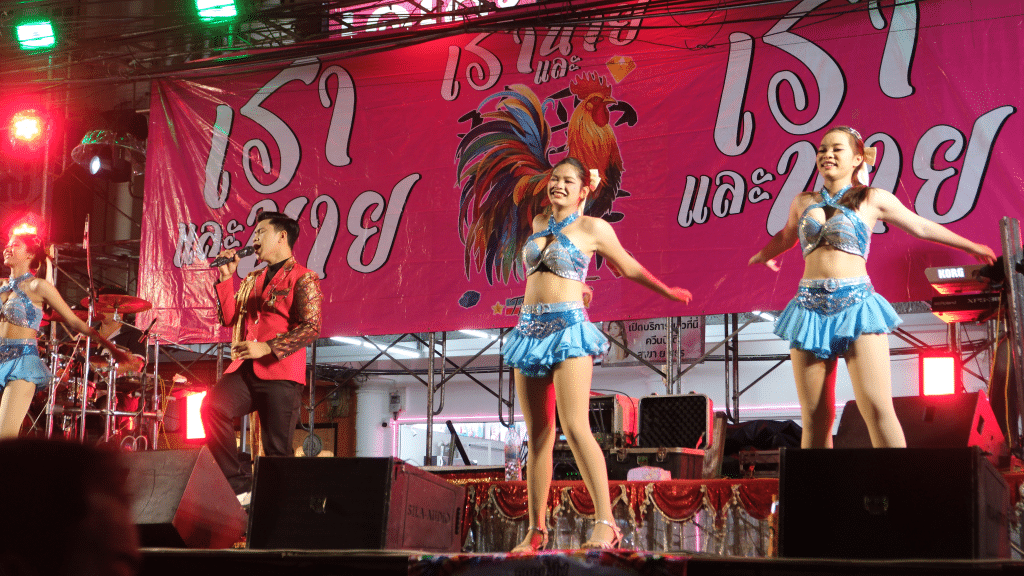
The route gets lined by stages for music and dancing, which peaks the night before the big parade, with calmer after-party. Some are rot ngan – trucks or buses incorporating a fold down stage and hinged speaker stacks. Music from rival stages clashes at deafening volume, and features more morlam now than in the 2000s, when Techno or sam cha ruled. Huge morlam-lukthung stage shows with carnivalesque dance troupes are less viable now. Singers are mostly backed by skimpily dressed dancers thrusting hips to morlam.
Following the 1997 economic crash, the OTOP-era revival of indigenous crafts saw renewed pride in wearing hand-loomed fabrics. That’s given way to synthetic T-shirts covered in lurid digital graphics – the new common outfit of rural Thailand.
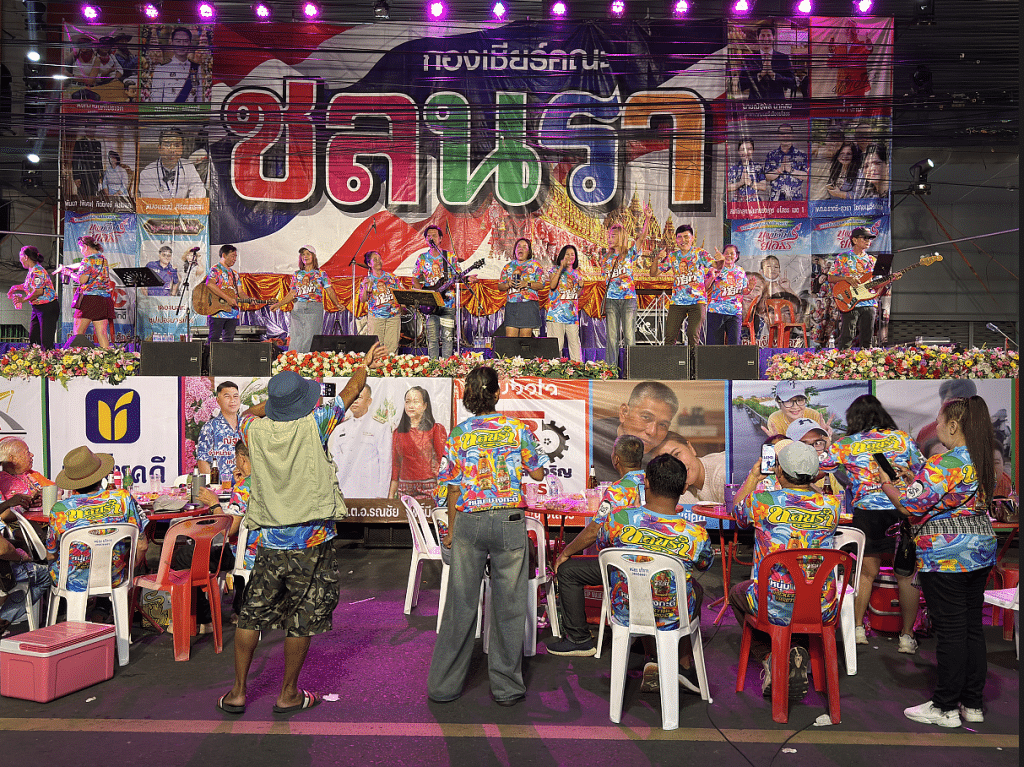
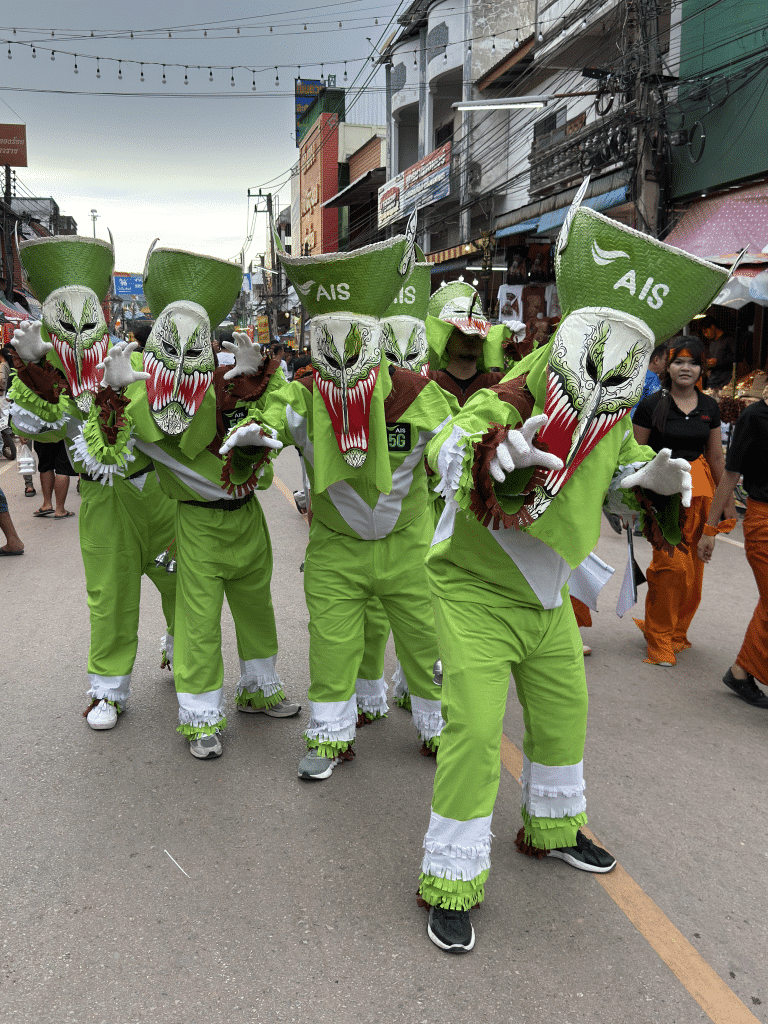
Costumed spirits used to be mostly young males, who’d remain masked while teasing the crowd or potential sweethearts. Perhaps due to climate change or the parade being rescheduled to hotter hours, few now cover their skin in gloves and socks and many take off their masks. That reveals a fresh diversity of age and gender, including kids, women and seniors.
Phi Ta Khon was an expression of place, but taking part is no longer just local. A scheme invites any Thai or foreigner to join a team, as long as they’re committed to the mask and costume-making from January to June. Corporations dress staff as spirits, in the branded livery of AIS, Red Bull or Krung Thai Bank. Even the military had a troupe of troops in khaki masks. Though invited, these faux spirits do sap the authenticity and mystique. Phi Ta Khon had felt otherworldly; now it chimes with tourists hiring national costume in heritage sites. Many tetsakan feel that dilution from going mainstream.
Despite new technology, tetsakan still showcase handicrafts. Souvenirs made with genuine care lend a humane, tangible quality that’s highly collectable. To buy a Phi Ta Khon mask or palad khik used to require only bargaining after the parade, which still happens around Wat Pornchai, costing 2,000-8,000 THB. Veterans seem happier to sell than youngsters who treasure their early handiwork. Now stalls sell masks throughout the fest, though some bear tourist slogans. Their size, shape and fragility mean they’re better sent by road than by air.
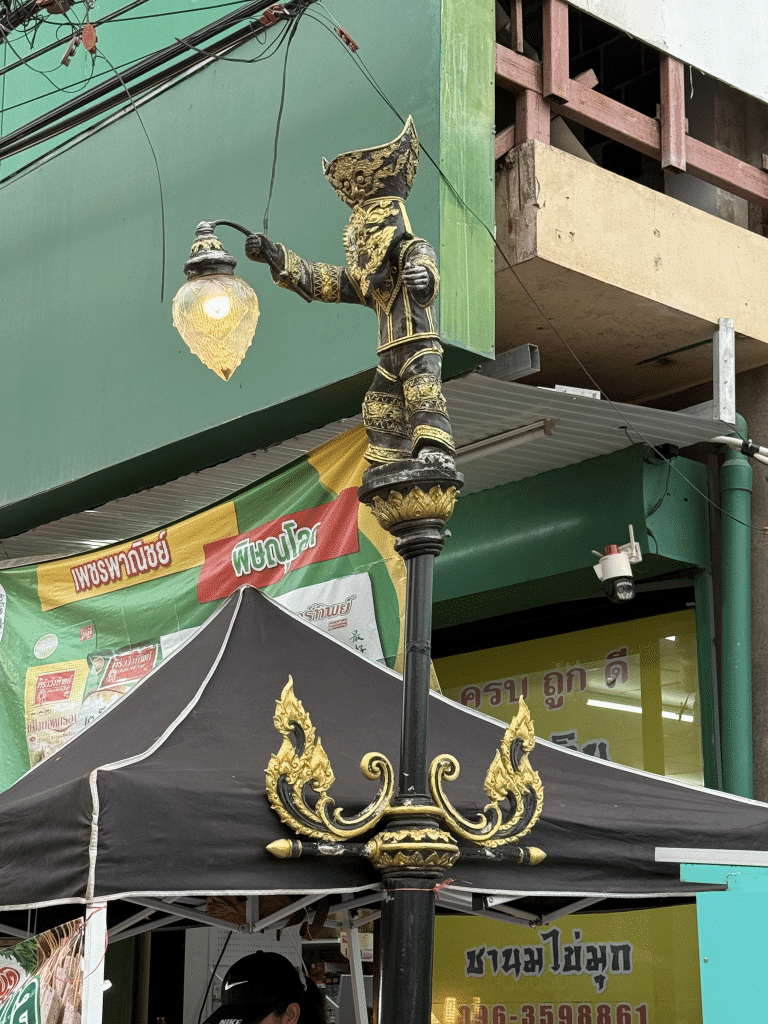
Festivals have become key to place-making. Thai street signs brandish motifs that depict their genius loci, whether market boats in Taling Chan or old ruins in Lopburi. Masked ghosts grace signs in Dansai and many structures along the road from Loei. Yasothon has gilded rockets on signs amid myriad statues of toads from the festival’s origin myth. That tale is related inside a six-storey orange toad-shaped museum, sharing a lakeside with a Naga-shaped building. At all tetsakan, stages and floats showcase local products, from axe cushions to watermelons.
Besides urban Thais, ever more foreigners flock to tetsakan, though most are expat culture buffs or those who married into Isaan families. The main event gets most crowded, so there’s an insider vibe to earlier activities, like viewing the floats, preparations or minor parades, like those from Dansai’s shaman house to Wat Pornchai.
These working towns lack fancy hotels. Grotty digs in town can sell at four-star prices for those nights. Most attendees must drive 30-60 minutes, whether from Ubon or Roi Et to Yasothon, or from Loei or Phu Rua to Dansai. Loei attracted many bikers carrying tents, many clearly hiring their motorbike and camping gear to tour the mountain roads.
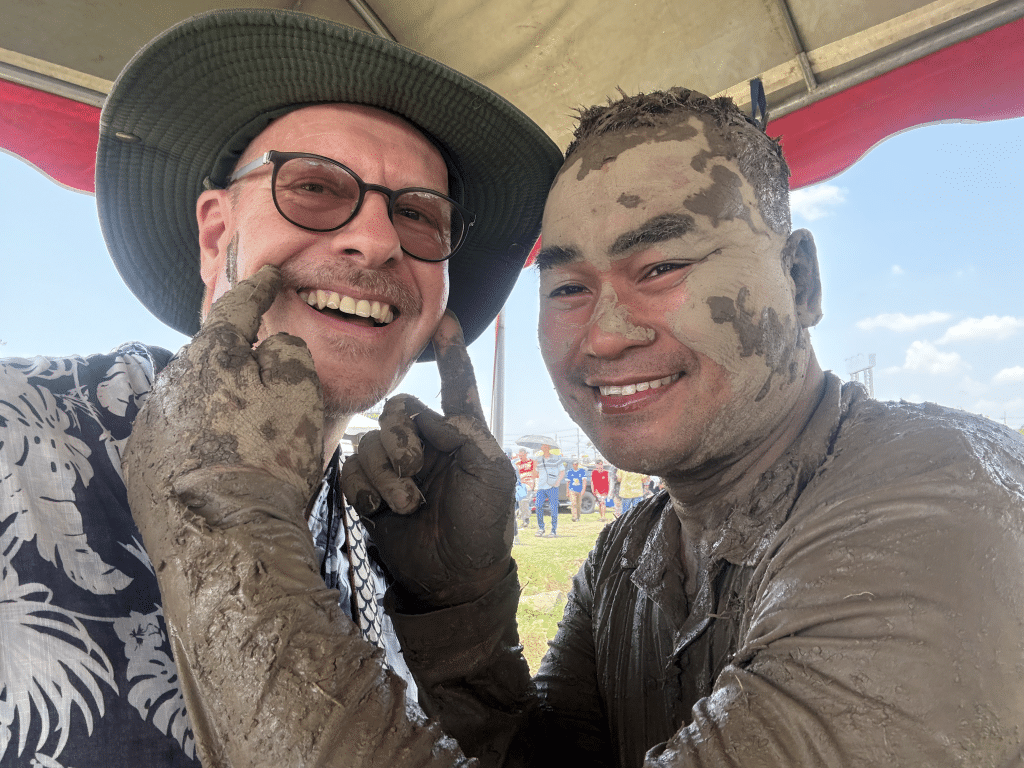
Major tetsakan have outgrown their original venues to halls or plazas. Anyone can buy access to grandstands, but each team’s shows held there block easy movement, so strategically choose which end you wish to roam. Spectators can mingle into the processions, though selfie-takers often hog the scene. Parades last for hours, so if parts get missed due to blocked views or resting in a beer garden, there’s plenty more to savour.
While tourism, tech and crowds have wrought change, an intimate sense of immersion persists. Isaan festivals remain freeform expressions of character, surprise and joy.
This twice-monthly column, Very Thai, is syndicated by River Books, publisher of Philip Cornwel-Smith’s bestselling books Very Thai: Everyday Popular Culture and Very Bangkok: In the City of the Senses.
The views expressed by the author of this column are his own and do not necessarily reflect the views of Koktail magazine.
Bangkok breaks into the global top 10 most expensive cities for the ...
From Sampheng market to Roblox, the squishy toy craze is taking over. ...
It really is another remarkable year for Thai auteur cinema. Thai director ...
Discover 7 exceptional culinary happenings in Bangkok worth ruining your hair for, ...

Applications are now open for Netflix REEL LIFE Season 4, offering free ...
Escape Bangkok for Thailand’s 7 best national parks. Discover wildlife, culture and ...
Wee use cookies to deliver your best experience on our website. By using our website, you consent to our cookies in accordance with our cookies policy and privacy policy

