
Weekend Getaways
7 Must-Visit National Parks in Thailand and How to Explore Them
Escape Bangkok for Thailand’s 7 best national parks. Discover wildlife, culture and ...



Meet Miwako Tezuka, Director of Dib Bangkok, and explore her vision for a museum where art feels open, accessible and connected to the people around it.
For many people, art still comes with a set of unwritten rules. Something you need to understand before you can truly appreciate it. But perhaps experiencing art does not always begin with knowledge. Sometimes it starts with curiosity, a feeling or simply being given the chance to look.
A museum, then, can be more than a place to display art. It can be a place where people feel invited to encounter it on their own terms. Nearly a year into Dib Bangkok, we look at how Miwako Tezuka, its Director, is working to make the museum feel closer to the people around it.
As Tezuka once put it to us,
“A museum earns its place not by importing prestige, but by becoming something a city recognises as its own.”
Before Dib Bangkok, Tezuka had already spent decades moving between museums, artist foundations and independent curatorial projects. With a BA in Art History from New York University and a PhD from Columbia University, where she specialised in modern and contemporary Japanese art, her career has taken her through research, exhibitions, acquisitions, writing and the wider networks that shape how art is understood and shared.
Her early curatorial work included Making It Home: Three Contemporary Asian Artists at the Ise Cultural Foundation in New York in 2002, followed by Poetic Spectrum: Images, Objects, and Words of Gozo Yoshimasu at Location One a year later. She then spent more than six years at Asia Society, progressing from Assistant Curator to Associate Curator. Alongside exhibitions and contemporary art acquisitions, her work included catalogue essays, artist interviews and the development of the institution’s contemporary art collection, as well as fundraising, patron relations and cultural trips across Japan, Korea and India.
From 2015 to 2020, Tezuka served as Consulting Curator at the Arakawa + Gins Reversible Destiny Foundation in New York, providing curatorial direction to the artist foundation. But alongside these institutional roles, one of the longest-running parts of her practice has been PoNJA-GenKon, the Post-1945 Japanese Art Discussion Group, which she co-founded and has co-directed since 2003. For more than two decades, the network has brought together scholars, artists and art professionals through research, discussion, annual symposia and other programmes focused on postwar Japanese art.
That long commitment to building connections around art also offers a glimpse into how Tezuka sees the role of a museum.
“Where there is so much friction, so much warfare, so many struggles, art gives us hope and gives us a new perspective on how we exist in our world. That is our mission. In the life of an institution, we are connecting with community members, artists and those who can be our supporters.”
Much of Tezuka’s career unfolded in New York, surrounded by an established museum and gallery landscape. Then came Bangkok, with its own artists, audiences and cultural rhythm. Dib Bangkok marks a new chapter in her journey: bringing decades of experience into a city that is continuing to shape what its museum culture can become.

Dib Bangkok is not simply interested in putting contemporary art on walls. The bigger question is what happens when people come face to face with it — whether they stay, look twice, question what they are seeing or simply let a work sit with them. More than anything, it is about creating a space where art feels open to everyone, leaving room for curiosity, personal interpretation and the possibility that each person might take something different from the same work.

Dib is led by Purat “Chang” Osathanugrah, Founding Chairman of Dib Bangkok, and Tezuka, Director. Together, they have shaped Dib around the idea of art as an experience – something people can return to, spend time with and encounter differently each time. For Tezuka, the relationship between artwork and audience is at the heart of what a museum can be. It is less about telling people what to see and more about creating the space for them to find their own way into the work.
“Our vision is a space like a sanctuary for art, where people can come to have direct encounters with truly amazing artworks. Our mission is to activate this sanctuary as a place where people can visit again and again, find new meanings, have moments of reflection and contemplation, and then find a connection to what art does best for us, which is to save humanity.”
That idea was already present in Dib’s inaugural exhibition, (In)visible Presence, which ran from 21 December 2025 to 3 August 2026. Rather than simply introducing Dib to the public, the exhibition looked back at what came before it, recognising the people and ideas that made the museum possible. For Tezuka, it was Dib’s first chance to establish its own story while acknowledging where that story began.
“It was to remember what was before us and who established the foundation so that we can be here today. So our grand opening exhibition was sort of like our statement, right? There was a conception, a moment of conception, and the museum is being created.”

Now, the story moves forward. On 26 September, Dib opens its second major exhibition, Giving Life, bringing together more than 160 works by 33 Thai and international artists. The exhibition looks at movement, change and the ways art can take on a life of its own.
“We were gathering these invisible molecules that are artworks into the first exhibition, which became one strand of DNA. Now we are ready to bring this shaping body into the second chapter of this long story. All of us who work at Dib consider the museum as a living organism. We cherish life, we nourish it and we care for it together. So Giving Life is our first step forward, and we’re always looking towards the future while not forgetting about our past.”

Movement becomes the thread that holds the exhibition together, with Alexander Calder as its anchor artist. Tezuka sees Calder’s work as more than a celebrated name within the collection. His use of movement connects directly to the exhibition’s central idea, while also placing Dib within a wider international conversation around the artist.
“So what is life without movement? The highlight theme of the second exhibition is movement. For each exhibition, we pick one anchor artist, and for Giving Life, that is Alexander Calder. It’s not just because he created artworks that move, but also because museums around the world are celebrating his work.”
Tezuka also considers the Calder connection to extend beyond the exhibition itself. This year marks the centenary of the artist’s move from the United States to France, placing his work within a wider international celebration. Dib joins that conversation with a significant Calder work from its own collection, bringing a major figure from the international art world into a museum that is still shaping its own story in Bangkok.
Tezuka also sees the importance of creating opportunities for local artists. She is particularly interested in the way Thai creativity can develop organically, often from a single spark of inspiration or passion. For her, Dib can be a place where those ideas meet new audiences, while also bringing international artists and perspectives into the same space.

That thinking is reflected in Dib’s new multi-year partnership with the Chanel Culture Fund, announced alongside Giving Life. For Tezuka, the partnership is not simply about bringing another international name into the museum. It is about creating opportunities for young creative voices from Thailand and helping them reach a wider audience.
“And this exhibition is also a proud moment for us to announce our multi-year partnership with the Chanel Culture Fund. This partnership has been really critical in supporting young creative voices from Thailand who are at the cusp of global visibility. We work together very closely to really lift them up onto the global art stage. So Dib really becomes a place where voices from Thailand and creative talents from all around the world come together and meet.”
The partnership comes to Thailand through the Chanel Gateway Commission, with its inaugural commission awarded to Thai artist Nawin Nuthong for Project 147. The multimedia installation brings together Thai folklore, history and interactive gaming, with six gaming consoles and screen-based imagery transforming the museum into an interactive space. Traditional stories become something visitors can encounter through a distinctly contemporary format.

This reflects Tezuka’s wider approach to Dib: a place where Thai artists can gain visibility, find support and connect with the wider art world. It also gives local and international voices a chance to meet, with artists and audiences able to encounter perspectives beyond their own.
“And this story cannot be written just by us. It needs to be written with the artists we present, the visitors who come through our gate and all the people who work with us here at Dib.”
That sense of a shared story brings the focus back to the museum itself. For Tezuka, Dib is not a finished idea. Its identity is shaped through the artists it presents, the people who visit and the relationships that grow around it.


Escape Bangkok for Thailand’s 7 best national parks. Discover wildlife, culture and ...
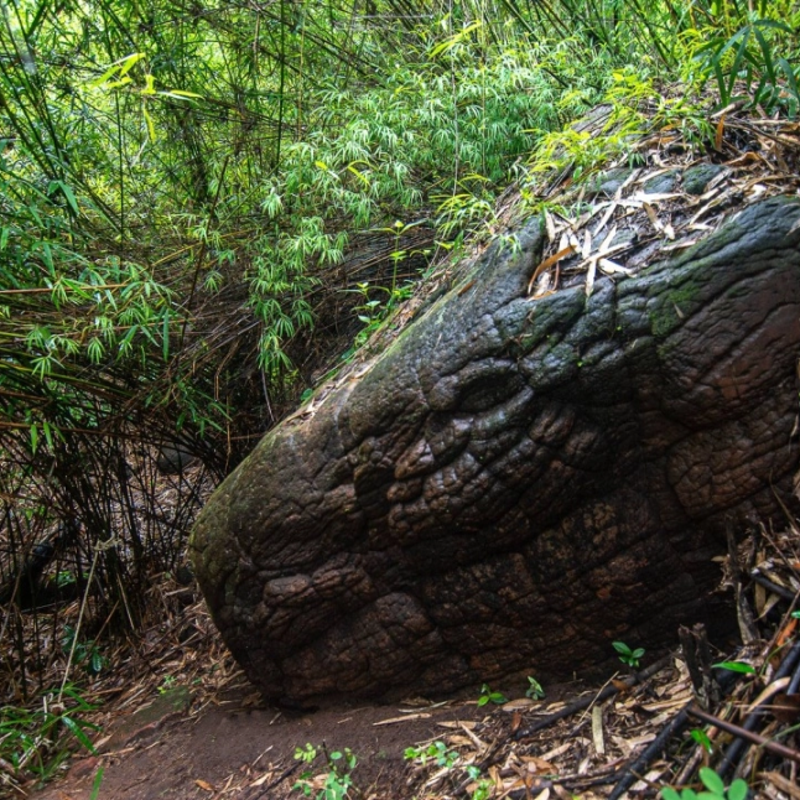
A detailed guide to hiking the Naga Cave, combining physical challenges with ...

Thai filmmaker Apichatpong “Joe” Weerasethakul receives France’s highest honour, the Legion of ...

Sailorr and Molly Santana’s black grills fuse hip-hop swagger with homage to ...

Treat your favorite furry companion some stylish goods Did you ever think ...
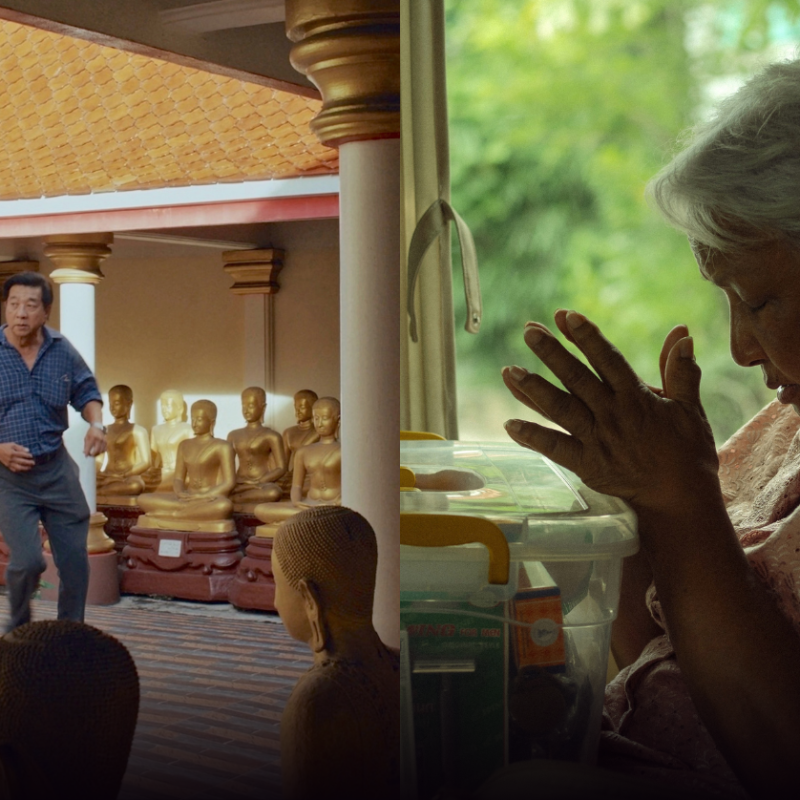
Tanat Sangaramya reviews 9 Temples to Heaven, Sompot Chidgasornpongse's new film on ...
Wee use cookies to deliver your best experience on our website. By using our website, you consent to our cookies in accordance with our cookies policy and privacy policy


