Weekend Getaways
7 Must-Visit National Parks in Thailand and How to Explore Them
Escape Bangkok for Thailand’s 7 best national parks. Discover wildlife, culture and ...


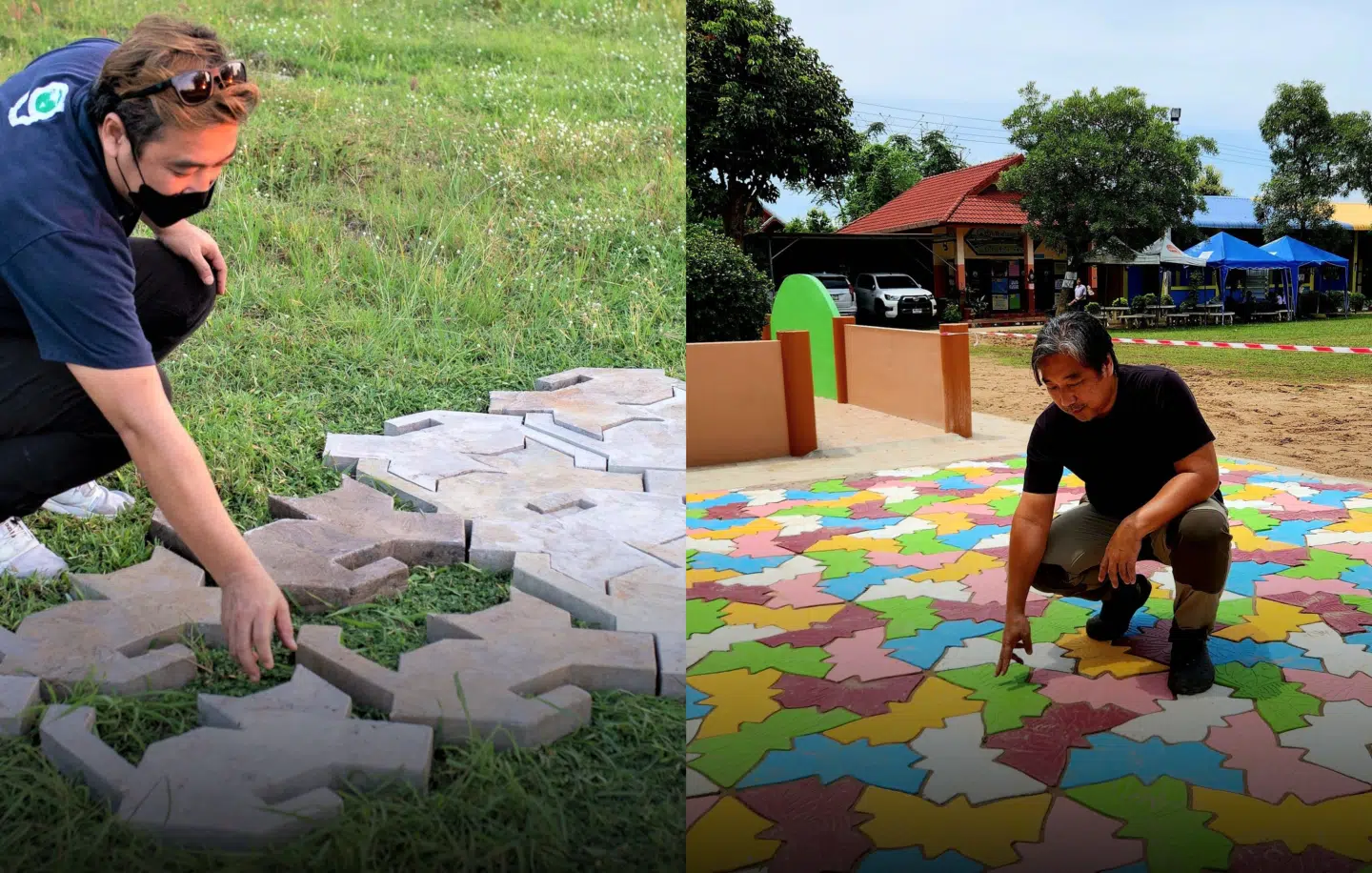

Imagine 4,000 plastic bags packed into a single square metre of paving. Here the trash turns into something useful; most of that waste would otherwise sit in landfills or float in waterways ignored and piling up.
We see a new generation giving plastic new life in everyday items from Pipatchara’s Infinitude bags to Poonsook craft products and on a larger scale in pathway paving which we examine today.
Leading the charge, Asst. Prof. Dr. Wechsawan “Pow” Lakas or Dr. Pow, founder of Green Road, flips the idea of trash on its head. Plastic transforms into road blocks, furniture and roofs. Waste becomes products that schools, temples and national parks actually use to cut pollution while helping communities at the same time.
Dr. Pow, a lecturer in the Department of Industrial Technology at the Faculty of Science and Technology, Chiang Mai Rajabhat University, witnessed a moment that changed everything. On a family trip to the sea, he had imagined showing his children clear blue water and white sand. Instead, he saw them swimming among plastic waste scattered along the shore.

That moment stayed with him. Concerned for his children’s future, he decided to tackle the waste crisis in his own way. With a background in civil engineering, he studied international research on waste transformation and discovered that the plastic waste in the ocean shares the same petrochemical origins as asphalt. This means plastic can be melted and reshaped into durable materials used in construction, furniture, roofing and other building products.
This inspired his project to turn plastic waste into alternative construction material. By adapting research to Thailand’s context, Dr. Pow has since improved the material’s performance, increasing its strength and stability by nearly 300 percent.
Green Road was founded in 2012 with an ambitious vision: to collect plastic waste until it’s gone, driven by Dr. Pow’s desire to create a better future for his children and everyone. The slogan sounds grand, but it reflects his passionate and unwavering vision. It began with a group of volunteer students from Chiang Mai Rajabhat University collecting campus waste to experiment with paving and roof blocks. The results were impressive, with some recycled-plastic products performing even better than the original materials.
Dr. Pow and his team begin with the process of turning waste into alternative materials. LDPE plastics such as plastic bags, bubble wrap, stretch film and shopping bags are shredded into small pieces and heated. Most donations now arrive pre-sorted, while some come from plastic factories sending defective packaging for recycling instead of disposal.

These plastics are light and melt at a low temperature of 130 – 140°C, ideal for shaping into paving blocks, furniture or other products. A single block combines one part plastic, two parts aluminum foil and one part crushed glass or sand. Each Green Road product has its own mix of waste and materials.


Over the years, Dr. Pow and his student team have transformed waste into a variety of products for schools, temples and national parks, giving discarded materials a new purpose. They also have also created products like guitars, trash cans and trophies, which turn everyday objects into one-of-a-kind pieces and give waste a new purpose. As the project grew, it expanded beyond university waste to public donations, drawing wider interest and participation from the community.


Dr. Pow’s goal goes beyond removing waste. It is about building awareness and inspiring a collective effort, where proper sorting becomes a shared responsibility for a better future.
Green Road brings this vision to life through workshops across Thailand, partnering with high schools to show how plastic waste can be transformed into eco-friendly products. The programme welcomes a wide range of participants, from students and teachers to government groups, private organisations, entrepreneurs and anyone interested in environmental issues. It has even reached an international level, with students from Keisen University in Japan visiting each year to learn Green Road’s methods and continue their own environmental efforts.

To deepen this impact, Green Road offers a membership. While it may resemble those found in lifestyle or retail spaces, for Dr. Pow it serves a greater purpose. It ensures quality and consistency, while encouraging long-term commitment to sustainable waste management.
The benefits feel familiar, but with a meaningful difference. Membership fees support the creation of products made from waste, which are then returned to communities in need. Members receive an ID for activities, discounts and access to workshops throughout the year. They can also send waste twice a month, up to 20kg and receive recycled products throughout the year, up to 12 pieces.
Social media further amplifies this message. Dr. Pow uses it to shift perceptions, making waste feel relevant and even exciting by showing how it can be turned into creative, useful products. Through Green Road, he shows that waste is not the end of a product’s life, but the beginning of something new. In a world facing increasing environmental challenges, his message is clear: change does not start with systems alone, but with people willing to rethink what they throw away.

Escape Bangkok for Thailand’s 7 best national parks. Discover wildlife, culture and ...
A detailed guide to hiking the Naga Cave, combining physical challenges with ...

From Lisa and Lingling Kwong to Nene Royal and Asian Games champions, ...

Sailorr and Molly Santana’s black grills fuse hip-hop swagger with homage to ...

Thai filmmaker Apichatpong “Joe” Weerasethakul receives France’s highest honour, the Legion of ...

Treat your favorite furry companion some stylish goods Did you ever think ...
Wee use cookies to deliver your best experience on our website. By using our website, you consent to our cookies in accordance with our cookies policy and privacy policy


