
Weekend Getaways
7 Must-Visit National Parks in Thailand and How to Explore Them
Escape Bangkok for Thailand’s 7 best national parks. Discover wildlife, culture and ...


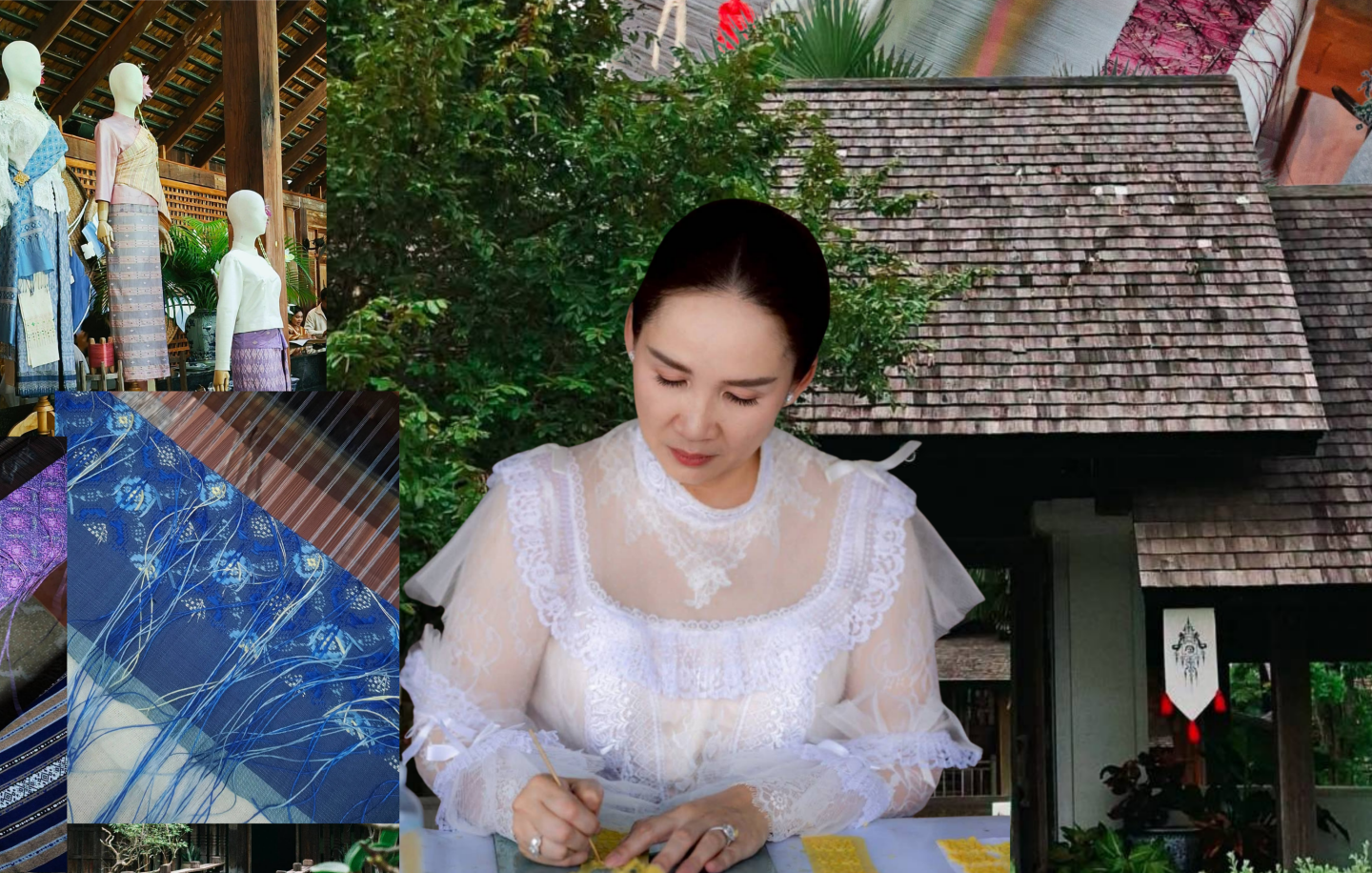
Thai silk is back in conversation. From renewed appreciation for Her Majesty Queen Sirikit The Queen Mother’s iconic looks to the online trend of pairing a sabai with jeans, the traditional fabric has found new ways into contemporary wardrobes.
Yet its story extends beyond how it is worn. In Ubon Ratchathani, inside a traditional house, Wiyada Unnanuntana is bringing that story closer through Khum Chanhom, an initiative that connects local weaving communities with today’s markets. Here, understanding Thai silk begins with the people who make it and the skills passed down through generations.

Wiyada’s love of Thai silk began when her grandparents introduced her to the garment and the heritage behind it. But the knowledge was not passed down through all generations. By the time Wiyada’s mother’s lineage came along, the practice had faded from family life. It remained close to Wiyada’s heart, however, and after leaving her job in banking, she decided to turn that long-standing passion into something more.
Through Chanhom, she brought local weaving communities together to create silk that reflects the regional motifs, craftsmanship and cultural heritage of Ubon Ratchathani. Today, the brand works with more than 70 local households. Its work sustains the skills involved in every stage of production. It gives local weavers opportunities to earn an income from their expertise and helps keep weaving relevant in contemporary life.

“The Northeast is known for its weaving traditions, an art form found in every province across the region. Weaving is more prevalent here than in other parts of Thailand. Woven fabrics from Isan reflect the local character of the communities that produce them.”
At Chanhom, quality takes precedence over quantity. Each design is woven as a single piece, with each carrying its own identity. Some draw inspiration from Ubon Ratchathani’s cultural landscape, including Pha Taem, a well-known destination in the province. By translating these places into the work, Wiyada creates textiles that appeal to collectors while preserving stories connected to the region.


Courtesy of Chanhom
“There is a wide variety of weaving techniques and patterns that differ according to the region of origin, such as Mudmee (ikat), Khit (supplementary weft), Praewa, Jok, Hang Karok (squirrel-tail effect) and Kap Bua fabrics. The people of Isan play a crucial role in the production of these textiles, as they have a weaving culture that has been passed down through generations to the present day.”
Getting the young interested in weaving is no small task. Chanhom has tackled this by training up and coming weavers under the guidance of local master artisans, helping them build skills and earn a living from the craft. The aim is to ensure these techniques are passed down through the decades.

The effort is already part of a wider operation. Through its weaving centre and network of local households, Chanhom produces more than 1,000 metres of cloth each year, around 500 metres of which is certified under the Royal Golden Peacock Silk Standard.
“What matters most is the shared commitment and dedication between us and our team. Mutual trust is what allows us to consistently produce high-quality work.”
Keeping Thai handwoven pieces alive also means keeping up with how people dress. Not everyone is ready to wear a sabai to the office, after all. As interest in traditional clothing shifts, Chanhom has expanded its range from sin skirts, scarves and sabai shawls to include ready-to-wear pieces, bags, neckties, accessories and homeware. Its expanding range makes Thai silk easier to incorporate into modern wardrobes and homes.
Moving from the loom to a wider purpose, Wiyada established Khum Chanhom, a museum and learning centre dedicated to Ubon Ratchathani’s weaving heritage. Set across more than 14 rai, the site brings together buildings inspired by traditional Isan architecture, with spaces for silk preparation, weaving and the display of handwoven textiles.

Visitors can follow the process from silkworm rearing and reeling to dyeing and weaving, gaining a closer look at the process behind each stage. In 2025, the Department of Sericulture selected Khum Chanhom as one of six new agro-tourism destinations in Thailand dedicated to silk and sericulture.
The collection brings together historic designs and Khum Chanhom’s own interpretations of kab bua, a motif associated with Ubon Ratchathani. Over nearly a decade, Wiyada has built a collection for future generations to study. Workshops give visitors and aspiring weavers the chance to learn directly from local artisans and develop their skills.


Courtesy of Chanhom
Wiyada’s work has also gained recognition outside Ubon Ratchathani. This month, she received the Outstanding ASEAN Woman Entrepreneur Award 2026 at the ASEAN Women Entrepreneurs Network (AWEN) Forum & Awards in Vientiane, Laos. She was one of 12 women entrepreneurs from Thailand recognised for their business achievements, including her contribution to local livelihoods and the wider regional economy.
“There is great pride in revitalising the cultural tradition of weaving. A community once on the verge of abandoning the craft has been brought back to life, ensuring the long-term sustainability of this weaving heritage.”

Escape Bangkok for Thailand’s 7 best national parks. Discover wildlife, culture and ...

A detailed guide to hiking the Naga Cave, combining physical challenges with ...

Sailorr and Molly Santana’s black grills fuse hip-hop swagger with homage to ...

Treat your favorite furry companion some stylish goods Did you ever think ...

Thai filmmaker Apichatpong “Joe” Weerasethakul receives France’s highest honour, the Legion of ...

Your guide to Bangkok in October, with Halloween events, art exhibitions, film ...
Wee use cookies to deliver your best experience on our website. By using our website, you consent to our cookies in accordance with our cookies policy and privacy policy


