Weekend Getaways
7 Must-Visit National Parks in Thailand and How to Explore Them
Escape Bangkok for Thailand’s 7 best national parks. Discover wildlife, culture and ...




After getting to know people across different industries, one of the things I value most is discovering the ideas and perspectives behind what they do. Every person opens up a different way of looking at the world, often in places I would not have thought to look before.
This time, that person happens to be my own professor.
Assistant Professor Porranee Singpliam was my professor at Chulalongkorn University, where she introduced me to new ways of thinking about gender, sexuality and society. Now, looking more closely at her work, I am discovering how many of those ideas extend far beyond the classroom. Her work spans gender, sexuality, media, politics and culture but a common thread runs through it all: a curiosity about how society shapes the way we understand ourselves, our bodies and one another.
Gender, sexuality and equality are not just academic topics. They are part of everyday life, shaping how we see our bodies, our identities and the roles we are expected to play. Because these things feel so familiar, we often take them for granted and rarely stop to question where they come from. Education gives us a way to look closer, unpack the ideas behind what feels “normal” and understand what lies beneath the surface. Sometimes, all it takes is a new perspective to make the familiar appear completely different.
This is a look at the ideas behind her work and the questions that continue to challenge the way we see the world around us. Maybe it is also a chance to retake an old classroom question, this time with a completely new lens.

During my time at Chulalongkorn University, I first knew Ajarn Porranee as a lecturer in Bachelor of Arts in Language and Culture (BALAC). I took her Cultures of the Body class, a course on the body as a source of identity and a part of culture, with its meaning and significance across history and contemporary life.
Looking back, that class was only one entry point into the questions at the centre of Ajarn Porranee’s wider work. She also teaches Gender and Politics, which examines the relationship between gender and political life, and Gender and Queering the Media, which looks at gender representation in media and its influence on how we understand gender in contemporary multicultural society. Another course, Thailand and the World, explores the political, social, economic and cultural changes taking place in contemporary Thailand and their connections to wider global developments.
Together, these subjects move from something as personal as the body to larger questions about media, politics, society and culture. They show how ideas about gender can shape many parts of life, even when we do not always notice them. So where did this focus come from?

The answer, in part, goes back to her own time as a student. She graduated with first-class honours in Language and Culture from the Faculty of Arts, Chulalongkorn University, in 2013. So she is not just my professor, but my senior as well. She then continued her studies in Cultural Studies at Waseda University, where she completed her MA in 2015 and PhD in 2018. She later returned to Chulalongkorn University, this time as a lecturer.
Her academic background gave her the foundation to pursue questions around gender and sexuality, media, politics, culture and Thai society. Those areas now form the basis of both her teaching and research, with a particular focus on gender and media, post-feminist media culture, gender and politics, and the relationship between gender, sexuality and Buddhism in Thailand.
The subjects she teaches may sound academic but the ideas behind them are close to things we encounter every day. How we see our bodies, understand gender, respond to media or think about social roles can all reflect wider cultural expectations. That is also why gender education matters. It gives people the language and perspective to recognise ideas that can otherwise feel too familiar to question. Her research takes these everyday experiences further, showing how society, culture and power shape the way we understand ourselves and one another.
One of the clearest examples is the chapter in her 2025 book The Constitutive Component of Sexes, Genders and Sexualities: The Case of Thailand. The chapter examines how ideas about the body are shaped not only by biology but also by culture, society and systems of power.
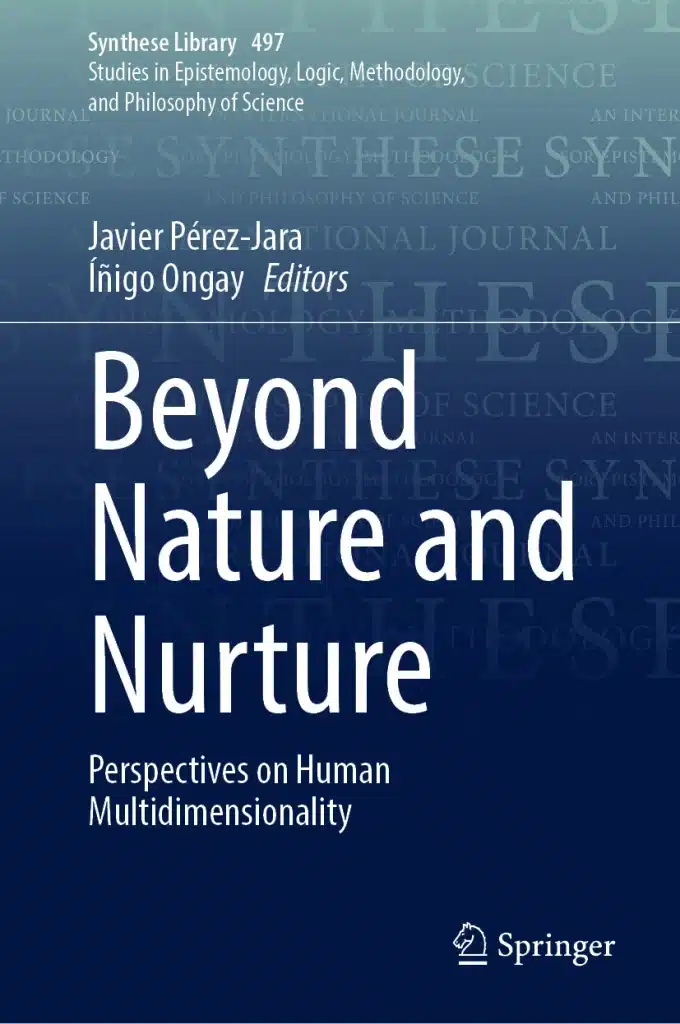
It looks at issues such as marriage and uniforms to show how the body can become a point where culture, law and political power meet. A body may seem deeply personal, yet society can also decide how it should be understood, categorised and recognised.
This perspective feels especially relevant today, as questions around gender, identity and equality continue to shape Thai society. The way we dress, form relationships, understand our bodies or move through public spaces can carry expectations that often feel too ordinary to notice. Her research gives us a way to see where those expectations come from and how they affect people differently.

A similar focus appears in the chapter “Gays and Ordination: Sexual Identity and Thai Gay Men’s Attitudes to Buddhist Ordination in Urban Thai Society” found in her 2024 book Queer Rites and Rainbow Robes: Sexual and Gender Diversity in Thai Religion and Modern Ritual. The chapter examines how sexual identity intersects with expectations around Buddhist ordination in urban Thai society, bringing religion, family expectations and ideas of masculinity into the same conversation.
By giving attention to experiences often left out of mainstream discussions, her research adds a more nuanced view of how sexual identity can shape people’s relationship with religious traditions. It also reflects a wider part of her work: looking at Thai society beyond simple categories and recognising the diversity within it.

Her 2026 book Transformations of Sexuality and Gender in the Thai Perspective: Politics, Media, and Citizenship takes these ideas into a broader view of contemporary Thailand. It examines how gender and sexual diversity connect with social movements, political change and cultural shifts, alongside the role of media and digital platforms in giving visibility to diverse sexual identities. The book also looks at the social, legal and cultural barriers LGBTQ+ people face in their search for rights and equal recognition.
Taken together, her research looks at gender and sexuality from different sides of Thai life: the body, religion, media, politics and citizenship. The subjects may differ, but the focus remains clear. Her work asks us to look at the structures behind familiar experiences and pay attention to people whose experiences do not always fit the categories society has created for them.
One of her more recent projects took this focus into the political sphere. In 2024 and 2025, Dr Singpliam served as a Visiting Scholar at the Harvard-Yenching Institute, where she researched the relationship between neoliberalism and gender in Thai politics.
Her focus was on women in politics who do not come from established political families, but enter public life through different paths and with fewer resources. Through in-depth interviews with women politicians, she examined the relationship between gender, political work and the changing conditions of contemporary work culture.
The project also points towards another area she hopes to explore: the experiences of gender-diverse and queer people in Thai politics. It adds another dimension to her broader interest in how gender shapes participation, representation and power in Thai society.
Today, as the Director of the BALAC programme, Ajarn Porranee continues to bring the same ideas into her approach to education. For her, teaching is not simply about introducing theories or academic concepts. It is about giving students the confidence to question what feels familiar, look at an issue from different angles and develop their own way of thinking.

Her classes reflect that approach, with subjects that encourage students to examine culture, media, gender, politics and society beyond their most obvious meanings. The classroom becomes a space for curiosity as much as learning, where everyday ideas can be unpacked and viewed from a different perspective.

This is where her teaching and research come together. The questions she brings into the classroom do not stay there; they extend into her research on bodies, media, religion, politics and identity. Her role as an educator is not simply to teach students what gender means but to give them the tools to question the ideas that shape how people are seen, treated and understood. In that sense, gender education is not only about learning a subject. It is about learning how to see society more clearly.

Escape Bangkok for Thailand’s 7 best national parks. Discover wildlife, culture and ...

A detailed guide to hiking the Naga Cave, combining physical challenges with ...

Sailorr and Molly Santana’s black grills fuse hip-hop swagger with homage to ...

Treat your favorite furry companion some stylish goods Did you ever think ...

Thai filmmaker Apichatpong “Joe” Weerasethakul receives France’s highest honour, the Legion of ...

Woralun Boonyasurat has spent her career preserving, reviving and bringing Lanna culture ...
Wee use cookies to deliver your best experience on our website. By using our website, you consent to our cookies in accordance with our cookies policy and privacy policy


