
Weekend Getaways
7 Must-Visit National Parks in Thailand and How to Explore Them
Escape Bangkok for Thailand’s 7 best national parks. Discover wildlife, culture and ...


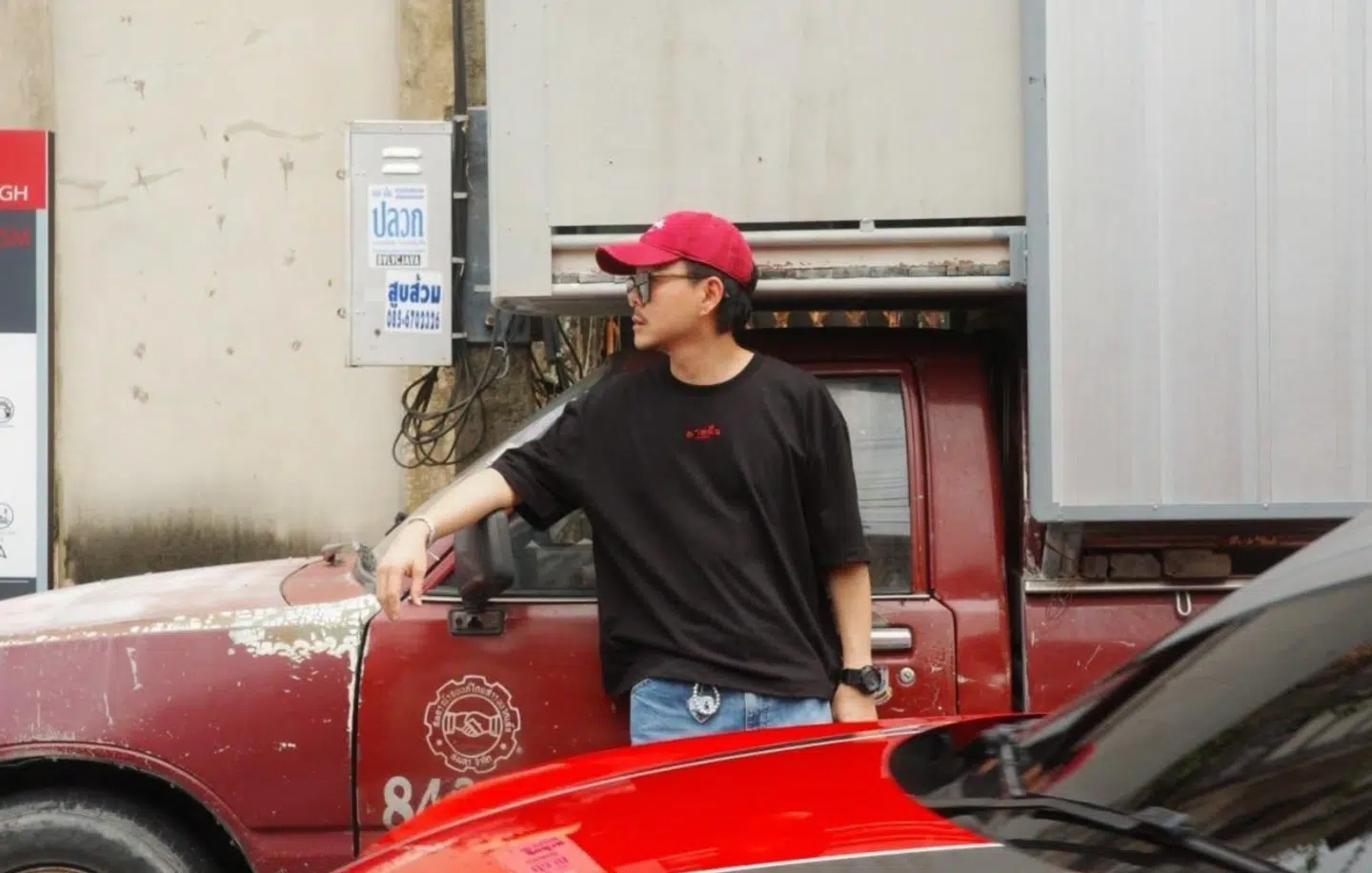
There are few people who can reinvent an entire city without ever seeming to try. In Songkhla, that person is Pakorn Rujiravilai, though nobody down south calls him that. To everyone here he is simply Aey, the man who looked at a sleepy port town most travellers only passed through and decided it was worth stopping for.
Over the past 13 years he has screened films in a converted shophouse, coaxed old grocers into being photographed, turned hand fans into a talking point and dragged Songkhla’s Old Town back to life. He runs a printing business by day. He grew up hauling fishing nets. He swapped the galleries of New York and Bangkok for a house where the sea is a short walk away. So what does a boy from a fishing family have in common with the most exciting arts district in southern Thailand? Rather a lot, as it turns out. So, dear readers, take the tea he offers and let Aey show you how a town wakes up.

I lived in Songkhla for a spell, so allow me to share the detail no guidebook bothers with: the whole place runs on nearness. Nothing is far. You can be eating breakfast, buying paint and dipping your feet in the Gulf of Thailand within the span of a single pop song.

On the table between us at a.e.y.space, on Nang Ngam Road, there’s a stack of proofs for an upcoming festival, still warm-smelling from the press, which Aey keeps straightening as he talks.
“After moving back, I realised how happy I was to be somewhere where everything is just three minutes away.”
“From my house to the beach takes three minutes. Everywhere is three minutes away. Everything is close and I have so much more time. Even when work gets busy, I still get to walk around and discover interesting things. That’s when I started seeing opportunities. I realised things could actually happen here.”
Aey is a city person – or at least he was – back when white-walled galleries were his natural habitat. Yet he is also, unmistakably, a small-town man. The son of a fishing family, he grew up with the tide setting the hours. Rather than inherit the boats, he built a career in art and design and eventually a printing company, so that his eye for pattern, graphics and branding could earn its keep. His clients now range from government offices to offshore oil firms, the sort of unglamorous industry that quietly keeps this coastline in work.
He is candid about the arithmetic of coming home, which is less romantic than the rest of it. There is simply less money moving through a provincial economy than a capital one and charging a design fee outright, he admits, rarely flies here, so he folds the cost into the production price instead, which locals find far easier to swallow. “It’s hard to explain to people why design should cost extra,” he says and shrugs, as if he’s had the argument enough times to stop minding.

Then Aey bought an old house slap in the middle of Nang Ngam Road and noticed something. “Whenever we organised an event, people would naturally wander in to see what was going on,” he recalls. That instinct – leave the door open, see who drifts through – became a.e.y.space, the first proper art gallery in the Old Town. Upstairs is a residency where visiting artists sleep and work; while we talk, someone comes down the wooden staircase, nods and heads out to the street without a word.


None of it, he’s keen to stress, came from a grand plan he’d nursed for years. It grew out of the buildings themselves, which were being rescued one by one around the same time.
“If you go back a little over 13 years, it all began when people started renovating houses and repurposing old buildings that had been abandoned,” he explains, tapping the table as he counts off the years. “They dusted them off and gave them new life. Once that happened, people saw these buildings could be used for more than just living or running shops. Galleries and art spaces gradually appeared. It made me realise that city-making really starts with the city’s architecture. Once people see what’s possible, they begin to feel they can do it too.”
The residency, he reckons, does more work than anything else. Invite an artist for a day or two and they leave with little. Let them linger and the place gets under their skin.
“Whatever kind of work they eventually create, even if it’s never shown here, it’ll carry a sense of Songkhla within it, often without them even realising.”
He isn’t sure how to measure this and doesn’t pretend to; he just likes that it happens.
Ask him to explain the leap from fishing family to gallerist and he sits back with his tea.
“A fishing net catches fish. This art space catches people.”
Both are his tools. Different results, but each can make something bigger.

Rewind a little over a decade and Songkhla was somewhere you drove through on the way to somewhere else. Today it is impossible to overlook and Aey is not the only reason, though he is a stubbornly persistent one. A generation of returnees, among them Pisuthpak Sukwisit, known to all as Amp, has come home to pour fresh energy back into the streets they grew up on.

The festivals have done the heavy lifting. Pakk Taii Design Week now gathers designers and artists across four southern provinces – Songkhla, Trang, Pattani and Nakhon Si Thammarat, while Singorama Art Fest, a contemporary community festival running from 24-26 July 2026, stitches together “people, art and the city” through the historic port district. Aey’s printing outfit hums along behind these events; not his main livelihood, but a handy one since, when a poster needs producing at midnight, he can simply make it himself and bother nobody.

His own projects go further than throwing a party. Portrait of Songkhla invited shopkeepers and residents to sit for family portraits, then hung the results in a show that pulled visitors from across the country. Made in Songkhla pairs young designers with long-standing local businesses to develop new products, helping traditional shops keep pace with a changing world. Word has spread and people from other towns now turn up at his door asking how it’s done.
The change still catches him off guard. “The energy when I started 13 years ago and now are so different,”
he says.
“There was no young generation like this. Now, I don’t know – it’s like a flower garden. Different flowers, different kinds, each with their own thing.”
He doesn’t finish the thought so much as let it sit there.

If you press me for one place to visit before you leave, I won’t hesitate: DASDNN. Styled like a traditional neighbourhood grocery, it reframes the utterly mundane as the story of Songkhla, all under the deadpan slogan “Something That Is So Commonly”. Even the shopfront sign leans into it, set in a plain typeface that becomes distinctive precisely because it refuses to try.

Inside the two-storey shophouse, souvenirs cover every surface, stacked on shelves, hung from the walls, crowded three-deep across the counter, which is the point, the name itself meaning something like many, full, all around. The team will be familiar by now: Amp, who also runs the bar Grandpa Never Drunk Alone; Aey himself; and Maprang of the Fake Florist. All three share a knack for spotting something in objects nobody thought worth a second look.


You may already know the shop from its ruay nud fan, which went viral after cameos from Lukgolf LG and Friends and, later, Lisa of BLACKPINK. But the fan is almost beside the point once you’re standing there among the mermaid pants, a parody of Thailand’s famous elephant trousers, the mudskipper socks and the shrimp crackers cheekily rebranded as mermaid meat. Aey rattles off the first things they ever made: a municipality T-shirt, the mermaid pants, sacred cloths printed with mermaids, caps stitched from fabric offcuts. Half of it started as a joke. Most of it is still on the shelf, selling.

The garden Aey talks about isn’t finished. Some of it has only just been planted, some of it will fail and he seems at peace with not knowing which. He isn’t trying to control what grows, he’s just kept the door open, kept the press running, kept inviting people in. The flowers will keep blooming, in their own time and their own directions, whether or not anyone’s watching. And Aey will be there when they do.

Escape Bangkok for Thailand’s 7 best national parks. Discover wildlife, culture and ...

Treat your favorite furry companion some stylish goods Did you ever think ...

Singapore’s Burnt Ends is bringing the fire to Bangkok. Chef Dave Pynt ...

Lisa’s SaWaDiKa puts Bangkok, Thai culture, contemporary art and local symbols on ...

From award-winning dramas to cult favourites, these 13 LGBTQ+ films are modern ...
L’On Art Festival makes its debut in Bangkok with live painting, workshops, ...
Wee use cookies to deliver your best experience on our website. By using our website, you consent to our cookies in accordance with our cookies policy and privacy policy


