
Weekend Getaways
7 Must-Visit National Parks in Thailand and How to Explore Them
Escape Bangkok for Thailand’s 7 best national parks. Discover wildlife, culture and ...



Squishy plush toys – or more adorably, squishies – have crept back from the dead, infesting Bangkok’s Sampheng market and dominating TikTok feeds as of late.
The chokehold squishies have on the iPad-dependent, six-seven-saying generation (i.e., Z and Alpha) right now is unreal, with kids obsessing over the sensory fix of “cracking butter bars” and viral ASMR trends.
The frenzy has grown so out of hand that it’s even migrated onto Roblox, spawning virtual communities dedicated to digital popping sounds because God forbid the youth actually go outside and touch grass when they could be staring at a screen tapping on simulated foam.
And don’t think for a second that grown adults are immune to the hype. Nostalgia-blinded Millennials are right there in the trenches, happily rinsing the craze to relive their 2010s youth before corporate burnout took over.
But these cute little things are actually quite deadly for both the planet and the user.
That soft, brain-tickling goodness you’re squeezing is actually just polyurethane (PU) foam or thermoplastic rubber (TPR). They belong to the same toxic chemical family as industrial wall insulation and ‘cruelty-free’ vegan leather.
It’s a sinister concept: taking a non-biodegradable, persistent pollutant and rebranding it as a harmless modern lifestyle accessory.
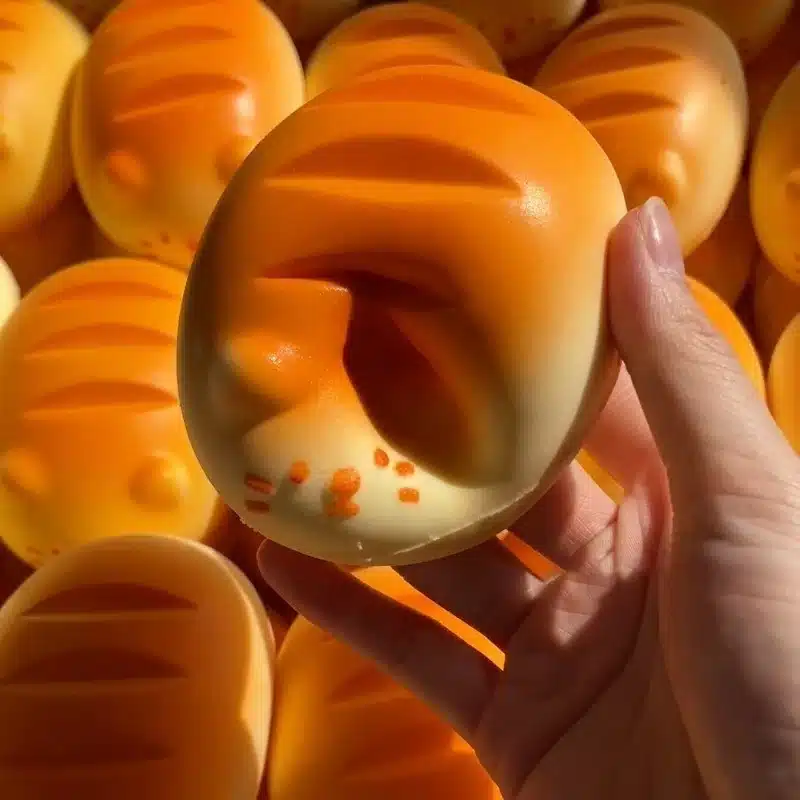
The genius of the scam lies in its performative innocence; it’s so aggressively adorable that you completely forget it’s a mass-produced plastic product, buying into the illusion that a simple squeeze can dissolve all your real-world panic.
These things have terrifyingly long lives. They don’t biodegrade and they’re a nightmare to recycle, filling up landfills as bright, dusty eyesores.
In a manner of speaking, they’re just pure trash, manufactured to be waste in the most absolute sense and bound for incinerators where they’ll pollute both the air we breathe and the land we walk on.
A study by the Norwegian Institute for Air Research (NILU), conducted on behalf of the Norwegian Environment Agency, revealed that every toy tested leaked a mixture of 12 to 30 different Volatile Organic Compounds (VOCs).
The test batch routinely off-gassed chemicals like dimethylformamide (DMF) into indoor spaces at potentially dangerous levels. Inhaling these substances can damage airways, trigger or worsen asthma and pose a known risk of cancer.

The influx of low-grade, poorly made squishies has prompted Thai authorities to launch an investigation into the booming market. Most of these cheap toys are sold completely unbranded, making it incredibly difficult to trace the manufacturers or pinpoint their origin.
The crisis isn’t confined to Thailand. Across England and Scotland, authorities are battling the same spreading problem, seizing sub-standard, illegally manufactured toys from local warehouses. Worse still, a viral trend of microwaving these squishies has taken off abroad, prompting urgent warnings from officials.
The trend, like every other, is completely fleeting, but the destructive impact on the planet is permanent.

Escape Bangkok for Thailand’s 7 best national parks. Discover wildlife, culture and ...

Two icons of modern art come together at Dib26’s Muse: Beyond Human, ...

A detailed guide to hiking the Naga Cave, combining physical challenges with ...

Sailorr and Molly Santana’s black grills fuse hip-hop swagger with homage to ...
Treat your favorite furry companion some stylish goods Did you ever think ...

Thai filmmaker Apichatpong “Joe” Weerasethakul receives France’s highest honour, the Legion of ...
Wee use cookies to deliver your best experience on our website. By using our website, you consent to our cookies in accordance with our cookies policy and privacy policy


