
Weekend Getaways
7 Must-Visit National Parks in Thailand and How to Explore Them
Escape Bangkok for Thailand’s 7 best national parks. Discover wildlife, culture and ...



When people think of Thailand, food often comes first. Mango sticky rice, street food and family recipes keep visitors coming back time and again. Yet temples, pagodas and Thai architecture hold just as much importance. They are as much a part of the country’s identity as a grandmother’s recipe in Yaowarat.
Many people admire the shimmering glass mosaics that decorate temple walls and pagodas without realising these details fade and deteriorate over time. Preserving them requires the craftsmanship of Krachok Kriab, a traditional Thai glasswork technique used in royal and sacred architecture.
One of the people dedicated to that work is Dr. Ratchapon Tajaya, better known as Kru Tay. As the fourth-generation successor to the Tajaya family, he carries forward the traditional knowledge of Krachok Kriab, passed down from his Tai Khün ancestors who migrated from Lanna. Today, he combines science and traditional craftsmanship to preserve and advance this centuries-old art.
“I’ve always said, by day I fix people and by night I fix temples,” he laughs.
We meet Dr Ratchapon Tajaya, known as Kru Tay, during his workday at Satriwithaya School where he teaches chemistry. He shares three influences that shape his path into Krachok Kriab and continue to guide his work today.

The story begins long before his own lifetime. The Tajaya family, a Tai Khün lineage with roots in Lanna, have always possessed ancestral knowledge linked to the reign of King Rama V. Following political conflict between Lanna and Siam, members of the family preserved this knowledge across generations. Family records describe traditional materials used in Krachok Kriab, highlighting five colour variations: green, yellow, white, red and indigo. These align with early references found in Rattanakosin-era documentation.
From a young age, Kru Tay was told this knowledge would eventually reach him. He recalls being told repeatedly that it should remain within the family line.
“When I was a child my great-grandfather kept telling me this is not something to share freely, it must go to the right person in the family. Out of all the descendants I was chosen. It stayed with me because I was given this information just before he passed away when I was around 15.”
At the time, he struggled to accept it. Like many teenagers, he questioned why such ideas should be taken seriously. He later went on to study chemistry at King Mongkut’s Institute of Technology Ladkrabang.
Scientific training gave him a new way to understand what once sounded like a myth. His family’s approach of turning metal into glass began to align with material science and modern chemistry, particularly processes involving alloy transformation under heat.
“I went back to my great-grandfather’s notes. He described melting lead or tin under heat until it becomes liquid. Then you add certain minerals like kaolin or coloured stones. Under the right temperature and conditions it reacts and becomes glass.”
While teaching chemistry at Satriwithaya School, a visitor once asked whether his family had ever produced glass. Out of curiosity, he experimented and the result echoed descriptions he once dismissed as gossip.
What once felt closer to folklore gradually became something more tangible through scientific understanding.

His path later led him into restoration work. He was invited to help conserve Krachok Kriab ornamentation at the base of the Singha platform housing the royal relics of King Rama VIII at Wat Suthat Thepwararam Ratchaworamahawihan. This moment shifted his focus from academic interest to long-term preservation.
He later pursued a doctorate in art history, bringing together scientific knowledge and cultural research. Today he applies both disciplines to restore and recreate Krachok Kriab ornamentation as closely as possible to its original form.
“The more I understand material science, the more I see the connection with what my ancestors told me. What runs through my family is knowledge. What runs through the country is history. What connects both is chemistry.”
Krachok Kriab, historically referred to as “glass” or “molten glass”, is not glass in the modern industrial sense. The process involves combining kaolin as a base material with lead and silica compounds. When heated, the mixture becomes a semi-transparent material with a luminous reflective quality, resembling glass while remaining structurally distinct from modern glass.

Historically, the technique is believed to have developed through low-temperature metal casting and hand-forging methods. Unlike European approaches of the time, which relied mainly on mould casting, this method allowed greater control over texture, flexibility and finish. It was regarded as highly advanced for its era and drew interest from foreign observers.


Courtesy of Ratchapon Tajaya
He explains that preserving this knowledge matters because it can still be decoded today. Each colour and material composition can be studied and reproduced. The resulting material, often described as “living glass”, is cut into small pieces and arranged into intricate patterns inspired by geometric diamonds, floral forms and traditional Thai motifs. These patterns became a visual language across royal temple architecture.
As a conservation specialist, he now works primarily on royal temples, including Wat Suthat Thepwaramahawihan and Wat Pho. He emphasises that these sites represent national heritage that require careful preservation.
“From my perspective as a conservationist, these works are of royal heritage. They are not just decorative elements. They must be preserved for future generations.”

For him, preservation always returns to a wider question of identity and tourism. When he reflects on Thailand, he is of the idea that culture already exists in abundance, yet is often overlooked in favour of modern innovation.
“We try to develop further by looking at what is modern in our country. But we cannot compete with innovation or AI technology and I believe art is what can push Thailand onto the global stage.”
He also reflects on how global audiences often value craftsmanship differently.
“Chinese visitors, for example, will buy everything if they see value in it. When they come to our country, they want something that feels real, something that looks like what exists in the temple itself. They understand it better than we do sometimes.”
This shapes how he understands preservation, not only as memory but as intelligence embedded within architecture.

“People ask why I study ancient knowledge and why I teach it. But look at our past. What were people doing hundreds of years ago? They were building temples, crossing rivers, creating structures like Wat Phra Kaew and Wat Arun that still stand today.”
He contrasts this with the present, where technological advancement dominates attention.
“We live in an age of nuclear technology, AI and advanced engineering, yet ancient structures remain standing without modern tools. That is science too. The way they built things then is extraordinary. So why would we not preserve it?”
Rather than treating this as history alone, he frames it as a question of value. Thailand’s strength, in his view, already exists within its cultural and architectural heritage. Art, craftsmanship and built knowledge stand as another form of intelligence with global relevance today.

Today, Kru Tay continues his role as a government school teacher while also carrying forward the practice of Krachok Kriab. His conservation work on Thai glass mosaic has gained recognition for its craftsmanship and fidelity to traditional forms.

He also advises students who wish to develop the technique further, encouraging new applications such as brooches and small decorative objects. In some cases, these ideas have evolved into commercial designs.

He often recalls conversations that remain with him, especially with visitors encountering Thai craftsmanship for the first time.

“A tourist once told me, ‘I feel like I take a part of your spirit with me.’ That is soft power, not something artificial. We cannot compete with AI. To be honest, we never will. But art is different. Thailand already has art, we have just forgotten it. That is what we should be sharing with the world.”

This marks a clear direction in his work. He remains committed to preserving Krachok Kriab through traditional techniques while using historical methods as a foundation for contemporary practice. At the same time, he shares this knowledge with communities and educational institutions, starting with accessible decorative applications.
His teaching approach encourages students to build understanding through experience rather than instruction alone. By reintroducing Krachok Kriab in modern forms, he aims to reconnect new generations with traditional Thai craftsmanship and support future creative development rooted in cultural heritage.


Escape Bangkok for Thailand’s 7 best national parks. Discover wildlife, culture and ...
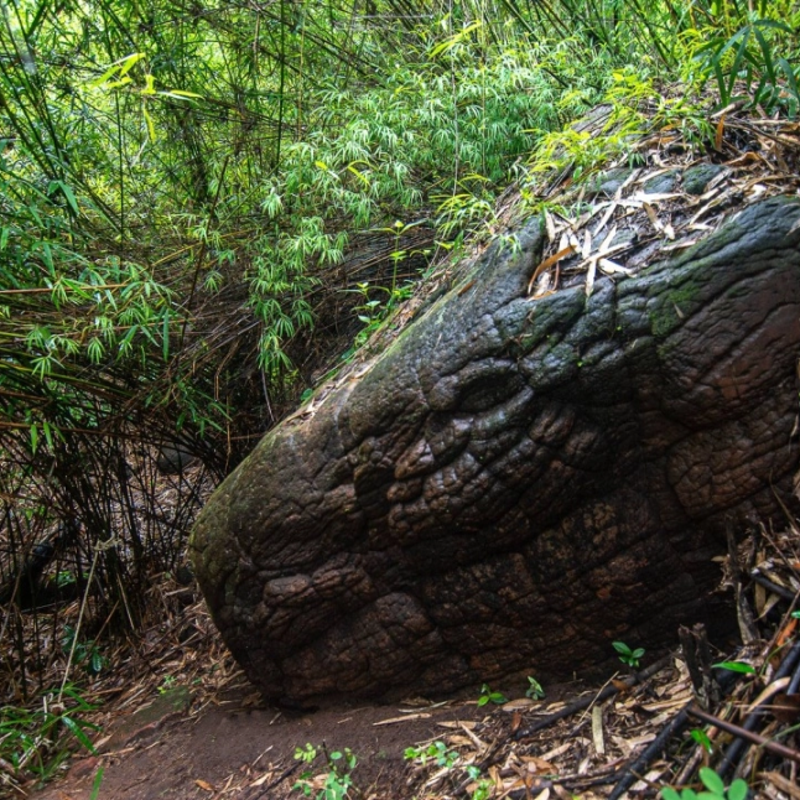
A detailed guide to hiking the Naga Cave, combining physical challenges with ...

Sailorr and Molly Santana’s black grills fuse hip-hop swagger with homage to ...

Treat your favorite furry companion some stylish goods Did you ever think ...

Thai filmmaker Apichatpong “Joe” Weerasethakul receives France’s highest honour, the Legion of ...

Woralun Boonyasurat has spent her career preserving, reviving and bringing Lanna culture ...
Wee use cookies to deliver your best experience on our website. By using our website, you consent to our cookies in accordance with our cookies policy and privacy policy


