Weekend Getaways
7 Must-Visit National Parks in Thailand and How to Explore Them
Escape Bangkok for Thailand’s 7 best national parks. Discover wildlife, culture and ...




Ever felt so completely overwhelmed by the 9-to-5 grind that you just want to pull the plug on your own brain for an hour? Not to achieve enlightenment, but to simply sit there, jaw slack and all.
If you’re a professional lollygagger looking to master the art of zoning out, the Commons & Bonfire team has you covered. This Saturday, 4 July, from 5pm to 6pm, they are hosting an event at Lumphini Park that gets straight to the point: “just sit and do absolutely f*ing nothing.”

Yep, you get thirty minutes alone in your own head before everyone catches up to discuss the experience. Whether you’re just rescuing your eyes from a screen or trying to “resist capitalism,” as the organiser puts it, it shapes up to be an oddly fun hangout for like-minded people who all want the same thing: a bit of peace of mind.
There are two great meetup options: the Monitor Lizard Statue (https://maps.app.goo.gl/DRJdeTrSMBpUFAkU6) or the lawn near the Chinese Pavilion (https://maps.app.goo.gl/it2scLg3GJLA1TcH6). For the latest rules and updates, check their Facebook or Instagram pages.
There’s a real point to the pointlessness of this collective idling. Koktail explores the benefits of hitting a pause button. In a world that demands you always be busy, choosing to do absolutely godd*mn nothing isn’t lazy – it’s a genuine way to save your wretched sanity.

The event post cracks a great joke about inviting you to become a “burden to the country’s GDP.” Comparing a group of people sitting blankly to macroeconomics is hilarious, but the underlying truth is brutal: modern hustle culture completely dumps mental health for the sake of output.
This endless overworking is a slow-motion disaster for your body and mind. It brings to mind the Japanese concept of karoshi, or death by overwork. The corporate rat race pushes people so far into the red that the stress becomes dangerous, leaving everyone completely fried.

Among young people in China, tang ping (“lying flat”) has become a symbol of rejecting the demands of the 996 work culture. Instead of chasing the illusion of upward mobility, they opt out of a system that demands constant labour for ever-diminishing rewards. Their refusal responds to neijuan (“involution”), a cycle of hyper-competition that breeds exhaustion rather than progress.
Doing nothing, then, is not simply an absence of action. Rather, it is a powerful antidote to burnout because it interrupts the cycle of productivity. To sit alone, free from deadlines and demands, is to give oneself permission to exist without producing. In that stillness, burnout begins to loosen its grip.
Doing nothing can be profoundly restorative. Meditation, for example, encourages us to observe our breath and passing thoughts until the mind settles into rhythmic silence. As work-related productivity becomes increasingly toxic, the Dutch philosophy of niksen – doing nothing without a goal – has gained popularity in recent years. Stepping outside the demands of use value, of both using and being used, can be one of the most productive things we do for ourselves.

Doing nothing offers an opportunity to resituate and recontextualise oneself: to pause long enough to navigate one’s thoughts, reassess priorities and regain a sense of direction. It creates space to reflect both on what one is doing and on what one could be doing, not in some distant future but in the next hour or even the next fifteen minutes.
In this way, moments of stillness sharpen rather than dull our awareness. They allow us to act with greater intention instead of simply reacting to the demands of the day, reminding us that clarity often emerges not from constant activity but from the willingness to be still.
For Gen Z, the phrase “rawdogging” has taken on a new meaning, often referring to enduring an experience – such as a long flight or a commute – without the distraction of a phone, music or other digital entertainment. In an age of digital burnout, where our attention is constantly pulled toward glowing screens, choosing boredom can be unexpectedly restorative.
This idea echoes a longstanding insight in Buddhist thought: to be fully present is far more difficult than it seems. Our minds drift toward the past, replaying what could have been, or leap ahead to imagined futures. Digital technologies intensify this tendency. Notifications, likes and the pursuit of online validation fracture our attention, replacing sustained presence with an endless stream of interruptions.

“Rawdogging boredom” means encountering the world directly rather than through the scripts and prompts of digital platforms. What social media often offers is not experience itself but its simulation – a curated, compressed version designed to capture attention rather than deepen perception.
Real experience can only be lived in the present and remembered later as memory. It cannot be fully anticipated, filtered or consumed through a screen. To embrace boredom is not to reject experience but to recover it. It is, perhaps, another way of learning how to live – to experience the experience itself.

Escape Bangkok for Thailand’s 7 best national parks. Discover wildlife, culture and ...
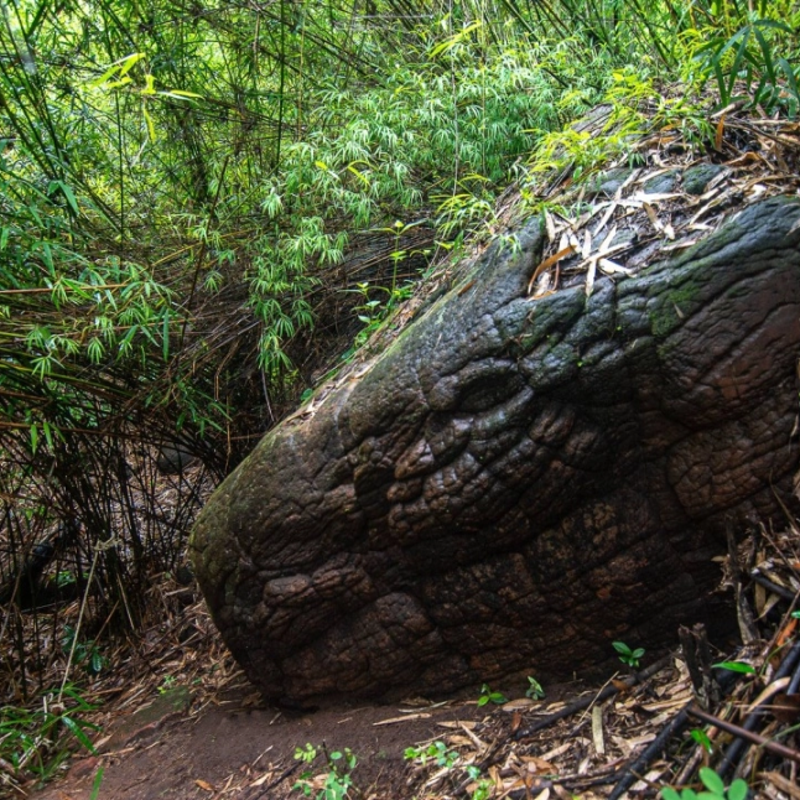
A detailed guide to hiking the Naga Cave, combining physical challenges with ...

Sailorr and Molly Santana’s black grills fuse hip-hop swagger with homage to ...

Treat your favorite furry companion some stylish goods Did you ever think ...

Thai filmmaker Apichatpong “Joe” Weerasethakul receives France’s highest honour, the Legion of ...

Your guide to Bangkok in October, with Halloween events, art exhibitions, film ...
Wee use cookies to deliver your best experience on our website. By using our website, you consent to our cookies in accordance with our cookies policy and privacy policy


