
Weekend Getaways
7 Must-Visit National Parks in Thailand and How to Explore Them
Escape Bangkok for Thailand’s 7 best national parks. Discover wildlife, culture and ...



What remains after a performance ends? There may be no physical object to take home or photograph that captures the full experience. What stays are the emotions, impressions and questions it leaves behind.
Performance art takes many forms, using the body, movement, objects and interactions with space to communicate ideas. Though part of contemporary art, it remains less familiar in Thailand. Artist Pitchapa “Namoon” Wangprasertkul offers a closer look at the medium through her performances and installations, which explore the social and political structures behind everyday life, from labour and economic insecurity to the systems that shape how we live.
Art was part of Namoon’s childhood, although finding her own artistic voice took much longer. She spent many afternoons drawing for competitions, often following designs set by teachers. As she grew older, she experimented with painting, illustration and graphic design, yet none felt quite like her own.
A turning point came in 2018, when she worked as a gallery guide at the first Bangkok Art Biennale. An exhibition featuring Marina Abramović introduced her to performance art. Visitors were invited to try Abramović’s exercises, from sorting black beans and rice to standing still with their eyes closed. Namoon guided visitors through these activities and tried them herself. She was struck by the emotional responses the exercises could provoke.
“I felt that performance art had a stronger effect on me than other art forms. I remember standing still with my eyes closed and suddenly having so many thoughts come to mind that I felt like crying. It was an intense experience and I realised this was the form of art I was drawn to.”
The encounter gave Namoon a way to express her own ideas.
Politics became an early subject in Namoon’s work, particularly during a period of growing student activism in Thailand.
“When I first started doing performance art, I was interested in politics, democracy and gender equality. But what interests me more broadly is how political and economic structures affect our everyday lives. Even the way we live, the food we eat and the hours we sleep are shaped by these forces, whether we realise it or not.”
“My process starts with looking inward. I reflect on emotions such as sadness or frustration, then trace them back to their causes. If I feel exhausted from work, for example, I ask whether others share the same experience. I try to connect my personal feelings to wider social issues and show why they matter to others, too.”
This process helps her move beyond individual stories towards issues that affect a wider community.
Over time, this gradually led her to performance art, where she found her own artistic language to express her thoughts and emotions. Here are four projects that reflect this journey.
Created from her experience at an advertising agency, The Standard by Namoon examines how social expectations and economic pressures shape life. Long hours and weekend shifts made her question how deeply her identity had become tied to professional demands. To explore these realities, she spent a month inside an 80-centimetre glass box furnished with essential items, following an eight-hour routine for 20 days. Through this experiment, she examined how the body and mind adapt to confined surroundings, eventually finding familiarity within the enclosure. The project raises questions about privacy, personal boundaries and how people gradually accept conditions that compromise their quality of life.
“With The Standard, I wanted to represent my own experience and the lives of urban workers. I have rarely seen artworks that reflect the everyday realities of people like us.”
As part of Early Years Project #8: Be Your Own Island at Bangkok Art and Culture Centre, Namoon explored memories of domestic violence through Things Left to Forget (2025). She recreated five objects linked to her childhood experiences–a bathroom, pillow, steering wheel, nails and clothes hanger. She then sewed these materials into new forms with everyday household fabrics such as curtains and towels, changing the objects’ original functions to remove their potential to cause harm. The project also extended into a live performance, Things that Stay, in which she spent eight hours inside an oversized pillow made from discarded fabric. The work reflects how traumatic memories remain with survivors, often resurfacing through the body long after the violence has ended.
Like Water was Namoon’s first internationally presented project, shown in Indonesia as part of Bertutur 2024. Inspired by Bali’s traditional Subak irrigation system, which promotes shared water management, the project explored how resource distribution reflects power relations. Drawing on childhood memories, Namoon recreated a game in which children dig channels in a sandpit to form a lake after rainfall. Participants could direct the water or block its flow by building dams. Through this playful activity, she connected childhood experiences with real-world water conflicts, highlighting how access to natural resources shapes relationships between communities.
Last but not least, we come to Namoon’s latest work Please Come Visit My Country, which also points towards a subject she wants to explore further: overtourism. During a month-long residency in Athens in May, she became interested in how tourism advertising shapes the image of a destination. She noticed that advertisements for both Athens and Bangkok often portray the cities beneath clear blue skies, promising visitors sunshine and warm weather. She collected blue objects discarded on the streets and used them to recreate an artificial sky, reflecting on the environmental and cultural effects of tourism. In a related performance, Please Come Visit My Body, she painted elephant motifs onto her body and turned herself into a tourist attraction. Both works open up questions about how tourism reshapes places, cultures and people.
“Although Thailand depends on tourism, I don’t hate tourists. We still have to welcome them. But seeing protests against tourism abroad made me more interested in how it affects everyday life and local culture. It’s something I want to continue exploring, especially how tourism shapes the things we come to recognise as part of our culture.”

Escape Bangkok for Thailand’s 7 best national parks. Discover wildlife, culture and ...

Experience BBC Planet Earth III Live in Concert at Wat Arun on ...

Experience the magic of Vijit Chao Phraya 2026, as Bangkok's iconic river ...
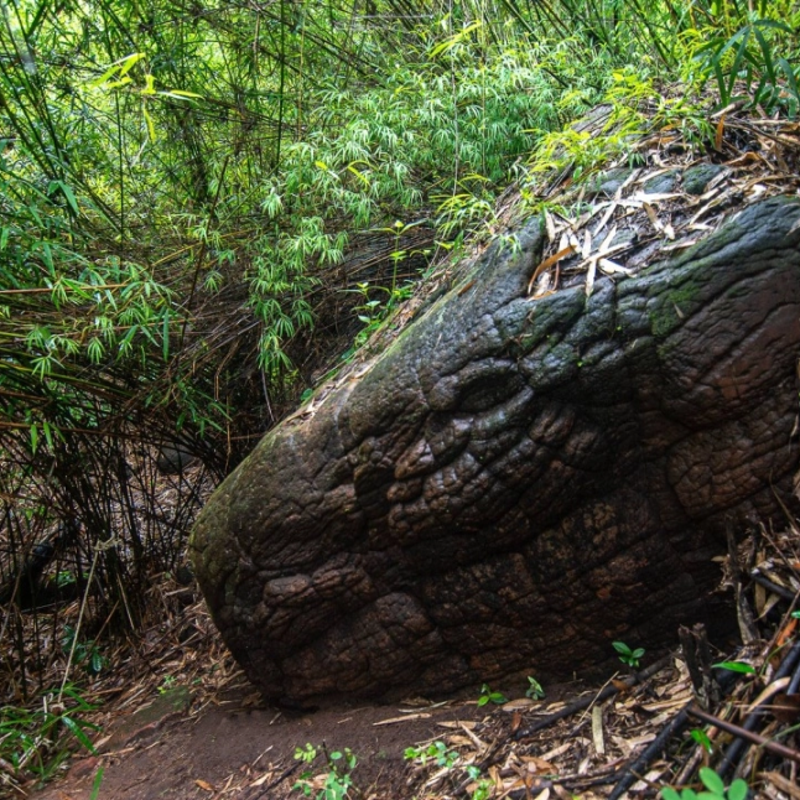
A detailed guide to hiking the Naga Cave, combining physical challenges with ...

Sailorr and Molly Santana’s black grills fuse hip-hop swagger with homage to ...

The timeless elegance of Thailand’s beloved queen, whose grace and vision shaped ...
Wee use cookies to deliver your best experience on our website. By using our website, you consent to our cookies in accordance with our cookies policy and privacy policy


