Weekend Getaways
7 Must-Visit National Parks in Thailand and How to Explore Them
Escape Bangkok for Thailand’s 7 best national parks. Discover wildlife, culture and ...




Maybe the most meaningful voyages aren’t the ones that take us somewhere far away. Sometimes, it’s those that lead us home.
Sompot “Boat” Chidgasornpongse is coming home at a significant moment. After taking an international festival route, 9 Temples to Heaven (2026) he returned to Thailand with a place in the country’s Oscar race.
Written and directed by Boat, 9 Temples to Heaven is his first narrative feature. Its journey from Cannes to the international festival circuit and now back to Thailand is an undeniable achievement for a first feature. The film has been selected as Thailand’s official submission for Best International Feature Film at the 99th Academy Awards. Behind this moment is a career built across film, from documentary to fiction, with cinema at the centre.
The film’s premise gives us a reason to look back at Boat’s own journey. Instead of asking what comes next, we return to where things began. From childhood favourites and early dreams to the films that stayed with him along the way, we trace his life through five films tied to different moments in his earlier life.
It is less a filmography than a portrait: a cinematic remix of Boat himself, told through the films that brought him to the present..
Boat’s relationship with cinema started with a simple love of watching movies.
“It really came from loving films. My parents took me to the cinema when I was a kid, so I grew up watching movies. The more I watched, the more I started to think that I wanted to make films too.”
Aladdin was the film that made that feeling clear.

Around the age of 10, Boat watched Aladdin again and again, as much as 40 to 50 times, until he could remember all the dialogue. At that age, he had yet to understand how a film was made. He simply knew that he loved what he was watching and wanted to see it again and again.
That curiosity slowly turned into something more. With a VHS tape, he would frequently pause the film, trying to follow the movement on screen. He drew, made flipbooks and experimented with animation of his own.
Only later did he begin to understand what was happening behind the images he loved. The characters had to be drawn frame by frame. Someone had to design the scenes, create the voices and bring all those pieces together to make the characters feel alive.
“I think Aladdin was the first time I realised that cinema was something special and that I wanted to be one of the people behind it. I started thinking about how the images I was watching were made. Someone had to draw every frame to make the characters come alive. There were people designing the scenes, creating the characters and doing the voices. I realised there was so much happening behind the film I was watching.”

The love of drawing and art stayed with Boat as he grew older. He studied in the science stream yet wanted to become an animator. Thailand had few animation schools at the time, so architecture became a substitute path, with its mix of art, design and technical thinking.
While he studied architecture, Boat took a film appreciation course from the Thai Film Foundation and the National Film Archive. There, he first encountered Abbas Kiarostami’s Where Is the Friend’s House?

This film centres on a young boy who tries to return his friend’s notebook. A simple mistake becomes a journey through everyday life in Iran.

“I remember thinking, ‘A film can be this simple?’ It was just a child trying to return his friend’s notebook, but it felt so special. It made me realise that a film could take something very simple and make it meaningful.”
The film gave Boat a new way to see cinema. A simple journey could carry something much larger, an idea that echoes in 9 Temples to Heaven. The film takes a family of nine on a one-day pilgrimage to nine temples, with the hope that their merit might prolong their grandmother’s life. The journey takes an unexpected turn and draws from Sompot’s own experiences with his family.

“I think I was influenced by Kiarostami in some way. A lot of his films involve journeys. You are in a car, you see the landscape, you see people and you experience the place along the way. I think that idea of travel answers something I am interested in.”
Boat sees people as part of the places around them. Home, neighbourhood and social context shape how people live and see the world. Travel gives him a way to explore that relationship. A long journey creates space for conversation, reflection and a closer look at the world outside.
“When we travel, we get to explore a place through time. When you travel far, you see different environments and different social contexts. Sometimes you travel alone and have time to think. Sometimes you travel with someone else and conversations happen along the way.”

By this point, Boat already knew he wanted to work in film. What he had not found was a filmmaker who made him think, I want to learn from this person. Then he watched Apichatpong “Joe” Weerasethakul’s Blissfully Yours.

He had never seen a Thai film quite like it. The unfamiliar actors, ordinary setting, long stretches of time and sense of a journey all felt completely different from what he knew.
“I was shocked because I had never seen a Thai film like this before. It was strange. The actors were people we didn’t know, very ordinary people. The story had a journey in it, and sometimes the film would stay with a moment for a very long time. I had never seen a Thai film like that. It stayed in my memory.”
After he finished with architecture, Boat decided to enter the film industry and asked Joe if he could become an intern. His first project with Joe was The Adventure of Iron Pussy (2003), where he got his first experience of working on a film set.

At the time, independent Thai cinema had limited space. Joe had to find international partners and funding, while his films often challenged what audiences expected from Thai cinema. Boat watched him stay true to his ideas despite that resistance.
“I think that was one of the biggest lessons I learned from Joe. He had the perseverance to create his own path. He kept making the films he believed in, even when people didn’t understand them.”
That lesson stayed with Boat: find your vision, then have the courage to stand by it.
Tropical Malady was a turning point in Boat’s path into cinema. It was his first film as an assistant director and the first time he had a place inside the making of a feature film. He was there for the casting, rehearsals, schedules and shoot, from the script to the final day on set.
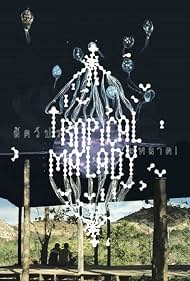
For someone who had spent years watching films and trying to understand how they were made, this was the moment he finally stepped inside one. So when the film premiered in Thailand, he thought he knew exactly what he was about to see.
He was wrong.
Sitting with the cast and crew, Boat watched Joe reshape the film in the edit, move scenes around and create something that felt almost unfamiliar. He knew every shot on screen, yet somehow forgot that he had helped make it.
“I was involved in every process, even the casting. I knew the script, I knew the scenes and I was there during the rehearsals and the shoot. But when I saw the finished film with the cast and crew, I was shocked. Joe had changed so much in the edit. It felt like a completely different film. I forgot that I had been part of it.”
The experience showed Boat the power of cinema. The first half tells a quiet love story between two men in rural Thailand. The relationship feels ordinary within the world of the film, something that was still rare to see in Thai cinema at the time. Then the film shifts into the forest, where the story takes on a darker and more psychological form.

“It felt like the second half explored another side of the first half. The first half was about ordinary life, while the second half went into the psychology of love, obsession and the things we cannot escape.”
The effect stayed with him long after the screening.
“The film affected me in a way I had never experienced before. It was complex, both in thought and emotion. The images, light and atmosphere all had such a strong effect on me.”
The fifth film takes Boat back to family, to home and to something familiar. Yasujirō Ozu’s Tokyo Story follows an ageing couple who travel to Tokyo to visit their children, with family, ageing and social change at its centre. It is close to the world Boat knows from 9 Temples to Heaven.

“Ozu made so many films about families. You could feel like you were seeing the same story again and again, but every film was special. His style was so clear. Somehow, every story was different.”
Ozu’s influence appears in a small detail in 9 Temples to Heaven. His famous “tatami shot” places the camera at the eye level of someone seated on the floor. Boat uses a similar perspective when his characters sit on the carpet inside temples.

“Actually, I thought about Ozu when we shot those scenes. His Japanese characters sit on the floor at home, so the camera is at the same level. In our film, the characters sit on the temple carpet, and the camera comes down to that level too. In a way, it is a small homage to Ozu.”

After its world premiere in Directors’ Fortnight at Cannes, 9 Temples to Heaven travelled through international festivals before returning to Thailand. It became the first Thai film in 19 years to screen in the section, after Pen-ek Ratanaruang’s Ploy in 2007, and went on to receive awards in Shanghai and New Zealand. It is now Thailand’s official submission for Best International Feature Film at the 99th Academy Awards.
“The film has come much further than I expected. For me, if we can make the film as well as we intended, that is already a success. Everything after that is beyond our control. I’m proud and happy for the whole team and the actors. To represent Thailand at the Oscars is a great honour, and something I never expected.”
The five films take Boat from childhood wonder to the world of cinema, then back to the things closest to home: people, family, space and the places that shape us. 9 Temples to Heaven has travelled far, yet its heart remains with the same things he has always been drawn to.
“I don’t want to fix myself to one path. We don’t know what the future will be. I just follow my instinct, my passion and my drive. Whatever comes next, I think it will still connect with the things I care about: people, space and social context. At least for now.”

Escape Bangkok for Thailand’s 7 best national parks. Discover wildlife, culture and ...
A detailed guide to hiking the Naga Cave, combining physical challenges with ...

From Lisa and Lingling Kwong to Nene Royal and Asian Games champions, ...

Sailorr and Molly Santana’s black grills fuse hip-hop swagger with homage to ...

Treat your favorite furry companion some stylish goods Did you ever think ...

Thai filmmaker Apichatpong “Joe” Weerasethakul receives France’s highest honour, the Legion of ...
Wee use cookies to deliver your best experience on our website. By using our website, you consent to our cookies in accordance with our cookies policy and privacy policy


