Weekend Getaways
7 Must-Visit National Parks in Thailand and How to Explore Them
Escape Bangkok for Thailand’s 7 best national parks. Discover wildlife, culture and ...




Did you know Sompot “Boat” Chidgasornpongse’s latest feature took almost a decade to make? From honing the script from the ground up in countless workshops to securing funds and global collaborations, 9 Temples to Heaven has been on a pilgrimage of its own. The film – a story about a family’s merit-making race to nine temples against the clock of mortality – was selected as Thailand’s official submission for Best International Feature Film at the Oscars.
Produced by At A Time Pictures and Kick the Machine Films, this Thai family drama with a dash of deadpan humour has been making the rounds on the festival circuit. But now, it’s coming back home to theatres across Thailand. But how has it been received among Thai and international audiences? Do Thai moviegoers relate to it, and do international viewers “get it” amidst the merit-making rituals, the chants and the pouring of water? And what were the difficulties of filming inside such tight car spaces as the characters travel from one temple to another?

In this episode of Koktail Konversations, we sit down with Boat to unpack it all, from initial conception to official release, exploring how the story draws from his own childhood memories and touching on some universal themes that resonate with viewers from any family background.
Although he graduated with a bachelor’s degree in architecture in 2002, Boat always felt a curious inclination toward the film world. He first interned on the set of The Adventure of Iron Pussy (2003), directed by Apichatpong “Joe” Weerasethakul and Michael Shaowanasai. From there, he continued to be involved in Joe’s productions, working first as second and then first assistant director alongside the auteur. After achieving an MFA in Film/Video from California Institute of the Arts, Boat was primed to set his sights on his first full-length directorial effort, the documentary Railway Sleepers (2016).
The idea to develop 9 Temples to Heaven started there, but the idea of the film itself goes way back to his formative years, when his family would take him to make merit at temples around Samut Prakan, not unlike the death-anxious family in the film. Even a trip to nine temples is something he has done himself.
“I had the idea for a while. It took around nine or ten years to develop this film. But the idea came even before that, because I grew up in a family that liked to go to temples and make merit like this too. My grandmother also liked going to temples. Going on nine-temple merit trips was something my family did as well. So whenever I went, I felt there were many interesting things happening, so it became an idea I wanted to make into a film.”

But going on such a trip – a family holy pilgrimage – requires one to sit inside a car for a long time, an aspect which is also reflected in the film. Nine temples is quite a lot and can be exhausting. There are many scenes in the film where the camera is placed alongside the characters as they discuss their troubles and concerns with one another, sometimes with those discussions turning quite intense. The logistics of it, as Boat explains, are harder than they look. Although the interactions on the screen come across as natural, there’s a degree of artifice. It is filmmaking, after all.
“It was difficult, because actually driving looks simple on the surface, doesn’t it? But behind the scenes, many filmmakers might have seen that you need tow trucks, trailers, crane trucks, police escorts to lead the way and so on. We were shooting inside, where the car space was narrow, so the camera had to be outside while the actors were inside. Sound was also a problem because Thailand is hot, so we had to turn on the air conditioning, which made noise. Then there was the glass: how to film without reflections? So what looks simple on screen was actually very complex behind the scenes. Every time we changed camera angles, it was difficult and took time to set up again.”

On the other hand, there’s a tendency to reduce this aspect of artifice with the casting. Most of the cast are non-professional actors who work regular jobs; some own businesses of their own. Working in such an environment, the actors deliver performances that come across as ‘natural’ and not as dramatic or theatrical as one would expect to see in a film. The actors are kept away from some information, only learning their lines. This highlights the spontaneity of their interactions, which feel as real as it gets.
“The main family members already account for nine people, plus monks at various temples and others. Most of the actors were non-professionals. Some had done supporting roles in films or series before, but many had never acted at all. Preparing them took quite a lot of time. We brought the actors in for workshops, which meant talking, rehearsing lines together and improvising. We tried to figure out how to make the script we had written sound natural in the actors’ mouths, adapting the dialogue to suit each actor, and combining their real-life stories with what I had written. This was to make everything natural and realistic, creating an atmosphere where the actors felt they could be themselves as much as possible.”

One of the film’s key themes seems to be the importance of mindfulness, which Buddhists generally view as achievable through a daily practice of meditation. One of the scenes that has everyone talking is one in which a character reflects on his experience with meditation. This experience, as Boat tells us, is his own.
“I think that one of the teachings of Buddhism that is very interesting to me is meditation and mindfulness. I feel it’s a teaching that isn’t just for Thai Buddhists. When studying Buddhism from a Western perspective, you find that people over there also focus a lot on meditation. It has become widespread to the point where many people say Buddhism is a practice they do,”
Boat says.

“In that sense, mindfulness is a key element of Buddhism. The film touches on this, because besides my own interest in practicing meditation, I felt the film itself, beyond discussing this issue, should reflect this through cinematic imagery. The spirit of the film itself takes on the role of creating space for viewers to feel this as well. At certain moments, the rhythm of the film gently nudges the audience to become mindful.”
This ongoing reflection, to sit in one place for a long time, is captured in the meditative cinematography of the film, with its static shots of the road as it passes by, and lines of trees and Buddhist architecture that seem to be reduced to tunnel vision as the character’s car accelerates to the next temple. But each temple has its own identity; it cannot be just any temple, but has to be the result of painstaking location scouting by the team. Boat knows Samut Prakan from the inside out, and he wanted to capture it on film. But this is not to say that it’s an easy task.

“All the temples were located in Samut Prakan, which is my home province. One condition I set for myself was to shoot entirely within Samut Prakan. I felt Samut Prakan is an interesting town, a transit city, like a gateway to Bangkok. It’s a suburban province that plays a huge role in the country because it has many factories and industrial sites, to the point of being in the provincial motto. It’s a city that, during colonial times, was a transit town at the river mouth; nowadays it’s still a transit town with Suvarnabhumi Airport where flights pass through. It has always been a transit city,”
he further explains.

“I feel the film is also talking about passing through to another life. It’s a space where traditional Thai beliefs clash with Western beliefs, tradition colliding with new modern thinking. Feeling it was an interesting city, I wanted to present this in the film. We scouted over 70 temples, and in the end we filmed at about 11 or 12 temples. We chose temples that not only reflected Samut Prakan but also had historical significance or importance to local people. For example, some had main stupas, some had interesting mural paintings, and some had murals conserved by the Fine Arts Department.”
9 Temples to Heaven first premiered at the Cannes Film Festival, and then went on to Melbourne, Sydney, Shanghai and Finland, winning awards in some. Most recently, it has been selected as Thailand’s Oscar entry for Best International Feature Film. The reception among both Thai and international audiences, as Boat confirms, has been great, but in different ways.
“We were worried foreigners wouldn’t understand, but actually they do. They might not understand specific rituals like Sangkhatan offerings or pouring water, but in the overall context, they understand family, relationships, travelling for loved ones or trying to extend a life through religious ceremonies. They just might not be familiar with the ritualistic actions. So the film presents daily life that is normal to us but novel to them, and their response reflected that.

“Meanwhile, Thai people after the premiere screening deeply understood the characters, connected themselves with the family members in the film, and many said it felt like seeing their own family. It connects closely with Thai people because we made the film for Thai people too. There are nuances, jokes and situations that only Thai people would fully get, and seeing their reactions showed that Thai people really understand it on a deep level. Seeing everyday life that seems so ordinary appear on the big screen brings a special thrill.”
But it is Thailand where the film is meant to be shown, as it is rooted not just in Theravada Buddhism as it exists in its present form, but in Thai family dynamics and how parents, children, grandchildren and so on regard one another.

“I feel very happy, because this is a Thai film telling a story about Thai people and the Thai way of life. The most appropriate place for this film to screen is Thailand. I’m glad the film has finally come home to Thai audiences.”
So here’s the invitation to all from the director:
“I’d like to invite everyone to come and see 9 Temples to Heaven. It released on 17 September and is currently showing nationwide in Thailand. You can check showtimes on our page @atatimepictures. It’s available in all major cinema chains. As I said, it’s an easy-to-watch film made for you! You can easily relate to the characters or your own family members through it, so please come and see it in cinemas!”

For the full interview, check our video on Koktail’s Instagram, Facebook, TikTok and X channels, or watch it below.

Escape Bangkok for Thailand’s 7 best national parks. Discover wildlife, culture and ...
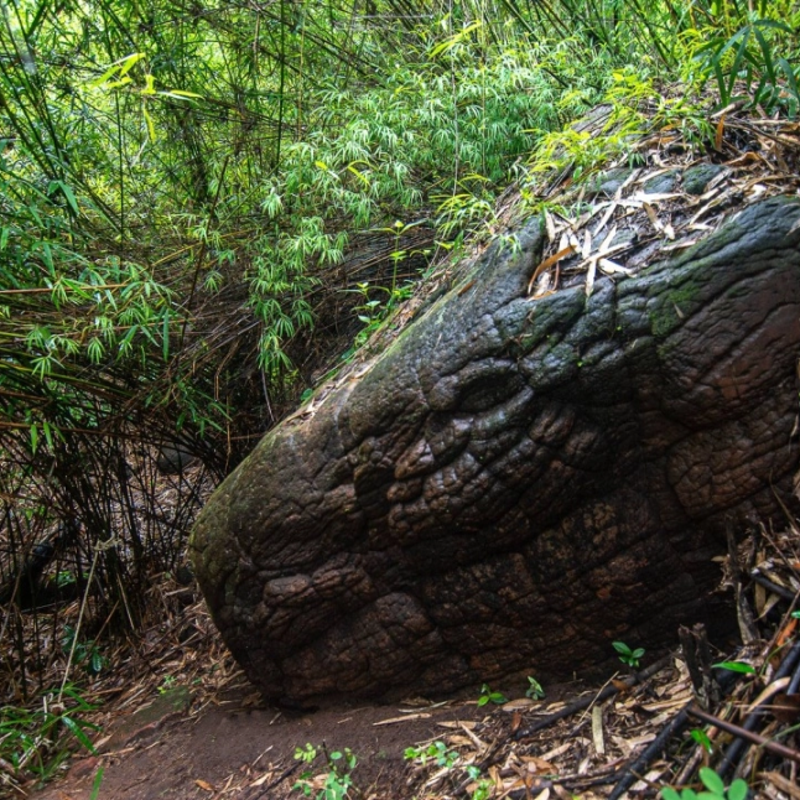
A detailed guide to hiking the Naga Cave, combining physical challenges with ...

Thai filmmaker Apichatpong “Joe” Weerasethakul receives France’s highest honour, the Legion of ...

Sailorr and Molly Santana’s black grills fuse hip-hop swagger with homage to ...

Treat your favorite furry companion some stylish goods Did you ever think ...
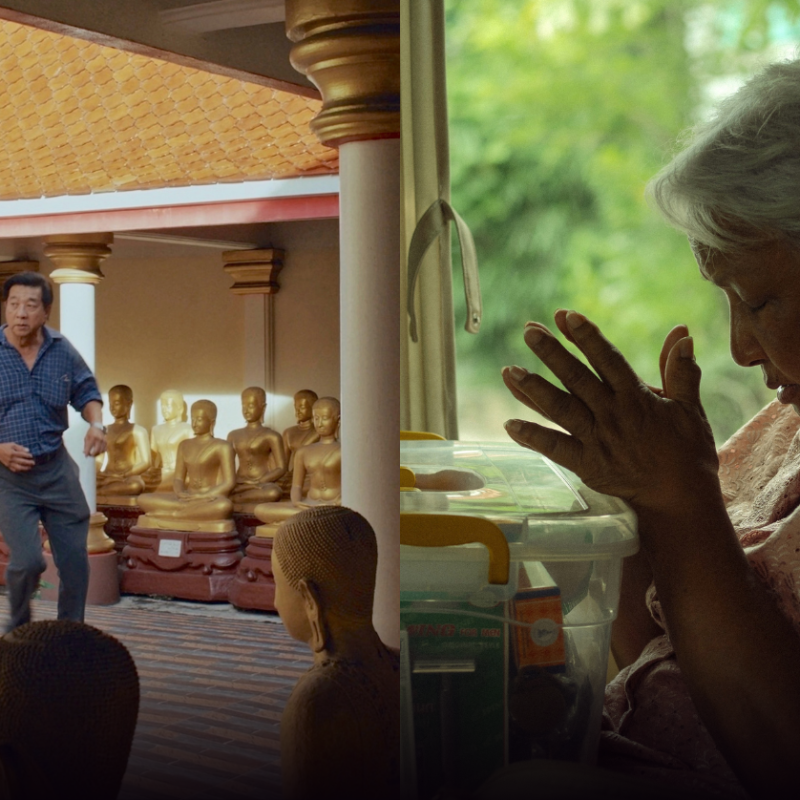
Tanat Sangaramya reviews 9 Temples to Heaven, Sompot Chidgasornpongse's new film on ...
Wee use cookies to deliver your best experience on our website. By using our website, you consent to our cookies in accordance with our cookies policy and privacy policy


