
Weekend Getaways
7 Must-Visit National Parks in Thailand and How to Explore Them
Escape Bangkok for Thailand’s 7 best national parks. Discover wildlife, culture and ...


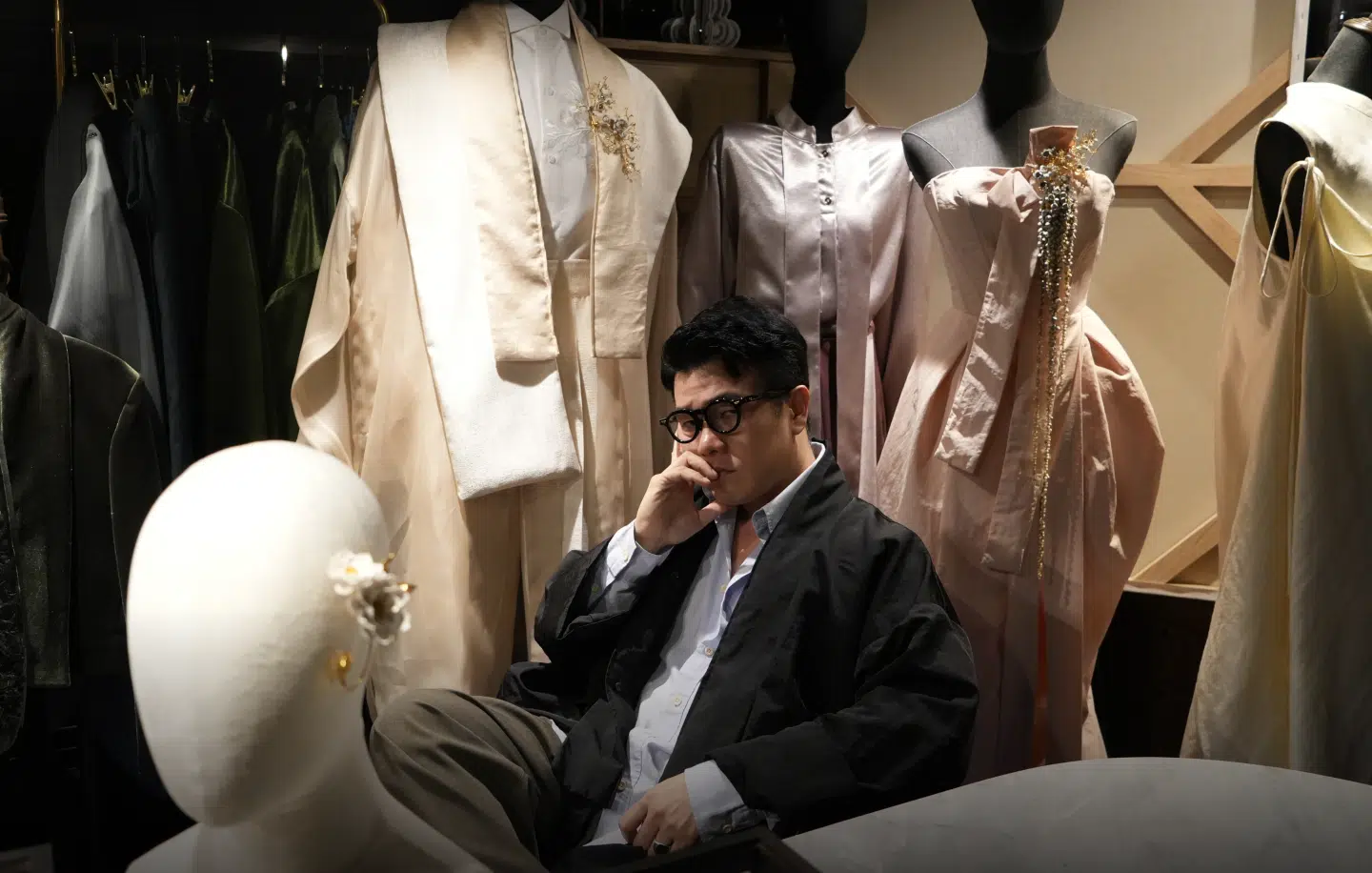
The beauty of craftsmanship in Thai culture lies in its patience, detail and devotion. Every process carries a story where hands, memory and tradition shape what becomes art. It is a language of creating where beauty and meaning live within every layer.
As Koktail celebrates this spirit through its second digital cover with River City Bangkok, we revisit the work of Sarran Youkongdee, founder of SARRAN, whose jewellery is featured on the cover. His journey has grown in recent years, marked by LISA’s TAT campaign and New York Fashion Week 2026.
Sarran’s practice moves across jewellery fashion and installation where craft becomes narrative and memory becomes structure. From here the story enters his secret garden, a world shaped by childhood memories of Thai flowers and everyday craft. A place where beauty is seen, lived, carried and reimagined through his hands.

“My interest in jewellery and art comes from a simple life. I grew up watching my mother wake early to bake cakes for shops and make flower garlands for weddings. She also sewed, produced handmade items and created traditional crafts for different occasions. She supported our family through this creative work so I grew up surrounded by it.”
If we look back at Sarran’s journey, it did not begin from a love of beauty and creativity, but from a daily routine that became part of his world. He grew up surrounded by art and everyday craft, mostly influenced by his mother and his grandparents. Continuing this creative path felt natural like an extension of the life that raised him.

He learned that every home carries its own craft and value whether it is a pharmacy, a workshop wood carving or home cooking. What feels ordinary in one place can hold beauty in another. For Sarran this became the foundation of his journey and the most important asset in his life. He studied Fine Arts at Srinakharinwirot University, where he continued working in oil and watercolour before expanding into design, which later grew into product design.
“Every artist has something they want to express, whether personal or drawn from past emotions, as a form of release. For me the challenge is to turn my expression into a message people can receive in a world that values beauty. I learned to embed ideas within visual beauty, and that became my understanding of art and design as communication.”
Sarran’s early practice turned ideas into objects such as lamps, home decor and woven works. His path developed through collaborations with women across communities including textile weavers, ceramic makers and local craft groups. Inspiration came from how women in Thai villages pass on craft as a language of beauty much like his mother.

He spent five years in this world gaining awards locally and internationally through competitions. Questions then emerged about how design could move beyond recognition and reach people in daily life. Even with lamps he reflected on how often such objects are used over a lifetime. He aimed to speak about Thai women and their strength while creating work that could exist in their daily lives.
“I see jewellery in my generation as style, while older generations view it as investment, status and security. In Thailand, I often see jewellery bought, sold and pawned not for meaning but for financial need. I wonder if we must give up what we love for financial security.”
Sarran then shifted his approach to jewellery that women can connect with more easily, worn with pride and emotional meaning rather than status alone. It carried his artistic message of love and emotional expression, leading him into jewellery design and the creation of SARRAN.
Sarran’s work carries a Thai visual language shaped by fine art and by everyday craft within his family. These two influences form the foundation of his practice.
His curved linework draws from traditional Thai painting, where an S-shaped flow appears across drawings and structures, becoming a signature across his jewellery and objects. Alongside this, floral motifs emerge from personal memory and family life, grounding his work in experience. His approach sits in art to wear, where art and design meet through jewellery.
“I grew up in a small secret garden of my family near Kamphaeng Saen, surrounded by Thai flowers and herbs passed down from my grandparents. My grandmother used plants as medicine and daily healing so I learned to see flowers as something more than decoration but as care and memory. The garden became my safe space. When I feel tired or lost I return to that sense of smell and nature as a form of comfort. This idea became the foundation of my work.”
Since childhood his connection with flowers has been about healing and memory. It feels natural for him to bring them into his work, especially Thai flowers because that is what he grew up with. He sees them as a way to tell stories about Thai women and their strength, and as motifs that carry a sense of healing, much like the way flowers have healed him.

“In creating a flower or a piece of work, I like to start from the women’s perspective because their experiences and emotions feel different. I see how women carry both work and family and hold many forms of pressure at once. I think about how my work can bring them some sense of ease even if they only see it or spend a moment with it.”
Within Sarran’s secret garden, the mali or jasmine stands as one of his favourite flowers. It was the first flower that led him to build his brand and the one that ties him back to his family, especially his grandmother and his mother.
“When I was young I woke at five each morning to pick jasmine for my mother and grandmother to make garlands for temple offerings. What felt strict and repetitive became my first lesson in flowers from handling them with care to arranging and understanding colour.”
He remembers picking jasmine at five in the morning. Over time, he noticed jasmine shifting in hue at dawn from white to soft violet, grey and blue as light entered the sky. From these early mornings, he later defined the moment as 05.09, a colour drawn from memory, light and the observation of jasmine at that exact time.

Like the Tiffany Blue represents Tiffany & Co., 05.09 has become a colour code in his jewellery design. He builds it through dots and layered colour inspired by print and digital systems. He uses small oil paint dots, followed by photographic compression. Under magnification, it reveals dense layers like print and TV colour dots. From a distance it reads as white jasmine, but within it holds grey violet and soft purple tones of the mali. These colours translate into floral jewellery, forming sculptural flower-like pieces and wearable forms that define his design language. They feel like coming back home for him, a return to where it all began.

When asked about his proudest achievement, he answers without hesitation: the recent project at River City. It brings back the same nostalgia that shaped his brand.
Sarran first presented the Ambassador collection at New York Fashion Week in February, a collection inspired by Thai diplomatic history and cultural exchange between Siam and Europe. The project explored layered, adaptable garments combining Thai and Western influences for real travel and extreme weather.
This narrative later continued when River City Bangkok invited him to create both a sculptural chandelier installation and a fashion presentation as part of the same event. Responding to the invitation, he developed the Ambassador Returns to Siam, extending the original NYFW concept and bringing it back to Bangkok as a homecoming moment, alongside his installation inspired by dok rak or crown flower, carrying the 05.09 colour tone.
“For this collection, I place jewellery at the centre and clothing as a support system. Jackets and pieces include removable collars and hidden pin techniques designed to hold multiple pins. The garment stays minimal while the jewellery defines expression.

I also created the floral button that acts as a connector for jewellery on clothing, allowing pieces to attach directly. It shifts the look between practical casual wear and a more elegant expression depending on styling. This system creates a single language where jewellery and clothing work together.”
This pushes Sarran’s creative boundaries, leading to strong demand for his pieces and new custom orders. At the core of his work is a focus on carrying a message of love and connection. He wants each wearer to feel that emotion and gain something real from it whether for beauty, expression or function. Each piece is designed to feel close to the body, grounded in personal purpose.


“Going forward I still want to understand people and myself more. I believe art is not only about beauty but about serving people and society. After a recent loss and long emotional pressure I realised I needed to take care of myself first. I use my struggles as a starting point for work that may also help others going through similar situations. The goal is to build work that improves life for others while I maintain my own balance year by year.”


Escape Bangkok for Thailand’s 7 best national parks. Discover wildlife, culture and ...

Treat your favorite furry companion some stylish goods Did you ever think ...

Japan’s famous Tsutaya Bookstore opens at One Bangkok this October 2026 with ...

From fish sauce cookies to mala ice cream, discover the strange and ...

From Chanel in Bangkok to Dior with A24, luxury enters new cultural ...
L’On Art Festival makes its debut in Bangkok with live painting, workshops, ...
 English English
  Thai
Thai
Wee use cookies to deliver your best experience on our website. By using our website, you consent to our cookies in accordance with our cookies policy and privacy policy


