
Weekend Getaways
7 Must-Visit National Parks in Thailand and How to Explore Them
Escape Bangkok for Thailand’s 7 best national parks. Discover wildlife, culture and ...


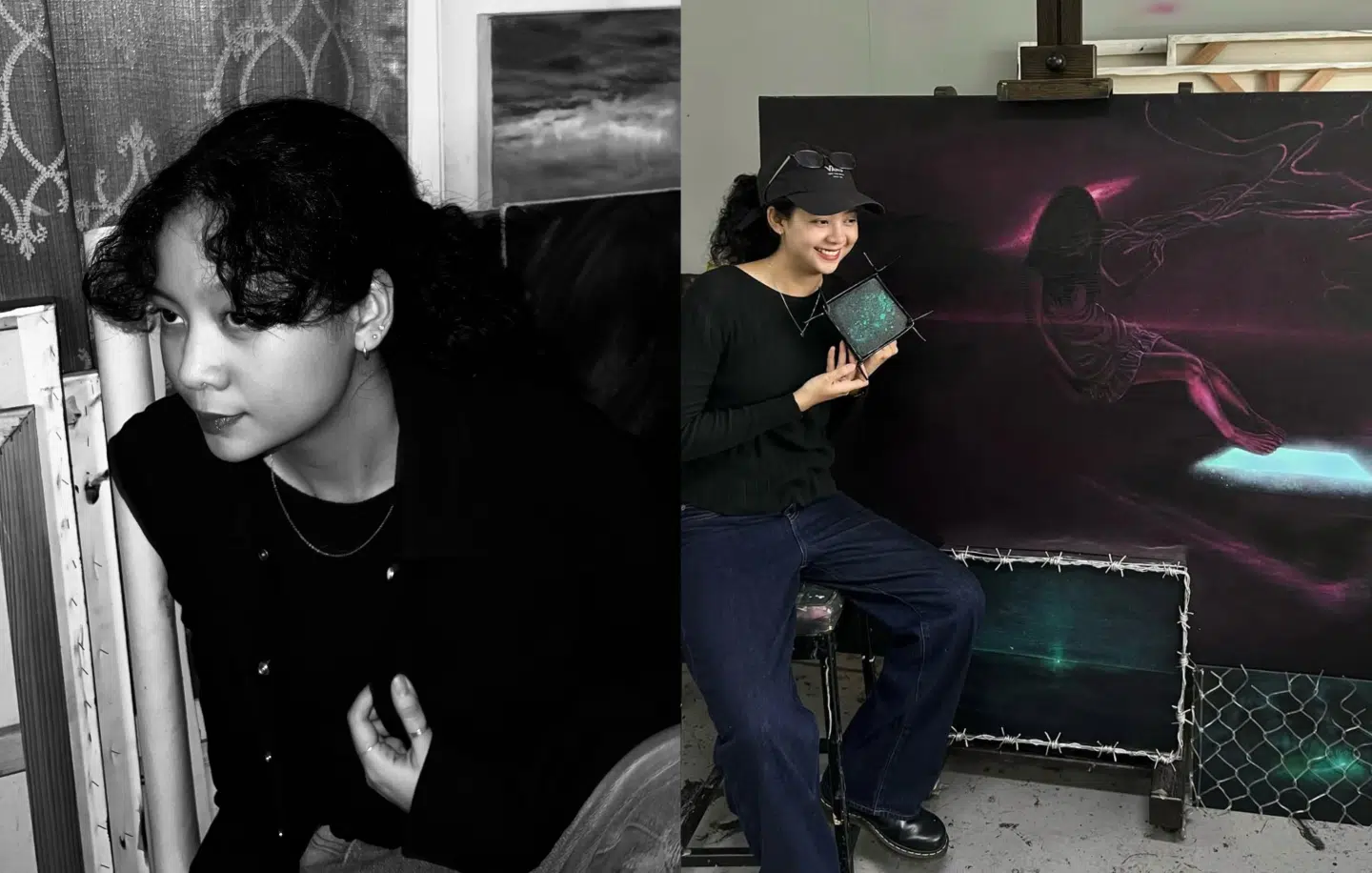
In this feature, Koktail moves closer to the world of art, where meaning and visuals often speak louder than words. Art carries ideas that resist naming that reveal hidden thoughts and unspoken emotion. It does not exist for aesthetic value alone but invites dialogue and leaves space for reflection.
One artist who does this with clarity is Phatnaree Boonmee, a Thai contemporary artist whose work examines social issues through a visual language. As the recipient of the UOB Most Promising Artist of the Year 2024 and 2025, her creations stand out for their intent and precision. We speak with her about technique, process and the reasons her work returns to these themes.
“My introduction to art began in early childhood, when my aunt taught me how to draw. What captivated me most was art’s ability to offer a space for expression without the pressure of excessive rationalisation.”
That early exposure shaped Phatnaree’s bond with art and colour. Academic spaces built on fixed theory never fully held her confidence, while drawing remained the place where certainty came with ease. This path later led her to graduate from the Faculty of Painting, Sculpture and Printmaking at Silpakorn University, where formal training gave direction to her practice and confirmed her commitment to art as a discipline.
“Painting functions as my principal means of articulating emotional and psychological states. I am particularly drawn to the process of constructing composition, applying colour and exploring the integration of different techniques. The two-dimensional surface offers a controlled yet expansive field where I can continually test visual and emotional possibilities.”
What drew Phatnaree towards darker realities came from two distinct but connected places. The first emerged through her interest in real life murder cases and social injustices; stories where victims received no fairness or recognition. These narratives stayed long with her, which left an emotional weight that demanded response.
“Encountering these stories generated a profound emotional response, compelling me to translate feelings of disturbance and empathy into visual form. These themes continue to inform my work as they reflect unresolved tensions embedded within society.”

The second source sits closer to home: personal experience and lived emotion. This direct relationship with memory and feeling allows her images to speak with honesty, rooted in awareness.
“Incorporating personal experiences and surrounding narratives enable a deeper understanding of emotions such as fear, anxiety, paranoia and psychological pain.”
Together, these two forces shape a practice that moves between social observation and inner reflection, where emotion becomes both subject and method.
“My initial engagement with this colour palette was influenced by learning about Yayoi Kusama and her life story, which revealed the systemic oppression of women during her time.”
When you stand before Phatnaree’s paintings, colour draws you in instantly. The compositions avoid loud saturation or excess, instead allowing a focused source of light to stand out against an otherwise muted palette. This contrast anchors the image, where darkness carries weight and light becomes the point of attention. We ask why she turns to subdued and shadowed tones that still allow illumination to take centre stage.
“Colour and light serve as primary tools for guiding the viewer’s emotional interpretation. I am particularly drawn to high contrast, as it intensifies psychological tension and amplifies the underlying themes of the work. Through contrast, emotional states are sharpened and made more immediate.”
That awareness shaped her visual language. It sparked a desire to express an impulse toward escape from restrictive environments, not through literal storytelling but through contrast, tone and emotional charge embedded within colour itself.
Her art resists a fixed structure. At times, a social issue stands at the centre. At other moments, an image or visual instinct leads the piece. These elements intersect and shift together. For Phatnaree, composition and colour carry greater force than linear narrative, as they shape emotional intensity and direct the viewer’s psychological response.
One work that reflects this approach is The Hostile Society. The piece stems from personal experience, specifically exposure to verbal attacks and defamation on social media platforms. These encounters revealed a lack of accountability and empathy within digital spaces. In many cases, hate speech appears as emotional release or casual entertainment, with little regard for its impact on mental health. This realisation became the core motivation behind the work.
Within the image, dark shadows symbolise the spread of hostility across public space. Vulnerability appears through the red hue surrounding a young girl, enclosed by faceless figures that reflect online anonymity. A window frames the scene, acting as the viewer’s lens on society. Through this structure the work seeks to raise awareness, encourage mindful communication and imagine a culture shaped by mutual respect.
“In this painting, green is used in the background to evoke anxiety, unease and paranoia, while red is applied to the female figure to signify victimhood. Simultaneously, red functions as a symbol of resilience and inner strength, allowing the colour to operate with layered and contradictory meanings.”
Phatnaree continues in this direction in her art, with future work focused on social values, power structures and subtle forms of oppression within contemporary society. She seeks to explore how individuals exist within unseen systems of influence, with ideas such as Pierre Bourdieu’s concept of symbolic power as a reference point for her work ahead.
“Rather than offering fixed interpretations, I hope viewers approach my work with curiosity and critical questioning. If it is able to encourage even a modest degree of social awareness or reflection, it has fulfilled its intention.”

Escape Bangkok for Thailand’s 7 best national parks. Discover wildlife, culture and ...

Treat your favorite furry companion some stylish goods Did you ever think ...

Japan’s famous Tsutaya Bookstore opens at One Bangkok this October 2026 with ...

From fish sauce cookies to mala ice cream, discover the strange and ...
L’On Art Festival makes its debut in Bangkok with live painting, workshops, ...

From Chanel in Bangkok to Dior with A24, luxury enters new cultural ...
 English English
  Thai
Thai
Wee use cookies to deliver your best experience on our website. By using our website, you consent to our cookies in accordance with our cookies policy and privacy policy


