Weekend Getaways
7 Must-Visit National Parks in Thailand and How to Explore Them
Escape Bangkok for Thailand’s 7 best national parks. Discover wildlife, culture and ...


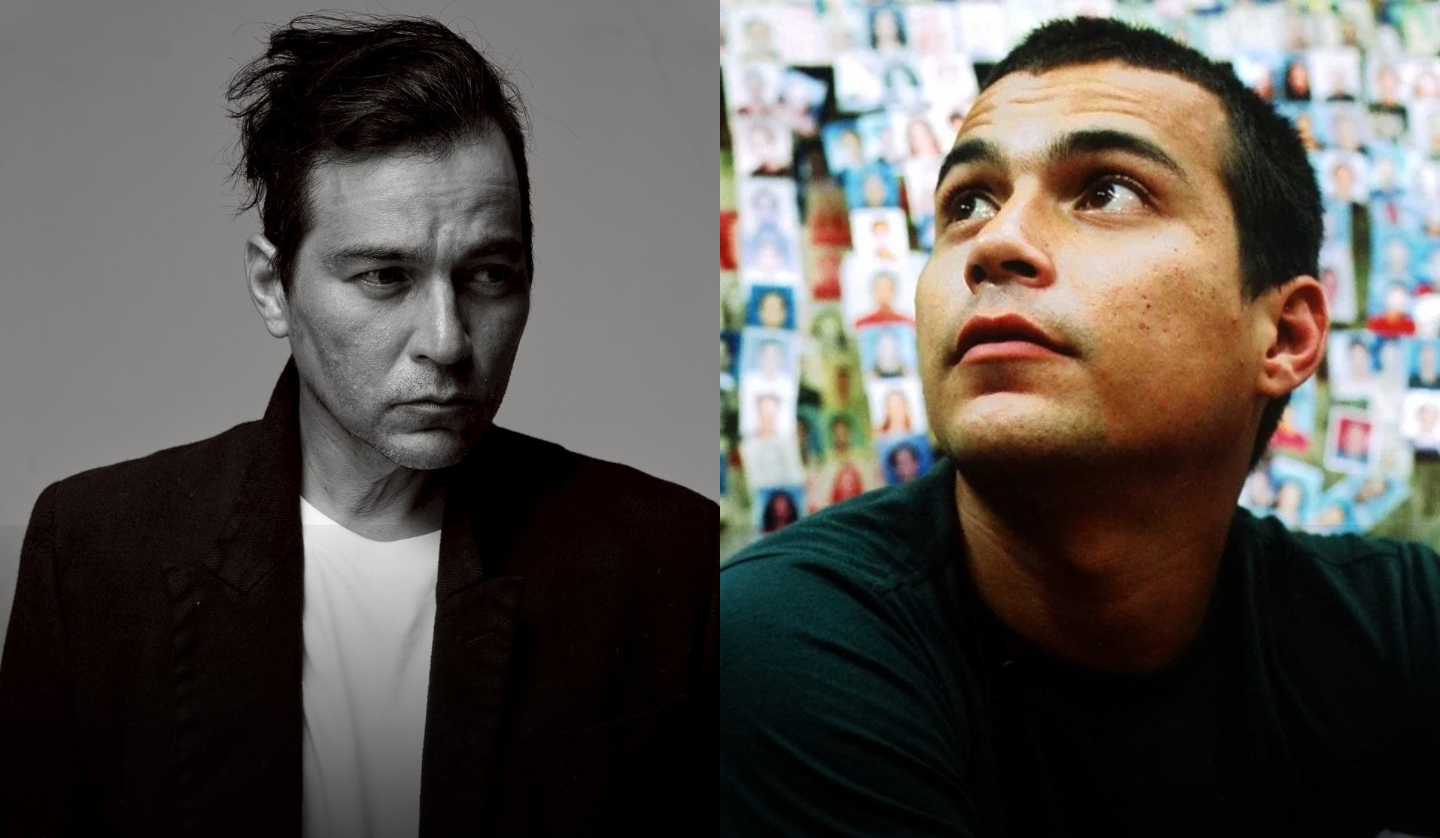

The death of a childhood screen hero always leaves a void. Tributes pour in from those who knew him well and those who only knew him from a distance, yet finding the right words to capture what he meant to us remains difficult.
Ray MacDonald (1977-2026) was an actor and television presenter of Thai-Scottish descent who rose to prominence in the 1990s, and who later transitioned into a sort of Anthony Bourdain figure: a traveller who introduces audiences at home to different cultures from all around the world. In commemoration of his memory, Koktail remembers the late actor and adventurer – really, a voice of his generation – by reflecting on different facets of his life, the roles he played on and off screen and the impact he left behind, not only on the entertainment industry, but on the way we ought to live our lives to the fullest.
Born in Roi Et in 1977, Ray spent his secondary school years in the United Kingdom. A keen sportsman, he captained a football team at the Gothia Cup youth tournament in Sweden, playing alongside Shahkrit Yamnam – who would become his lifelong friend and a matching force on screen. Before they made their mark in the 1998 cult film O-Negative, both Ray and Shahkrit got their first taste of fame presenting Teen Talk. Debuting on Channel 5 on Saturday morning, 7 January 1995, the variety show dug deep into the era’s fashion, music and youth culture. Unfiltered and proudly idiosyncratic, the programme was considered truly weird and groundbreaking at the time: made by teenagers, for teenagers.

Anyone coming of age in that era knew Ray’s screen presence inside out. He had a habit of tossing out unprompted jokes mid-conversation, delivered with a deadpan coolness so smoothly you might miss them if you didn’t pay attention. To young viewers, he was the roving reporter jetting off to countries like Japan for celebrity scoops (a type of sheer TV personality you simply do not see on screen anymore). Yet, recent tributes paint a very different picture of the man behind the camera. Off screen, Ray was surprisingly grounded: calm, rational and soft-spoken, a far cry from the wild-card host who said outlandish things for a quick laugh. They were two sides of the same coin.

For its time, Teen Talk provided an in-depth look into what teenagers felt, and more importantly, how they felt. It was the time capsule of a specific era. Looking back, one could almost call it an ethnographic collection of moments and memories as the new century slowly approached. It gave a platform to young people and, at the same time, introduced new ways of looking at the world, shaping a distinct new sensibility.
Ray’s transition into acting started with a bang in Pen-ek Ratanaruang’s debut feature Fun Bar Karaoke (1997), one of the primary detonators of the Thai New Wave. Thai cinema had seen nothing like it: a film that took Tarantino’s crime-world formula and bent it through dreamlike visuals and an ambient, lingering score. Just as Jean-Pierre Léaud became the physical avatar of the French New Wave, Ray became the poster child of Thailand’s cinematic rebirth, standing right at ground zero. He pushed those subversion credentials further in Attaporn Thaihirun’s Konjorn (1999), a jagged piece of early Thai experimental indie. Playing a tender-hearted “lunatic” navigating a hostile world, Ray was central to a not-so-veiled critique that sliced directly into police corruption and a society quick to purge anyone who does not fit its version of sanity. Ray’s screen presence and the trajectory of Thailand’s cinema revolution were essentially one and the same.

Two films locked Ray’s legacy as a cinematic force: Fake (2003) and O-Negative (1998). Fake brought him into the orbit of Paopol “Tar” Thephasdin and Putthipong “Leo” Sriwat, sparking a real-life collective so fiercely burned into the country’s pop-culture memory that “Tar-Putt-Ray” became the definitive shorthand for ride-or-die friendship. O-Negative, meanwhile, became a sacred text for university kids. It refused to play nice, showing teenagers locking horns with the adult world, a tension epitomised in that infamous slap scene that pushed a generation to reject blind obedience. The film was a cult sensation, single-handedly turning Silpakorn University’s Decorative Arts faculty into a magnet for the nation’s youth. The film lays bare how love destroys friend groups from the inside out. Unlike the movie’s tragic arc, though, the cast’s real-world bond never fractured.

From the late 1990s into the early 2000s, Ray approached personal style with an unbothered, anti-fashion stance. He brought bright tees, functional denim, all-weather trainers and the sharp skinhead buzz cut into mainstream youth culture. His clothing style reflected his outlook on life: don’t overcomplicate things – a lesson he imparted in Dear Galileo (2009), talking in character as if he were the character. That pragmatic core stayed with him for life. In later years, his clothes quietened down into simple button-ups, plain T-shirts, utilitarian windbreakers and his staple short-brimmed cap flipped upward: a mature iteration, perhaps, but built on the exact same functional sense of style.

In his later years, having established his name on the silver screen, Ray morphed into a restless wanderer. Yet unlike today’s polished travel vloggers, he was driven by a nomadic itch; he was less interested in easy leisure than in probing whether travel held any actual meaning at all. On his show Roaming, Ray went all in on the rails: boarding a train at Bangkok’s Hua Lamphong station and riding it 15,000 kilometres all the way to London, crossing two continents, 16 countries and the Trans-Siberian Railway. It was an epic train odyssey reminiscent of the long-haul journeys of writers like Paul Theroux. But Ray had a populist grit that made his world far more grounded, capturing the human element not through prose, but directly on screen in a way that felt very Bourdainesque.

Ray had a knack for demystifying world travel for the average Thai viewer. In No Visa, he dragged his camera through destinations where you did not need a visa to pass through, stripping away the intimidation factor and showing people that a backpack and a plane ticket were all they really needed. He was a pioneer of local travel television: one of the first to do it, and easily one of the very few who made it look cool. That restlessness eventually migrated to YouTube on his channel Rayron, a play on his name and the Thai verb ray-ron, meaning to wander without a fixed purpose. On two wheels and on foot, he took to the road with a kid-like curiosity, joined by his old crew from way back: Tar and Leo Putt.

What lesson did Ray leave us with after all these years? If any single idea captured his entire philosophy, it was that you can never be truly prepared for what life throws your way. “The plan is no plan,” and that was the whole point. Whether it was love, loss, stability or the courage to live on your own terms, you could never plan it all out. When the moment comes, you must simply rise to meet it – and just go. From one horizon to the next, the entire world is just a blink. Life requires a leap of faith into new roles and unfamiliar territory. The film where you play the lead is yours to direct: what is the next move? What is the best possible move? Bob Dylan once said he was busy being born; Ray had time for little else because he was too busy living. No regrets, not a second wasted. And now, as he travels from this world to the next, he keeps moving forward – just as he always did.


Escape Bangkok for Thailand’s 7 best national parks. Discover wildlife, culture and ...

A detailed guide to hiking the Naga Cave, combining physical challenges with ...

Sailorr and Molly Santana’s black grills fuse hip-hop swagger with homage to ...

From Lisa and Lingling Kwong to Nene Royal and Asian Games champions, ...
Treat your favorite furry companion some stylish goods Did you ever think ...

Thai filmmaker Apichatpong “Joe” Weerasethakul receives France’s highest honour, the Legion of ...
Wee use cookies to deliver your best experience on our website. By using our website, you consent to our cookies in accordance with our cookies policy and privacy policy


