Weekend Getaways
7 Must-Visit National Parks in Thailand and How to Explore Them
Escape Bangkok for Thailand’s 7 best national parks. Discover wildlife, culture and ...




“I put my arms around him yes and drew him down to me so he could feel my breasts all perfume yes and his heart was going like mad and yes I said yes I will Yes.” Needless to say, Molly Bloom’s feverish, life-affirming soliloquy from the ultimate chapter of James Joyce’s modernist magnum opus, Ulysses, still holds a special place for readers everywhere.
This weekend, the Jim Thompson Art Center becomes the stage for a literary homecoming where those final words find a new resonance. Hosted by the Embassy of Ireland, the Irish Literature Festival 2026 runs from 20–21 June, bringing the global Bloomsday tradition – typically celebrated on 16 June – right to Bangkok.

You’ll hear from an impressive lineup of literary scholars and industry insiders, including Dr Paige Reynolds and Associate Professor Dr Verita Sriratana, as they dive into a series of engaging panel discussions. Joyce is at the heart of the weekend, but he’s really just the starting point for exploring the broader impact of Irish literature.
The event also features a special session with the Irish Ambassador, H.E. Pat Bourne. Between talks, attendees are invited to wander through the exhibitions or browse the curated book sales. It is an ideal way to soak up some Irish culture, and admission is entirely free – whether you are a lifelong bookworm or simply feeling curious.
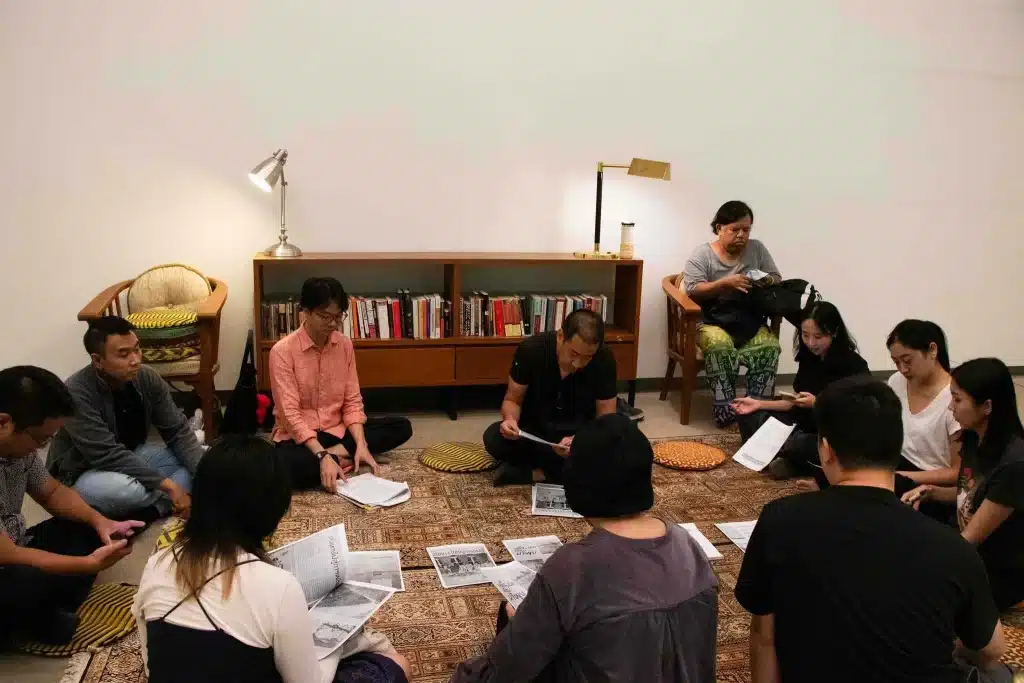
At Koktail, we’re obsessed with literature. It’s the wellspring from which language takes shape and expression. Joyce, in particular, is a massive favourite of ours, and whether you’re a first-timer or overdue for a reread, it’s time to dive in. In anticipation of the festival, here are five reasons why you should read the man. But first – what is Bloomsday, anyway?
Bloomsday, observed on 16 June, provides the physical and metaphysical setting for Ulysses, which unfolds over a single day in 1904. This literary behemoth chronicles the adventures and misadventures of Leopold Bloom, whose journey home is woven into the intermingling thoughts and desires of other central figures – most notably his free-spirited wife, Molly, and the ever-sensitive aesthete Stephen Dedalus (Joyce’s alter ego), whom some may recognise from A Portrait of the Artist as a Young Man.

The date also marks the first time Joyce and his wife, Nora, got together – both romantically and in the bedroom. Only a writer with his level of passion and sense of humour would decide to build his entire novel around such a potentially embarrassing, private memory.
And yet, there is something Joycean in this intersection of sexuality and art, just as there is in the structural correspondences between his novel and Homer’s Odyssey (the hero of which the Romans called Ulysses).

The significance of Bloomsday lies in Joyce’s pioneering of a new literary form: essentially a new movement and a whole new way of writing. But its importance also lies in what Joyce has come to mean to Irish culture and the global literary scene.
Bloomsday is celebrated worldwide (usually in the form of pub crawls), not only because it is the story of the Irish people but because it is also the story of all humanity: of people who must endure everyday tedium, who must think and rethink, decide and hesitate.
The novel itself is a celebration of this mundane aspect of modern life, suggesting that it is not as mundane as it first seems. Or even if it is, there is always something special about that mundanity, that interiority which feels like a universe unto itself.

If anything, you should read James Joyce for his masterful prose. Before Ulysses, the popular narrative form perfected by 19th-century authors like Jane Austen and Gustave Flaubert was the free indirect style; in it, the third-person narrative voice and the character’s consciousness are so closely aligned that the distance between objectivity and subjectivity is all but destroyed.
Joyce took this approach a step further. His method of ‘interior monologue’ operates on a purely textual level: characters such as Leopold, Molly and Stephen each possess a distinct way of speaking, a way of existing texturally.

For instance, Leopold, an advertising canvasser, thinks in clichés and topical turns of phrase, whereas Stephen is inherently philosophical, possessing an aesthetic temperament that leads to the grand, sweeping statements seen at the end of A Portrait of the Artist as a Young Man.
From the outset, Joyce’s works are rooted in the complexities of nationalism, race and morality. In Dubliners, the motif of paralysis is central: the characters find themselves unable to act at a critical juncture in history, a moment of profound crisis that reflects the paralysis of the nation itself, whether caused by institutional, racial or spiritual constraints.

Charles Stewart Parnell, the tragic leader of the Home Rule League, haunts Joyce’s work like a shadow. His public disgrace and subsequent death in 1891 proved a foundational absence that informs the entirety of Joyce’s oeuvre. Joyce makes it clear that the literary and the political are one and the same – there is no such thing as the apolitical.
We are not speaking here of ‘Western culture,’ a term as elusive as it is contested, but of culture in a universal, human sense. Ulysses’s reliance on Homer’s Odyssey points to a literary thread. Across centuries, how we process our thoughts and navigate between the external world and the internal mind remains, quite extraordinarily, the same.

Indeed, for Joyce, the particular always contains the universal. A man walking through the streets of Dublin, visiting this or that pub, can tell us more than just his choice of stout. We, as Walt Whitman once put it, contain multitudes.
Joyce is brilliantly funny in Ulysses. Many have remarked on his dirty, scatological humour – perhaps the best-known examples being those impassioned letters to his wife. But he also has a repertoire of puns – clever ones that took scholars years to decipher! – and witticisms that instantly resonate with Dubliners, but which we can learn to appreciate as well.

He can be quite sad and melancholic when the story demands it. The themes of longing, yearning, death and disillusionment permeate his work. For example, Eveline in Dubliners stands on the precipice of escape only to abandon her future, while the narrator of “Araby” – from the same story collection – eventually sees himself as a “creature driven and derided by vanity.” It is immensely satisfying to read Joyce.
In other words, you should read Joyce’s work for the sake of reading it. In a world where everything vies for – and holds hostage – your attention, reading demanding works of literature can help one know solitude.
More than just transporting you into a different world, reading grants access to a fundamental sense of aloneness – an act in which one gets lost in thought, much like Leopold, Molly and Stephen. In the words of Jonathan Franzen, reading teaches one how to be alone.


Escape Bangkok for Thailand’s 7 best national parks. Discover wildlife, culture and ...

A detailed guide to hiking the Naga Cave, combining physical challenges with ...

Thai filmmaker Apichatpong “Joe” Weerasethakul receives France’s highest honour, the Legion of ...

Sailorr and Molly Santana’s black grills fuse hip-hop swagger with homage to ...

Treat your favorite furry companion some stylish goods Did you ever think ...

Koktail celebrates the sixth edition of The Future List with 100 Future ...
Wee use cookies to deliver your best experience on our website. By using our website, you consent to our cookies in accordance with our cookies policy and privacy policy


