Weekend Getaways
7 Must-Visit National Parks in Thailand and How to Explore Them
Escape Bangkok for Thailand’s 7 best national parks. Discover wildlife, culture and ...




It’s Pride Month, which means one thing is guaranteed: your feed is about to be flooded with the annual wave of LGBTQ+ movie recommendations.
You already know the usual suspects: Brokeback Mountain (2005), My Own Private Idaho (1991), the glorious filth of Pink Flamingos (1972) and all the other go-to titles that crowd the conversation. But separating “queer cinema” from the rest of film history is pointless anyway – it’s all just great cinema.
Koktail is skipping the obvious Hollywood blockbusters to bring you a list of criminally underrated, strictly international gems (with a Thai cinema deep-dive coming very soon). These films might not all fit neatly into a ready-made box; they inhabit a world of shifting identities and untamed desires that happily ignore the boundaries set by polite society.
dir. Jane Schoenbrun
With Teenage Sex and Death at Camp Miasma (2026) winning the Queer Palm at this year’s Cannes Film Festival, Jane Schoenbrun has gone from cult fascination to full-fledged festival fixture. Yet for many – particularly within the haunted corridors of Film Twitter – the point of no return was I Saw the TV Glow (2024).

Set in 1996, the film follows Owen (Justice Smith) and fellow social outcast Maddy (Jack Haven), whose obsession with The Pink Opaque – a young adult television series about girls with psychic powers battling monsters of the week – consumes them. As time folds in on itself, the series begins to haunt Owen’s everyday life, blurring the line between media fantasy and what he believes, or at least would like to believe, is reality.

The film’s references to Buffy the Vampire Slayer and other late-1990s genre shows are apparent, serving as a framework through which it explores gender dysphoria, alienation and the consequences of denying one’s own identity. Few recent films have articulated the paralysis of internal repression quite this painfully.
dir. Shunji Iwai
For many, Shunji Iwai will always be the poet of digital-era adolescence and static-filled yearning in All About Lily Chou-Chou (2001). But A Bride for Rip Van Winkle (2016) hums at a different frequency. The greens and pale golds of Lily Chou-Chou give way to a tide of lilac purple – melancholic, feverishly romantic even. Classical music, mostly by Mozart and Chopin, curls through the film with Iwai’s distinctive lyricism.

Nanami (Haru Kuroki) is a lonely soul seeking intimacy online before getting engaged to Tetsuya (Go Jibiki). But her loneliness has a way of emptying a wedding hall. Faced with a barren guest list, Nanami hires strangers to play her friends and family on the big day. What begins as staged companionship opens onto something far more fragile: the possibility of love and the cruelty of discovering how easily love itself can become a performance.
dir. Chang Tso-chi
First gaining attention on the festival circuit, Thanatos, Drunk (2015) cemented Chang Tso-chi as a defining voice in contemporary Taiwanese cinema, portraying life on society’s battered margins with an unflinching gaze. Thanatos, the Freudian death drive, here is pushed to delirious extremes.

Stuck in the shady side of Taipei, Rat (Lee Hong-chi) and his brother (Huang Shang-ho) chase desperate romances – one with a mute sex worker (Chang Ning), the other with their cousin’s gigolo boyfriend (Cheng Jen-shuo). Together, they endure the tumults of society and the aimlessness of life in constant survival mode while their mother (Lü Hsueh-feng) drinks herself to death.
dir. Sion Sono
Frequently hailed as one of the best films of the century – and trying to speak with as little bias as possible, I think there is a genuine case for it – Sion Sono’s four-hour epic is a sweeping proclamation of the triumph of love. Featuring a meta-textual soundtrack by the now-defunct Yura Yura Teikoku, the film is an absolute pinnacle of maximalist, multipart storytelling.

So, what’s the actual plot of Love Exposure? Yū (Takahiro Nishijima), a boy plagued by a uniquely Catholic crisis, has no sins, which means he can’t participate in the daily confessions demanded by his devout priest father (Atsuro Watabe). To fix this, he decides to sin with absolute dedication, eventually weaponising his perversion into kung-fu upskirt photography.

But when a lost bet forces him into drag, he encounters Yoko (Hikari Mitsushima) and instantly falls in love. The catch? She thinks he’s a woman. This sparks a chaotic chain reaction of cross-dressing, cult conspiracies, Christian iconography and messy infatuations. Frankly, it’s a film you owe it to yourself to watch at least once before you die.
dir. Céline Sciamma
Almost everyone knows about Céline Sciamma’s 2019 period drama Portrait of a Lady on Fire, but her debut effort Water Lilies (2007) shouldn’t be overlooked either. It marks the first time in Sciamma’s filmography that we encounter the talented Adèle Haenel, who went on to develop a long professional relationship with the director.

The film follows Marie (Pauline Acquart) as she becomes increasingly drawn to Floriane (Adèle Haenel), a member of the local synchronised swimming team, during a languid summer at the neighbourhood pool. It’s a story about the moment adolescence tips into passion – that tangled business of desire that only French filmmakers like Sciamma can capture.
dir. Alfonso Cuarón
Real talk: Challengers (2024) wouldn’t exist without Y Tu Mamá También (2001). Cuarón captures this incredibly raw youth culture, but undercuts it with a non-diegetic passage of time that makes closeness feel completely out of reach, even when trapped together on a road trip. It’s definitely not a standard coming-of-age story about discovery.

Two teenage friends, Julio (Gael García Bernal) and Tenoch (Diego Luna), set off on a spontaneous road trip with Luisa (Maribel Verdú), an older woman who unexpectedly joins their swaggering, somewhat delusional summer escape. While chasing a mythical beach, they end up stumbling into a harsh lesson about growing up too fast and sharing a kiss with the last person they ever expected.
dir. Claire Denis
“This is the rhythm of the night.” Decades before TikTok resurrected Corona’s 1993 dance anthem, cinema lovers knew it as the climax of Claire Denis’s Beau Travail (1999), an arthouse titan of homoerotic tension and fragile masculinity.

In the blinding heat of Djibouti, beauty is a death sentence. Loosely mapping Herman Melville’s Billy Budd onto the scorched sand of the French Foreign Legion, Galoup’s memories play out like an autopsy of desire. In Denis’s universe, it is a cosmic rule that an ugly world will immediately target and destroy anything pure; Galoup’s tragic fate, sparked by his jealousy of a charismatic recruit, is simply that rule in action.
dir. Jamie Babbit
Recently revitalised as a cult classic, Jamie Babbit’s But I’m a Cheerleader (1999) is a vibrant satire described by its director as a “gay Clueless.” The plot kicks off when Megan’s (Natasha Lyonne) parents decide she is gay and send her to a conversion boot camp called True Directions. While navigating the camp’s absurdities, a confused Megan meets Graham (Clea DuVall), a fiercely unashamed lesbian who sparks a romance that changes everything.

dir. Pedro Almodóvar
This critical darling by Spanish master Pedro Almodóvar is about Manuela (Cecilia Roth), a grieving mother who heads to Barcelona to find her late son’s (Eloy Azorín) father – a trans woman named Lola (Toni Cantó) – after a freak accident involving stage diva Huma Rojo (Marisa Paredes). The film is a wild melodrama about the families we choose when the world falls apart.

dir. Nagisa Ōshima
In his final film before his death, Japanese auteur Nagisa Ōshima proves that a pretty face can be far more dangerous than a katana. Taboo (1999) drops a beautiful, androgynous young swordsman (Ryuhei Matsuda) into a strictly male, hyper-traditional samurai unit, instantly fracturing their rigid code of honour. It’s a hypnotic portrait of repressed desire that serves as a perfect final bow for Ōshima’s career.

dir. Wong Kar-wai
In Happy Together (1997), Wong Kar-wai takes a toxic relationship and places it halfway across the world in a heavily stylised Buenos Aires. Lovers Lai Yiu-fai (Tony Leung) and Ho Po-wing (the iconic Leslie Cheung, may he rest in peace) arrive from Hong Kong hoping to fix things, but instead slide right back into a cycle of intense codependency and cruel mind games. As Yiu-fai scrapes together plane fare, Po-wing continuously pulls him back into his toxic orbit.

dir. Derek Jarman
Set to screen at this year’s Thailand International LGBTQ+ Film & TV Festival (TILFF) with Thai subtitles, Derek Jarman’s Blue (1993) remains one of the most devastating and radical achievements in cinema history. Released just months before Jarman died of AIDS-related complications, the film features no moving images, no actors on screen and no cuts.

While it is an experimental masterpiece that requires absolute attention, its deeply personal narrative remains utterly engaging all the way through, forcing the audience to look away from the screen and directly into the heart of the crisis.
dir. Gregg Araki
The first entry in Gregg Araki’s legendary “Teen Apocalypse Trilogy,” Totally F***ed Up (1993) is a darkly funny snapshot of queer youth culture in ’90s Los Angeles. This New Queer Cinema staple follows a tight-knit, chosen family of six gay and lesbian teenagers navigating alienation. Structured as a series of chaotic video diaries, the film mixes an angsty slacker style with an uncompromisingly honest look at kids trying to survive in a hostile society.


Escape Bangkok for Thailand’s 7 best national parks. Discover wildlife, culture and ...
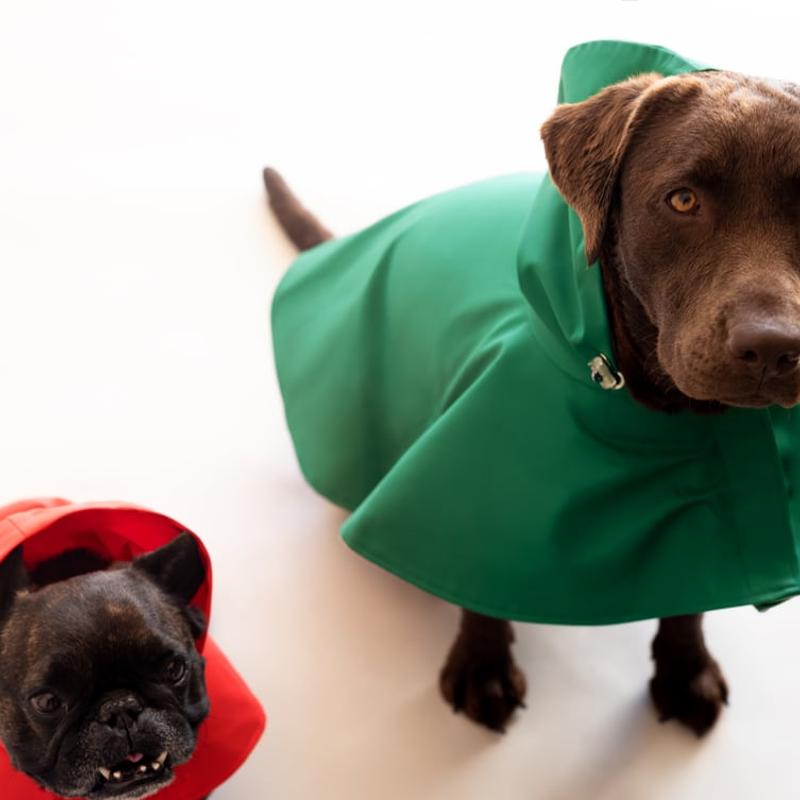
Treat your favorite furry companion some stylish goods Did you ever think ...

Japan’s famous Tsutaya Bookstore opens at One Bangkok this October 2026 with ...

From fish sauce cookies to mala ice cream, discover the strange and ...

L’On Art Festival makes its debut in Bangkok with live painting, workshops, ...

From Chanel in Bangkok to Dior with A24, luxury enters new cultural ...
 English English
  Thai
Thai
Wee use cookies to deliver your best experience on our website. By using our website, you consent to our cookies in accordance with our cookies policy and privacy policy


