The Arts
Picasso and Matisse Under One Roof! See Their Masterpieces for Free in Bangkok for Just Four Days
Two icons of modern art come together at Dib26’s Muse: Beyond Human, ...


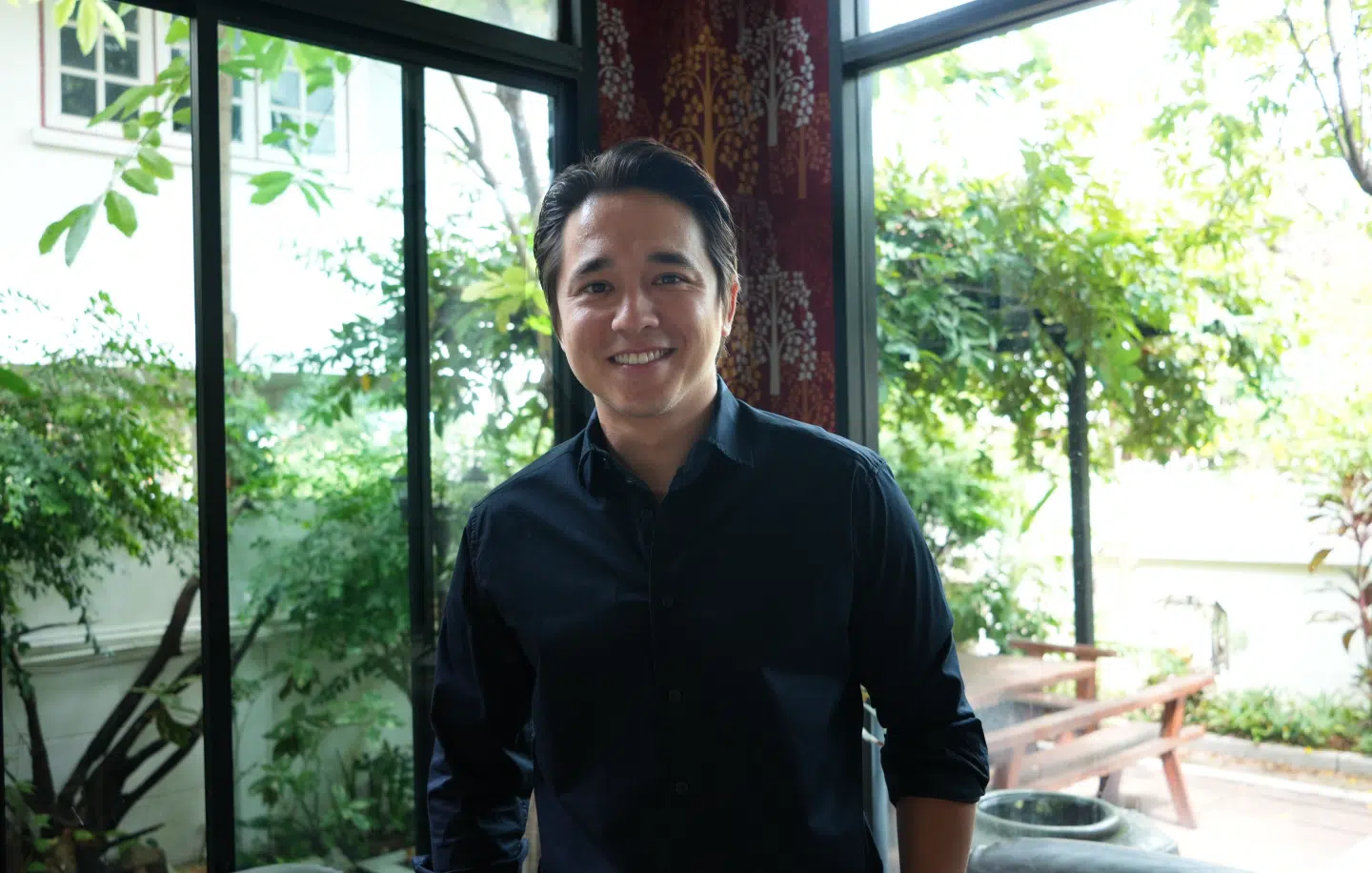

As we sat down with Alexander Rendell, a British-Thai actor, it became clear that his world now revolves far more around education, sustainability and long-term impact than celebrity. Behind the familiar face is someone who has focused on how environmental awareness can move beyond social media trends and become something people genuinely carry into everyday life.
At Environmental Education Centre Thailand (EEC Thailand), where he serves as co-founder and CEO, Alex has spent years creating programmes that bring children closer to nature through direct experience rather than classroom theory alone.
What makes his perspective stand out is how grounded it feels. Throughout the conversation, one thing became clear: for Alex, education is not separate from change. It is where change begins. As EEC enters its 11th year, we look back at the experiences and ideas that shaped his vision and explore what he believes needs to happen next.

Long before environmental education became his full-time focus, Alex’s connection to nature began through acting. Travelling across Thailand for filming exposed him to forests, mountains and places far removed from Bangkok’s landscape. Between early call times and shooting in natural settings, something shifted.
“Whenever we filmed in places like Khao Yai, surrounded by nature, everything just felt better. My acting flowed more naturally. Leaving the city helped me focus. Everything slowed down.”
The feeling started even earlier. At 10 years old, a trip to Phi Phi Island and an elephant rescue left a lasting impression.
“I remember helping elephants when I was 10. Experiences like that stayed with me.”
Later, life in Bangkok sharpened the contrast. Studying at Chulalongkorn University, long commutes and constant movement felt overwhelming. Diving trips became an escape and gradually pulled him closer to the environmental path he now leads.
What began as personal interest slowly evolved into EEC, where his early work focused mainly on conservation before expanding into something broader.
“Over time, I realised it was never only about the environment. One side was conservation, but the other was education and life skills. These experiences were helping people grow. We saw children gain confidence, families reconnect and organisations build stronger relationships. That’s when I realised EEC could become a platform for real change.”
Rather than relying on lectures, Alex and his team built EEC around edutainment which combines education with entertainment through hands-on experiences shaped by his entertainment background.
“We always try to make it fun. Environmental topics can become boring very quickly if people don’t feel involved. That’s why we focus on activities and direct experience rather than just sitting and listening.”
Today, EEC runs programmes across wildlife, forests, marine life, fossils, veterinary science, sustainable development and more. Children dig for fossils, work alongside zoologists, study marine ecosystems and learn from local communities across Thailand.
Older students join long-term Sustainable Development programmes (SD), working on Sustainable Development Goals (SDG) topics before presenting their ideas in TED Talk-style sessions with parents, policymakers and experts. EEC expanded beyond conservation alone, with programmes that showed how learning can shape confidence, relationships and communities.
“Once we started working in environmental education, I realised how many layers there were to it. If people want to change something, they first need to understand it.”
There was also pressure that came with entering the environmental field as a public figure. In the beginning, Alex admits he felt insecure about whether people would take him seriously or assume he would eventually move on. However, that insecurity faded as EEC continued to grow. The platform evolved alongside him, and each new programme pushed him to keep learning.
“Luckily, every new project forces me to learn something new. I never formally studied circular economy or waste management. Most of what I know comes from designing programmes, going into communities, speaking with local people and trying to understand things properly before creating anything around them.”
As EEC continued to grow, so did the pressures behind it. Although the organisation operates as a social enterprise, much of the responsibility still fell directly on him, from programme execution and operations to managing people and the business side of the organisation.
“People sometimes assume it’s non-profit social work, but at the end of the day it’s still a business. Honestly, it can be overwhelming. If I only stayed in acting, life would probably be easier. But this feels like purpose.”
That sense of purpose became clearer as EEC expanded into larger national and regional projects. One programme brought together 450 local students in Chonburi and Rayong through collaborations with educational and government sectors. Another gathered young leaders from across ASEAN to develop ideas around environmental policy and sustainability.
Yet the moments that stay with him most are often the personal ones.
“Honestly, the moments I feel most proud are when my niece experienced what we built, and even more the thought of my son one day experiencing it too. I’ve worked with so many children over the years, but when it’s your own family, it feels different. You really see the impact.
With other children, they come and go. But with your own, you notice how their thinking shifts afterwards. That’s when it becomes quite sentimental, seeing your family benefit from something you’ve created.”
And what stays with him most is the feeling that the work continues to hold meaning after all these years.
“I’ve spent the last 10 years working harder than I ever thought I could. But looking back, I feel lucky that I chose something that actually feels meaningful. If something has no purpose, then what’s the point of doing it?”
Over the past decade, Alex says his understanding of sustainability has changed completely. What once began as a love for forests and oceans slowly turned into something far more urgent and personal.
“Now sustainability affects every part of life more than we realise. We’ve seen coral bleaching, floods, wildfires, extreme pollution and water shortages. Ten years ago, I never thought we would reach this point so quickly.”
As the conversation continued, it became clear that what affects him most is the imbalance behind it. The people who contribute the least to climate change are often the first to face its consequences, particularly children and rural communities already living close to nature. It is this sense of imbalance that now drives how he defines real change.
“I think the hardest part is the unfairness of it. Children in areas hit by landslides end up using car parks as classrooms because their schools are gone. These are innocent kids. Climate change is largely caused by us in the cities, yet they produce the least carbon and become the first people affected by it. At the same time, they’re often the communities helping protect the environment for everyone else.”
That perspective also shaped the way he thinks about change itself. Real impact, he believes, comes less from individual gestures and more from long-term shifts in behaviour and collective culture.
“People think one person can’t change anything, but they add up and become about culture and habits. In Japan, for example, waste separation is just part of everyday life. That mindset matters.”
This is exactly why EEC matters, as a platform that turns awareness into lived experience and continues to shape the next generation to understand, care for and actively protect the environment.
More than a decade into EEC, the future Alex talks about feels less fixed and more like something that continues to evolve alongside the work itself.
“I used to think growth meant doing more and more. Now I think it’s more important to do fewer things properly and build them well.”
Even with the challenges of running EEC, part of what continues to drive him is the possibility that the platform can inspire younger generations beyond environmental education alone.
“I’m not saying I’m perfect, but I hope I can be a good role model for young people in some way. I want to use my entertainment background for something that feels useful.”
Today, his role stretches far beyond hosting camps or speaking to students directly. As CEO, much of his focus now sits on building an organisation that people trust and believe in for the long term.
“Thailand already has everything. We have forests, mountains, two oceans, communities, culture, food and biodiversity. I really believe Thailand could become one of the leading countries for environmental education in the region. We’re ready for this. ”
The long-term goal now stretches beyond EEC itself and towards building a future where education, sustainability and everyday life feel more connected within Thai society.

Two icons of modern art come together at Dib26’s Muse: Beyond Human, ...

Escape Bangkok for Thailand’s 7 best national parks. Discover wildlife, culture and ...

Sailorr and Molly Santana’s black grills fuse hip-hop swagger with homage to ...
A detailed guide to hiking the Naga Cave, combining physical challenges with ...

Treat your favorite furry companion some stylish goods Did you ever think ...

Thai filmmaker Apichatpong “Joe” Weerasethakul receives France’s highest honour, the Legion of ...
Wee use cookies to deliver your best experience on our website. By using our website, you consent to our cookies in accordance with our cookies policy and privacy policy


