
Wellness
Gentlemen’s Guide: Bangkok’s 5 Best Barber Shops
These top 5 barber shops in Bangkok are where gentlemen can elevate ...


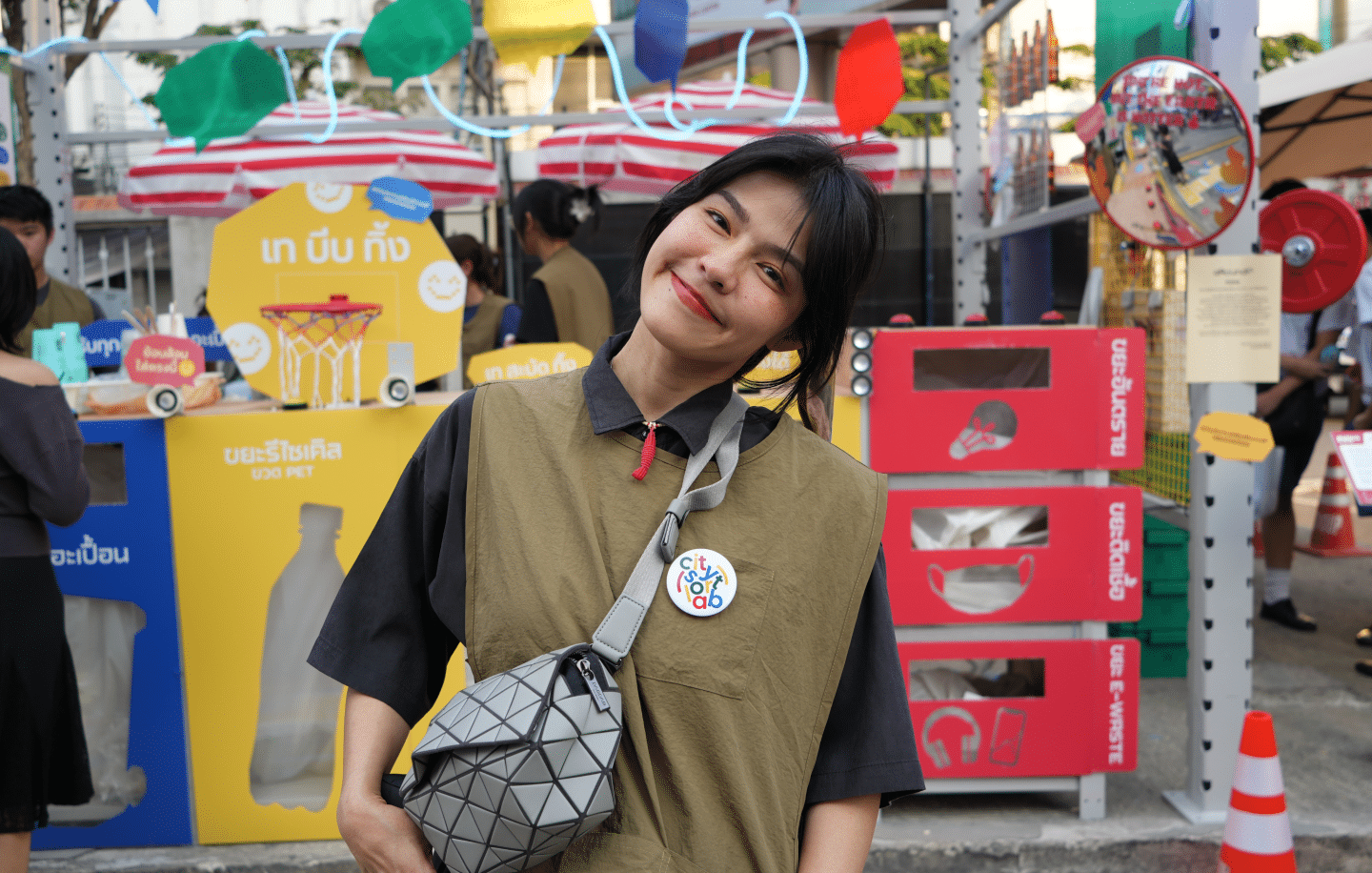
Sustainability often feels serious, distant and instructional. At its core, however, it lives within everyday habits, shaped by appetite, routine and the choices we return to without much thought.
Pimlada “Pear” Chaipreechawit, a content creator around food, waste and sustainable practice, enters the sustainability conversation from a different angle. Rather than relying on instruction or alarm, she uses food and daily habits to bring the idea closer, lighter and firmly into real life. Through this approach, casual conversations carry real weight, and small relatable moments begin to point towards much larger change.
Her commitment is real as her comment to Koktail, as we sit down with her for the interview, shows:
“Thank you for taking part in this and helping to share it.”
From content shared on her own platforms to larger scale projects such as City Sort Lab at Bangkok Design Week, we trace her journey from early personal initiatives to a broader vision that continues to shape how people think about food, waste and the way we live.
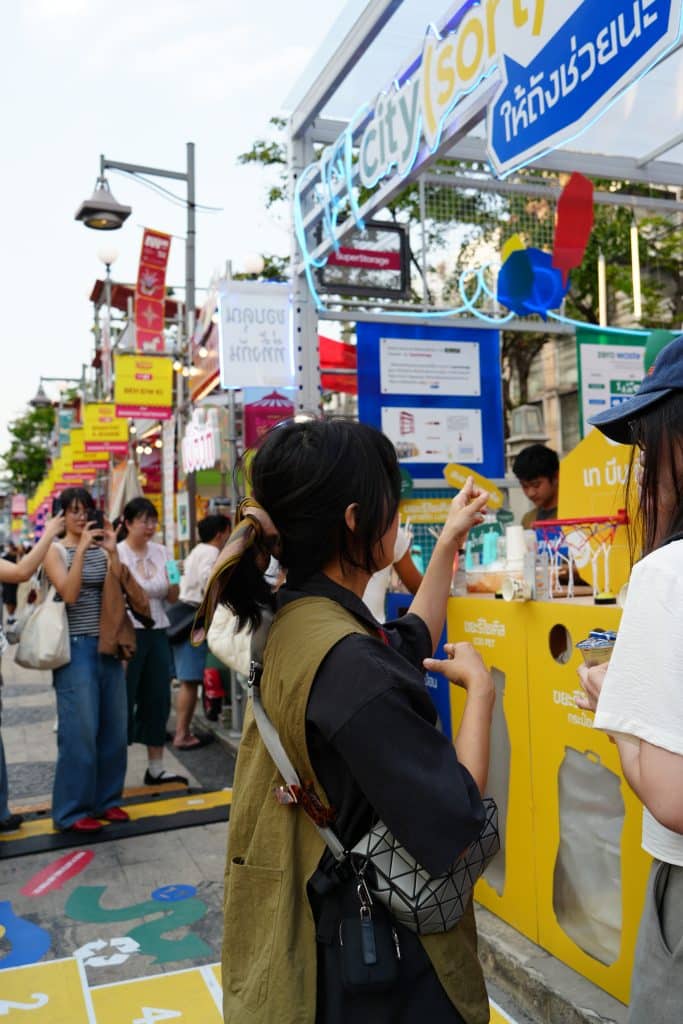
From an early age, Pear carried a quiet concern about the planet, though the language around sustainability had not yet entered everyday conversation. At that time the idea felt distant within society, rarely discussed beyond science programmes or abstract warnings. She held the feeling privately and, as life moved forward, set it aside.
“I became interested in these ideas from a young age, though I did not call it sustainability then. I used to describe it as a fear of global warming. At that age, I remember people talking about air conditioning, CFCs and damage to the atmosphere, an explanation of the greenhouse effect. I began to wonder what the world might become, how hot it would feel and whether I could live in it. That moment shifted my mindset. I grew uneasy about things like air conditioning and plastic use.”
With little space for wider conversation at the time, Pear took a different path and built a career across television, stage and film. As climate disruption grew more visible, the concerns she once carried returned with greater urgency. A further shift came during a forest journey in Chiang Dao with Amata Chittasenee, known as Pearypie, a content creator and our 2022 Future Lister. Five days without electricity or running water revealed how closely daily actions connect and ripple outward.
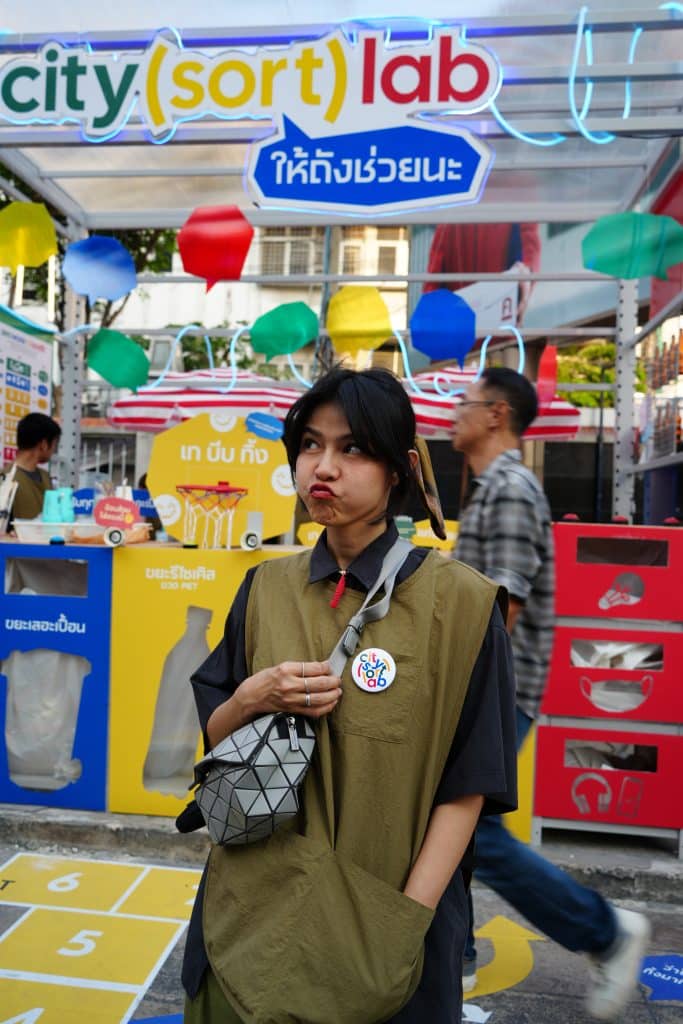
Alongside this, a long-held wish to create her own platform returned. After years of adapting to different spaces, the rise of independent creator platforms finally gave her room to speak in her own voice.
“I ask myself who I am, what I want to do and what I want to communicate. For more than 20 years in the entertainment industry, I worked by adapting to different spaces, each with its own expectations and culture.
When I finally had a platform of my own, the questions I had never paused to ask returned. I needed to know whether this path reflected what I truly wanted. It felt like two worlds meeting. The industry taught me how things work in front of and behind the camera, while years across different environments shaped my sense of self. Those experiences helped me understand what to carry forward and what to leave behind.”
Pear begins as a content creator, with food as her point of entry. Sustainability sits at the centre of what she wants to communicate. She treats her platform as a table rather than a lecture, where different ideas appear in different forms.
Food makes the conversation accessible. Her content is built around pillars such as Menu Plaek, centred on unfamiliar or unexpected dishes, Gin Mod Jan which encourages eating everything on the plate, and Menu Rong Kor Cheevit focused on repurposing ingredients and giving leftover food a second life. These formats remain light in tone, but resonate through curiosity and familiarity, allowing ideas around sustainability to surface naturally.
“We eat three meals a day. Food already sits at the centre of everyday life and Thai people love eating. If something tastes good or sparks curiosity, people will travel for it. That belief led me to food as a way to reach people. I believe eating brings people together, though that connection holds many sides. Taste, design, preparation, sustainability and local culture all exist within it. Food carries everything. I chose it as my starting point because it speaks to everyone, even though I still had to decide which part of that conversation I wanted to share.”
Pear wants to invite people to bring sustainability back into everyday life. The idea of “good sustainability” often sounds abstract or difficult, so her role becomes one of translation. She breaks complex ideas into simple familiar actions. She believes that if people begin to reduce waste at the source and return unused food back into the cycle, wider environmental pressure can ease.
For example, Menu Plaek may appear as a simple tasting content, where guests or friends introduce what makes a dish unfamiliar. Yet beneath that surface, she draws attention to local recipes and everyday practices, such as cooking with leftovers or using what already exists. Sustainability enters quietly, without instruction or force. The audience absorbs the idea before they even realise it.
Koktail: As you invite others to share their dishes on your channel, what is your own Gin Mod Jan?
“My Gin Mod Jan dish is my mum’s cooking. It is the food I have eaten since I was a child, and it tastes perfect to me. So if you ask me what my Gin Mod Jan dish is, it is simply my mum’s food. I believe everyone already has a dish like this. The more ‘finish-the-plate’ dishes we have, the less food waste we create.”
Over time her role expanded beyond that of a content creator into something more deliberate and outward facing.
“I wear two hats. One as a content creator and another as a regenerative sustainability driver. I work through content, projects and practical solutions.”
As her audience grew so did the scale of her work. Digital platforms opened space for awareness but Pear recognised their limits. She began to move ideas into the physical world, where behaviour could change through participation rather than instruction. This shift led her towards projects that addressed systems, not just stories.
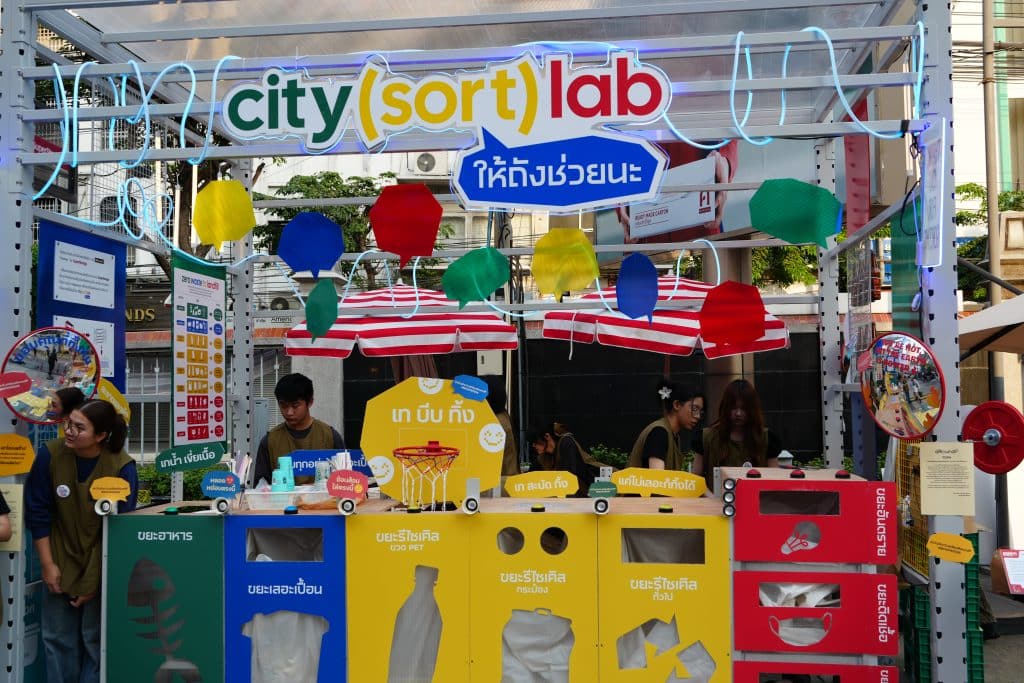
Where we stand with her today at the Grand Postal Office, her participation in Bangkok Design Week marks a clear turning point. The project presented here grows from Less Club and Friends, a space for students and young people to explore everyday sustainability together, not as a fixed ideal but as an evolving practice. Previous collaborations include the redesign of waste management systems within university residences, working from the source to the endpoint, from staff training to daily use.
“The world that is coming belongs to the next generation, not to us. When I asked myself what I wanted to do, I realised I wanted to pass on a better world. That is why I work with students. When we build something together, the impact becomes far greater than that of one person alone.”
The project takes the form of a working lab that invites city residents to engage with waste separation in ways that feel simple and approachable. Rather than an exhibition to observe, the space encourages participation, where sustainability becomes something to try, adjust and understand through action.
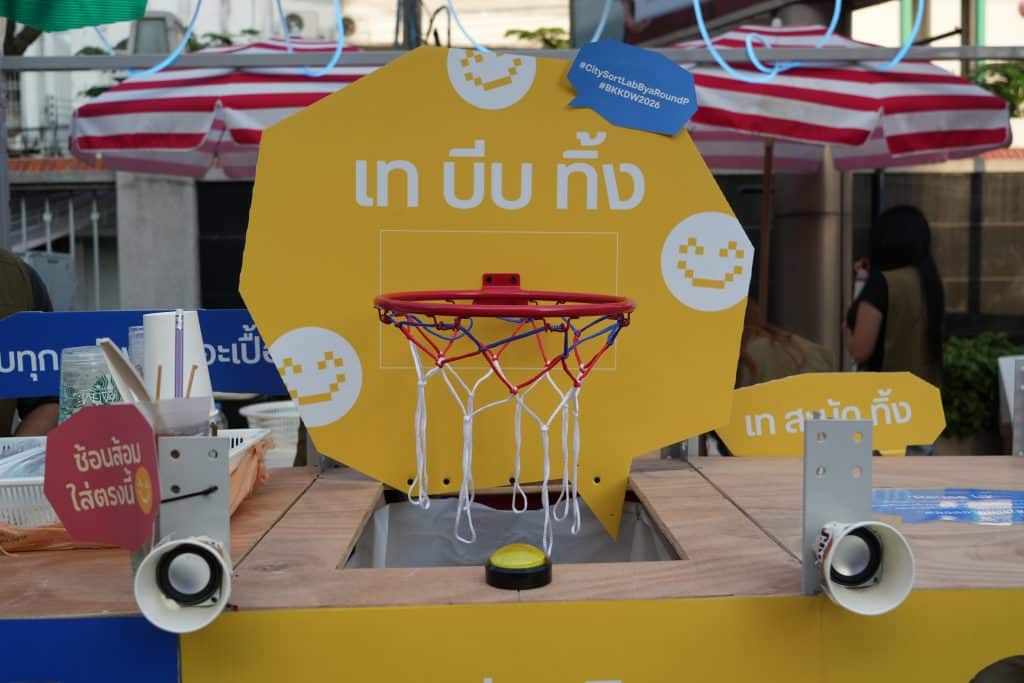
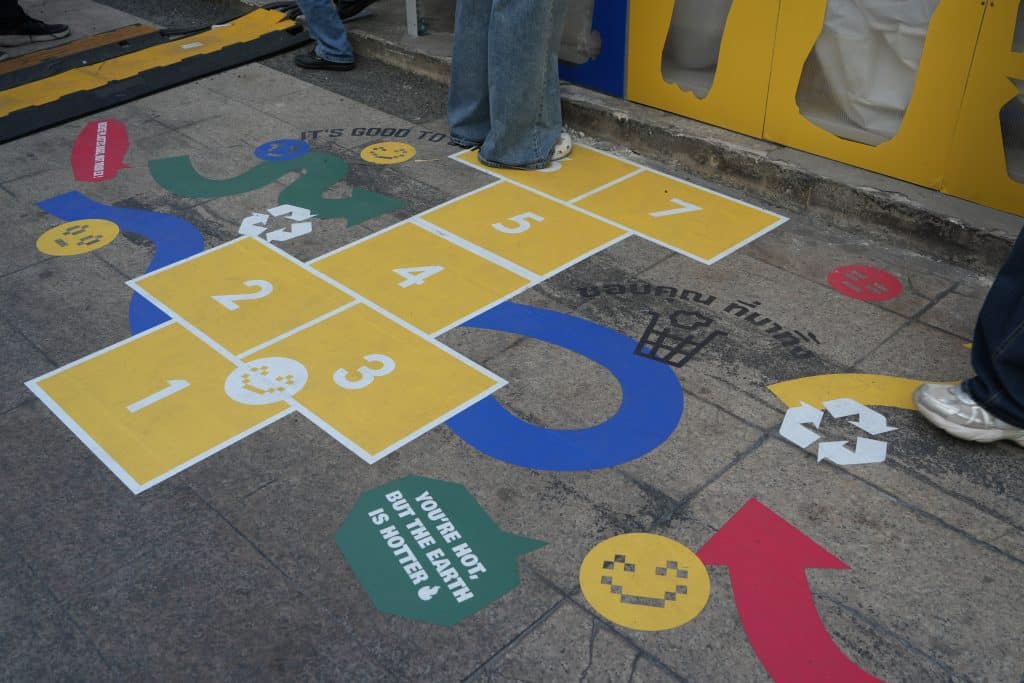
Courtesy of Koktail Thailand
Today, Pear’s practice moves across content, collaboration and system design. What began on screen now extends into shared spaces, real systems and lived experience. Following her journey reveals a shift from conversation toward action.
“Our actions affect the world and we all have the power to choose. Every choice can make the world better or worse. Change does not happen overnight but each decision matters. What I want to see is cooperation at every level. This cannot be the responsibility of one person or one sector alone. It must move together, from the top down and from the ground up. Laws mean little if people do not act and individual effort can only go so far without policy to support it. Sustainability must be something we do together, not just something we talk about.”
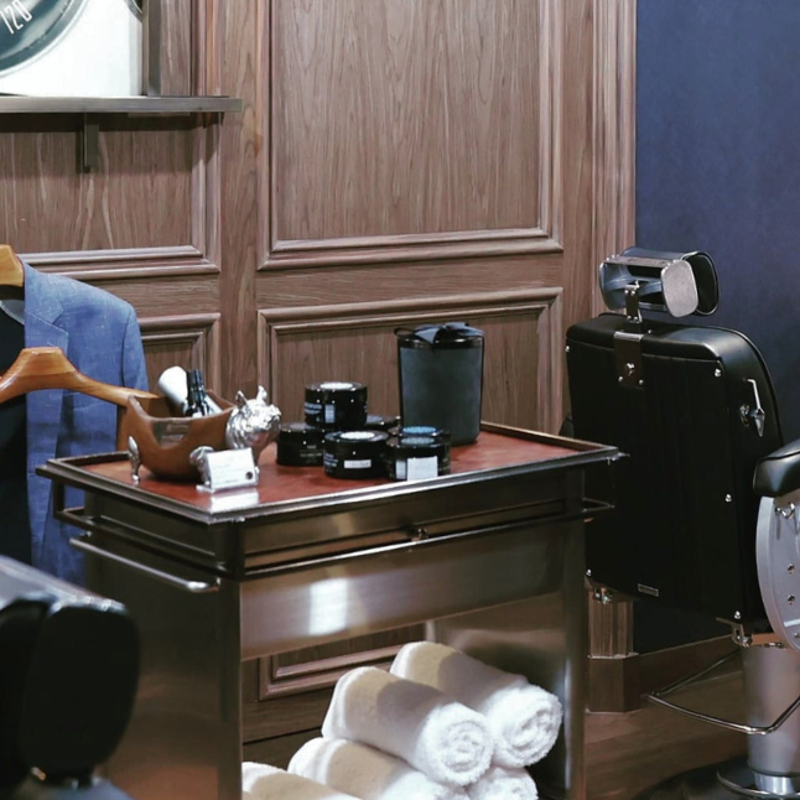
These top 5 barber shops in Bangkok are where gentlemen can elevate ...

Set to premiere on 24 April, the Japanese remake of Girl From ...

A cinephile’s guide to eight alternative cinemas in Bangkok worth checking out. ...
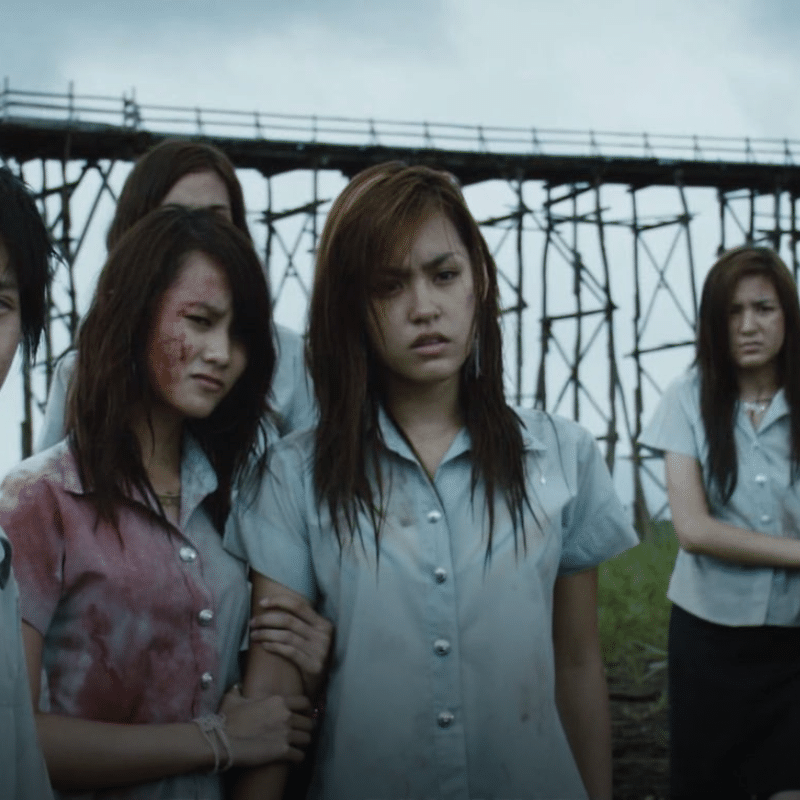
Bangkok Horror Film Festival rises again with cult classics, new voices and ...

From pitch-black dining rooms to tables with riverfront views, these spots make ...
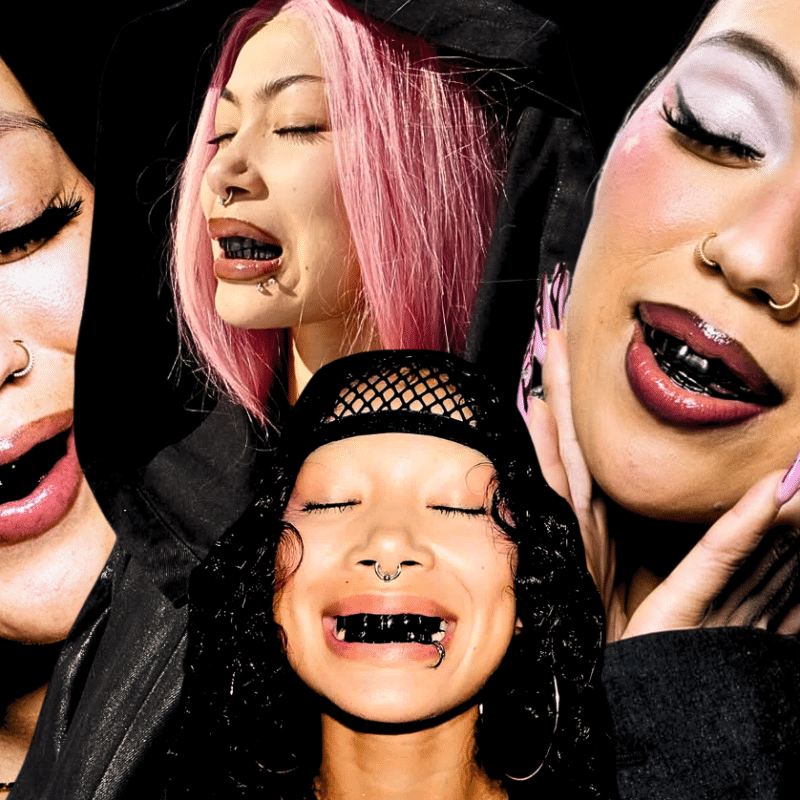
Sailorr and Molly Santana’s black grills fuse hip-hop swagger with homage to ...
Wee use cookies to deliver your best experience on our website. By using our website, you consent to our cookies in accordance with our cookies policy and privacy policy


