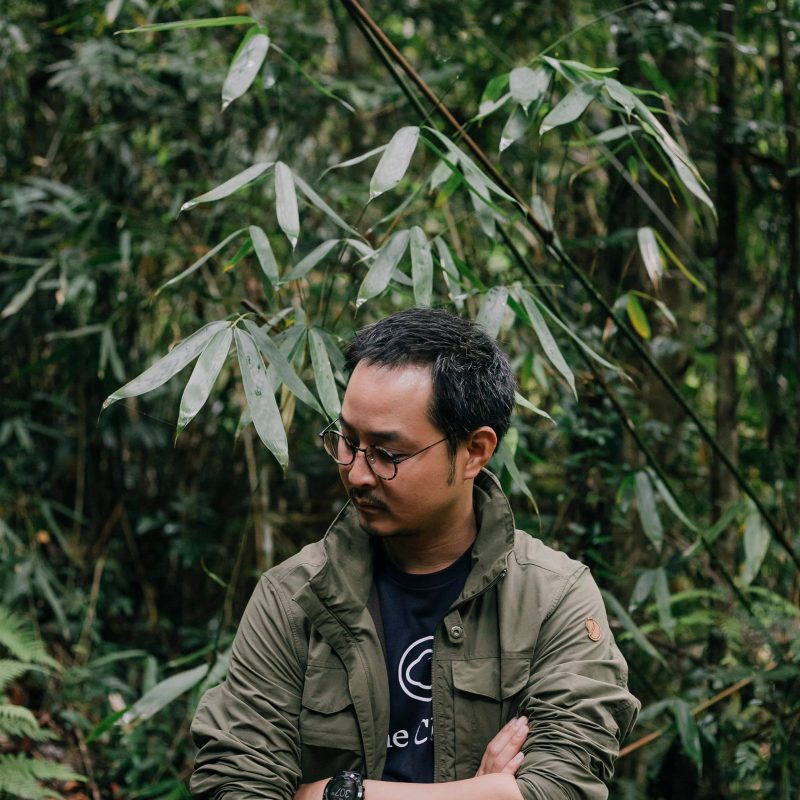
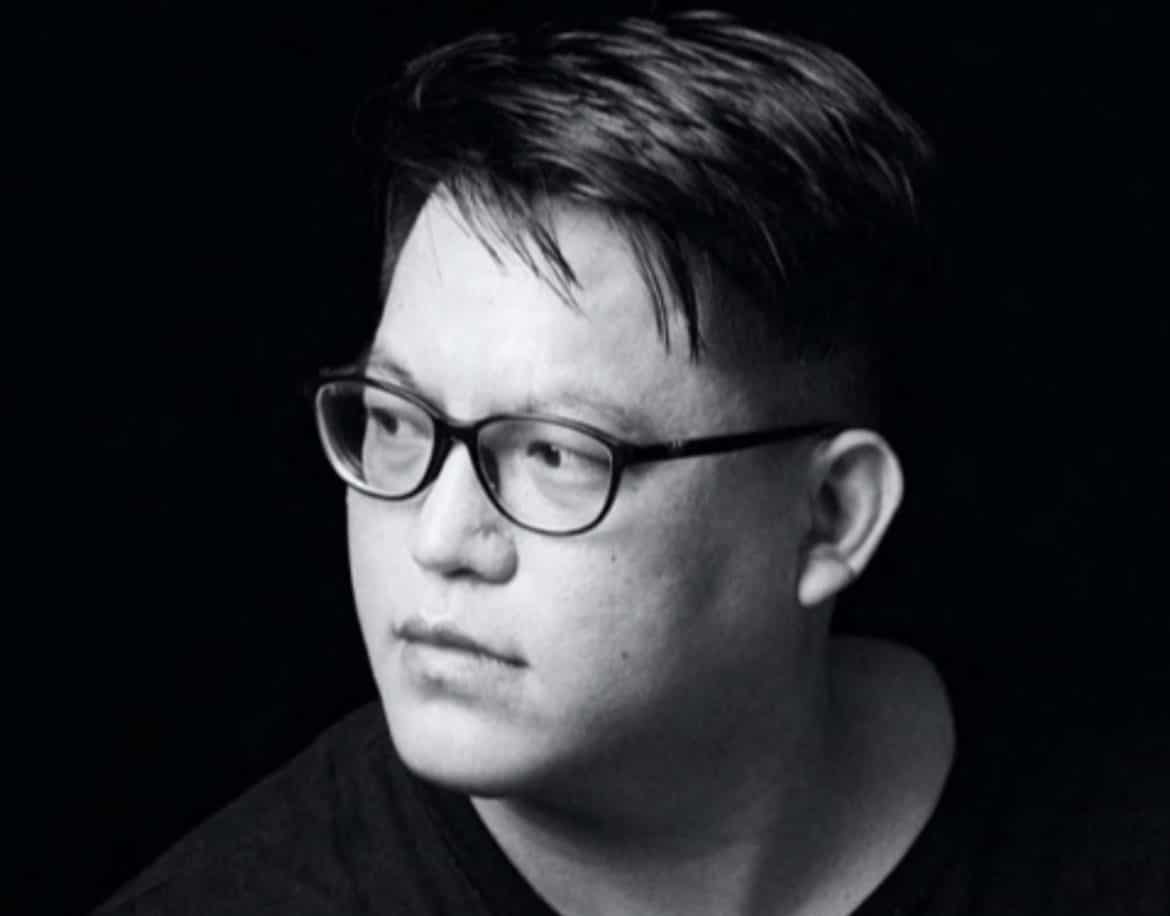

Tanitha “Toon” Vachira of MOHo Studio transforms paper into sustainable exhibitions and art using origami, modularity and circular design to give materials new life.
Paper is everywhere, wrapped around our deliveries, stacked in our offices, plastered across events — and most of it ends up in the bin before the day is even over. In the world of exhibitions and pop-ups it’s even worse: giant backdrops, signs and props that look impressive for a weekend’s duration are tossed out by Monday.
Tanitha “Toon” Vachira has built MOHo Studio on a simple yet profound belief: that paper can be both purposeful and transformative. Koktail sat down with him to explore his vision of how a simple sheet of reused paper can become something new when treated with respect, creativity and a circular mindset.
From Event Waste to Art: Toon’s Journey
“I grew up running around a printing factory, surrounded by ink, machines and sheets of paper. It became part of my everyday life and I was honestly happy waking up to the smell of ink and the sound of printers.”
Toon began his career in architecture and exhibition design, paths that felt natural given his long-standing interest in design and art since his family business is in printing. His experience expanded further when he entered the events industry. At the time he was a designer working on event booths, exhibition layouts and various spatial projects.
The events ran smoothly but when the dismantling began, something changed for him. He watched months of effort, every detail he had refined, turn into waste within a few hours. That moment became a turning point. He realised that in the world of event and exhibition design, creators often become unintentional contributors to waste. No matter how thoughtful or well-designed the work was, it ended up as discarded material.
That moment led him to found MOHo Studio in 2015, a design practice focused on conscious paper-based creations. The studio works across two main areas: exhibitions and art pieces. He explains that the name MOHo comes from the Spanish word moho meaning “mould” or “template.” At the same time the name carries a more personal layer: in Thai, moho also means “mad,” a fitting reflection of how he felt at the moment he realised that everything he had designed had become waste.
Paper That Lasts: Origami, Modularity, Circularity
“Many people misunderstand and assume paper is fragile or temporary and unsuitable as there’s this mindset that event structures must be extremely durable. But in reality most events last no more than a week. So if I can design a structure that remains strong and stable for that specific timeframe, then paper becomes one of the most efficient materials to work with.”
Some were amazed, some resisted and many felt paper simply couldn’t achieve height, complexity or structural strength. Now a decade later Toon observes that every department store and major event incorporates paper in some form. For him it reflects an important shift, an industry beginning to recognise the value of paper as a material.
“I’ve always been inspired by Japanese architecture. Many of their traditional houses rely on joinery systems that allow structures to be assembled and taken apart without damage. When I first observed that approach I remember thinking, why couldn’t I adapt this logic for paper? So I began developing their wooden techniques into something suitable for my own material. That idea eventually became part of my studio’s identity.”
Toon often says his approach to paper is shaped by three core pillars. The first is origami, a Japanese design principle that transforms a flat sheet into complex three-dimensional forms through folding and unfolding. This technique allows structures to be assembled and dismantled with ease, reducing waste and enabling reuse.
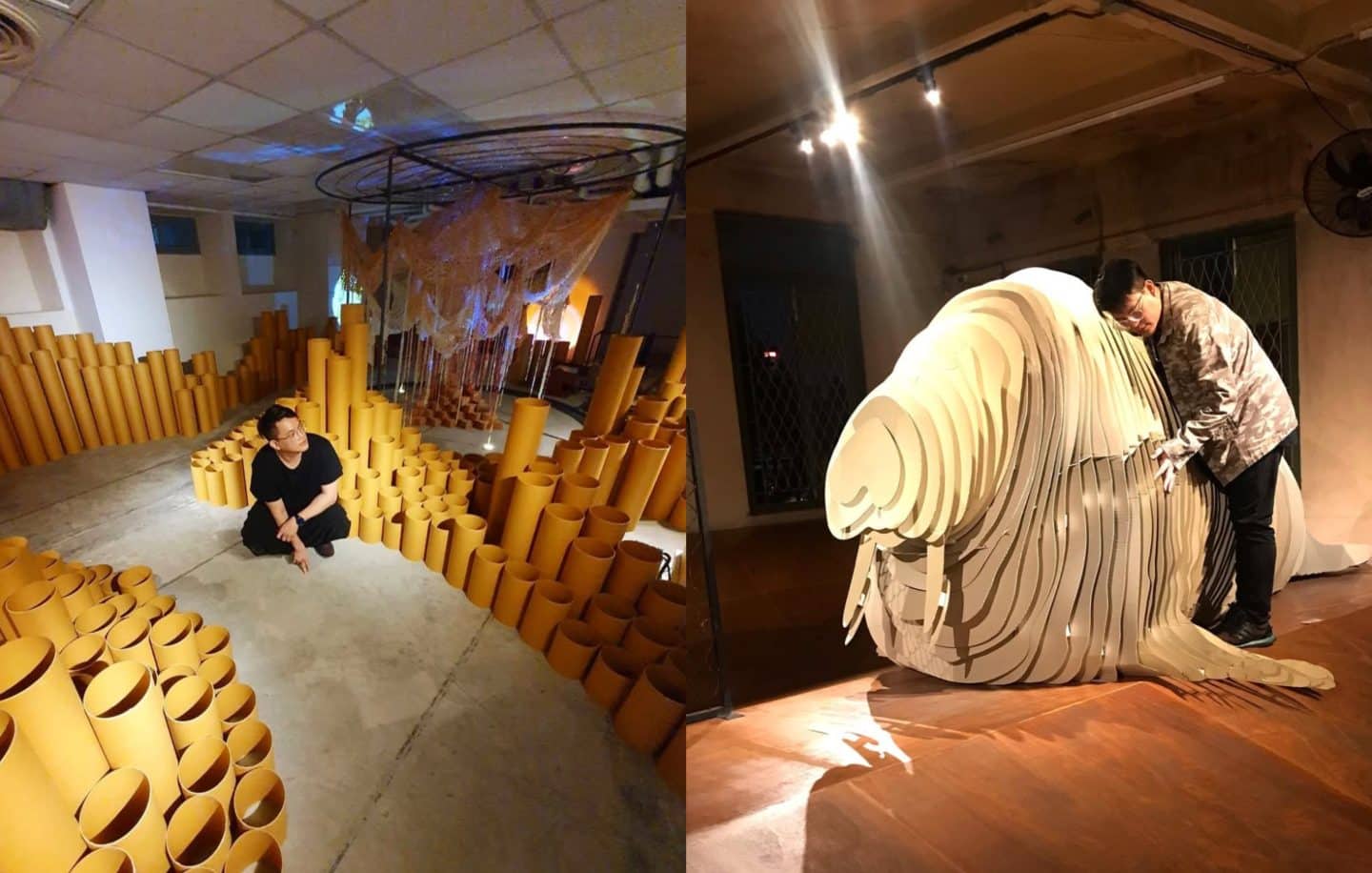
The second is modular design, using a single repeatable unit to create larger forms and volumes when added together. So in his work the paper he uses for an installation can be reused in another work.
“What I’ve come to appreciate is that paper, as a material, has one of the most efficient waste-management systems compared to wood or metal. When a project ends I can send the paper straight to be recycled, and by the next day it can re-emerge as a new sheet.
Wood and metal can, of course, be recycled too but their processes take far longer, sometimes 10 to 40 days because of the sorting, breaking down and treatment required.”
The third is circular design. When a project ends the materials don’t become waste. Any other materials used for installations, aside from paper, are passed on to schools, communities, foundations, universities and even correctional facilities. Meanwhile the paper itself is sent for recycling and reused. In this way every piece continues its life in another form.
In the past year alone he hasn’t thrown paper away at all. For him that is the heart of a circular economy: when materials are cared for and redistributed, their value extends far beyond the lifespan of a single event.
One of the projects that has left a lasting impression on him is his art piece through which he communicates themes of nature using paper, displayed at Bangkok Design Week in 2022. It was the Walrus project, inspired by the story of Freya, a walrus that was euthanised by Norwegian authorities in August 2023. Toon recreated the animal in paper. He built the walrus to life-size proportions over four metres long.
“I realised that the presence of nature, of animals, brings joy to humans. With my walrus installation, visitors didn’t just take photos; they sat beside it, read and interacted. It showed me that nature and people can coexist harmoniously. The piece reflected Freya, the walrus who was tragically euthanised for being too comfortable around humans. On the final day of the exhibition I dismantled the installation in front of everyone. It wasn’t real yet it conveyed loss and absence.”
Beyond Eco-Friendly: A New Standard in Design
Toon reflects on what sustainability means, a journey that has taken him over a decade to understand. To him sustainability isn’t just about using natural materials; it’s about recognising the problems he creates and finding ways to prevent them from happening in the first place.
“For example I once created a pavilion using fabric. Instead of discarding it after the event, I repurposed the material to make food covers, which I then distributed to local communities to use. Similarly wooden and metal structures that might otherwise have been wasted were donated to local councils to benefit public spaces or provide shelters.”
For Toon sustainability is about humans coexisting with the environment responsibly and joyfully. It’s not just about reducing consumption or avoiding certain materials, it’s about balance. Nowadays Toon has also expanded the studio’s services to include MOHo Carbon (MC²), providing environmental consultancy and advising organisations on sustainable design and construction practices.
“My current ambition is to set a standard. I aim to establish a benchmark for material management, design and waste handling that extends beyond events into everyday life.
I don’t want clients to hire me just for “eco-friendly” projects, I want them to learn and grow alongside us. By this I calculate the carbon footprint of every material I use from design to transport. That way I can show clients how choosing certain materials makes their booth greener and reduces its overall impact.”