
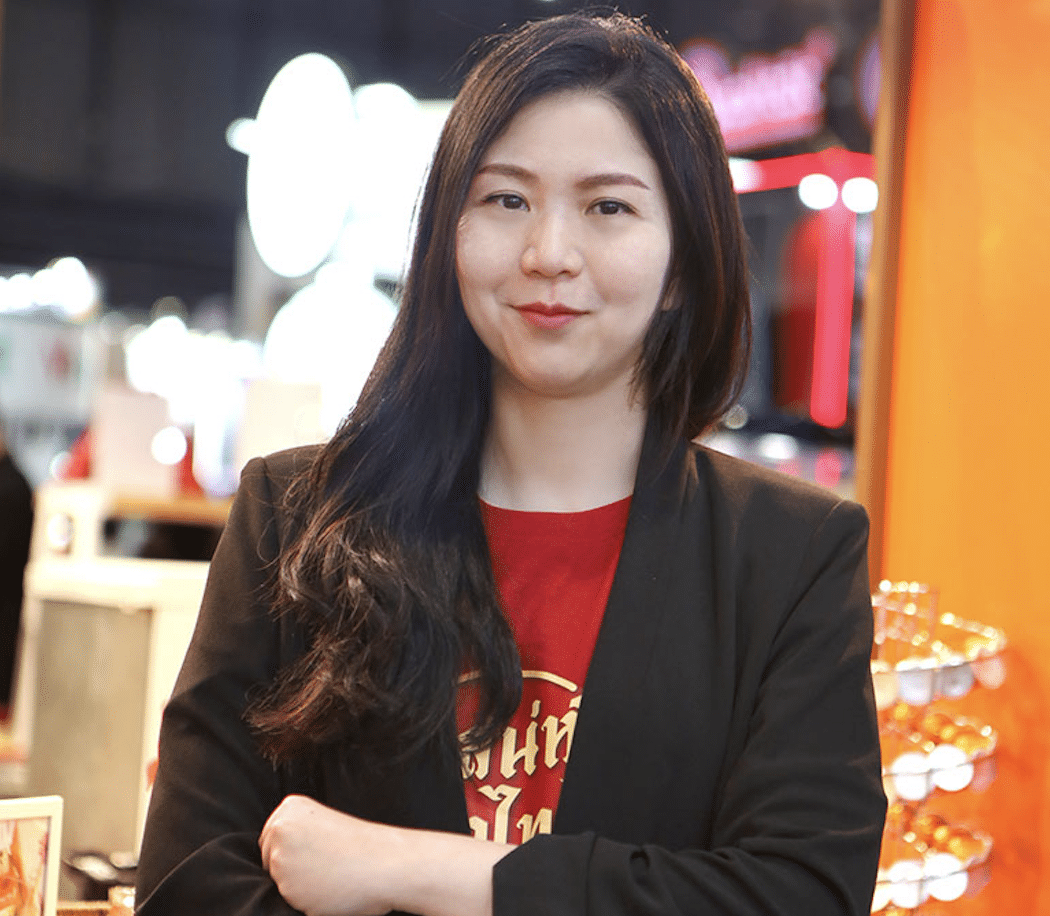

ChaTraMue’s third-generation leader Praonarin Ruangritthidech carries Thai tea forward through heritage, innovation and cultural collaborations that keep a brand relevant worldwide today.
Thai tea holds a familiar place in daily life for Thai people, from street corner markets to shopping mall breaks and everyday takeaway cups across the country. Over time, Thai tea moved beyond its local roots and found new fans through cafés, social media and a growing interest in Asian flavours.
“Thai tea has its own charm,”
says Praonarin Ruangritthidech, executive of ChaTraMue.
“We use tea grown in Thailand. It is a type of black tea and that alone gives it a distinct identity through its flavour.”
As Thai tea reaches new audiences worldwide, ChaTraMue stands among the brands that help guide this movement. Long queues and patient waits for a cup remain part of the story and speak to how Thai tea continues to live within everyday culture.
At the recent ChaTraMue x GDH Chinese New Year menu launch, we met with Praonarin to talk about her vision as a third-generation leader and how she navigates the brand’s direction today.
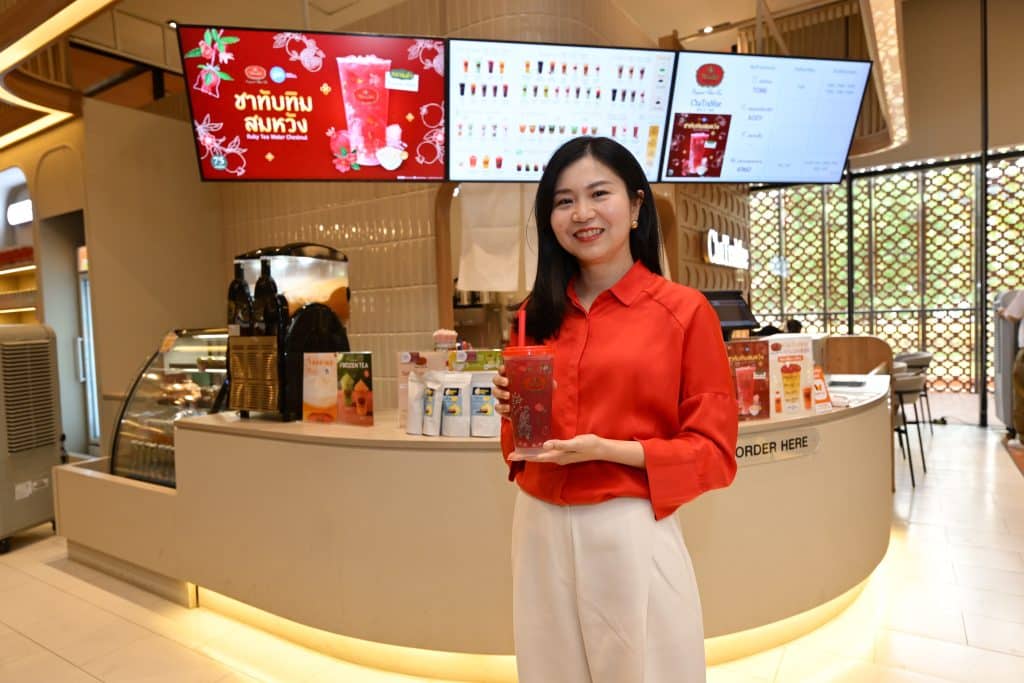
The First Chapter
Tea spans cultures from West to East, but in Thailand, its roots tie closely to Chinese heritage. Thai-Chinese communities favoured hot tea and restaurants commonly served it as part of the dining experience. Tea functioned as both ritual and routine within Chinese dining culture. As red tea began to arrive through Chinese trade, Thai-Chinese communities integrated tea culture into their everyday local life.
The origins of the brand trace back to 1920 when the founder, the elder brother of Praonarin’s grandfather, began the tea business in Thailand. He opened a shop that sold imported Chinese tea under the name Lim Meng Keeat on Yaowarat Road. As siblings who migrated together joined forces, the business grew into a family-run venture. Later in 1945, the ChaTraMue name was adopted and the year became the official start of the brand.
As lifestyles changed, bottled water and coffee replaced hot tea at the table. The second
generation, which included Praonarin’s parents, responded with three key shifts. Tea leaves
transitioned to local production in Thailand, particularly in Chiang Rai and nearby regions, helping reduce production costs.
The second change came through brewed milk tea with sugar.
Her father came up with Thai milk tea and Thai black tea both served with ice to meet the
changing needs of Thais. ChaTraMue stood among the first to shape this style and formed a
new flavour that became identified as Thai tea. While the third factor is how her parents recognised the importance of ASEAN early on. They began participating in exhibitions and searching for official distributors in ASEAN countries. As a result, they have been exporting tea products to those countries for more than 20 years.
As the term “Thai tea” was then not used to identify a particular flavour, her parents sought to
establish a clearer identity for the beverage and heavily promoted the name for this Thai tea.
They also introduced beverage storefronts to reach more people. The business remains largely
B2B with a focus on more exports to other countries. The brand also joined selected events to
sell products directly to consumers.
How ChaTraMue Entered a New Era
“When I was young, I helped pack tea during busy periods, especially when the shop was short on hands,”
she says with a smile.
“Those moments became part of my memories.”
“As I grew older, I helped with exhibitions as well. I remember that the first event I went to help my parents, a familiar face came and they told us our brand brings back memories of their childhood drinking tea and I was so happy. That was during my student years, going out to events and representing the brand. These are the memories that stay with me – they feel like my own ChaTraMue memories.”
About 10 years ago, the brand entered its third generation under Praonarin and her brother
Setthakit “Trophy” Ruangritthidech. After graduating from Thammasat University and Sasin
School of Management and also working in accounting, she returned to the family business. Her
focus moved ChaTraMue beyond its traditional merchant base, with the goal of bringing the
brand to a broader audience.
“When we started to join more exhibitions and fairs, more people began to notice us. They were everyday tea drinkers who came to walk around the events and that was when the idea of opening drink shops came up.”
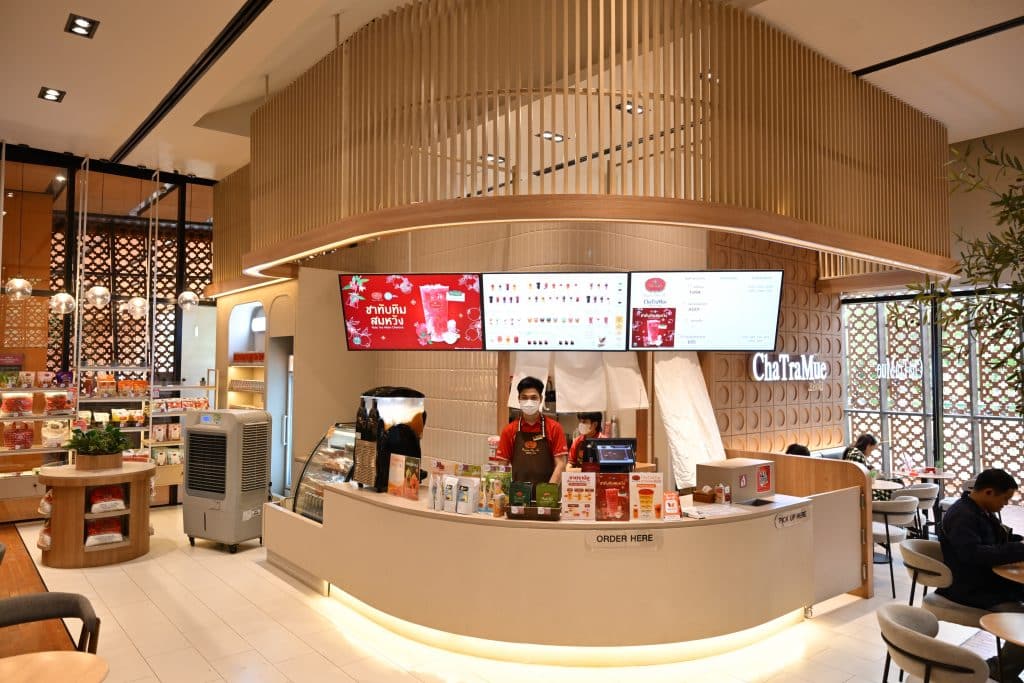
Under her leadership ChaTraMue shifted closer to consumers. The brand now runs over 220 storefront branches and 130 international locations. This B2C focus also supports the B2B side. The storefronts act as a live testing ground, where partners see which flavours resonate, which ideas perform well and how tea culture evolves. It helps the wider tea market grow while giving the brand a clearer read on consumer behaviour.
“My days involve a lot of tea tasting,”
she laughs.
“Every menu comes from tasting again and again as a team and from watching how people respond. Most days I talk with the team about what we plan next, what problems come up and what we can improve. I also spend time at the stores, because being there lets me see what really happens and where we can do better.”
Fun Facts: The Turning Point Wasn’t Just Thai Tea
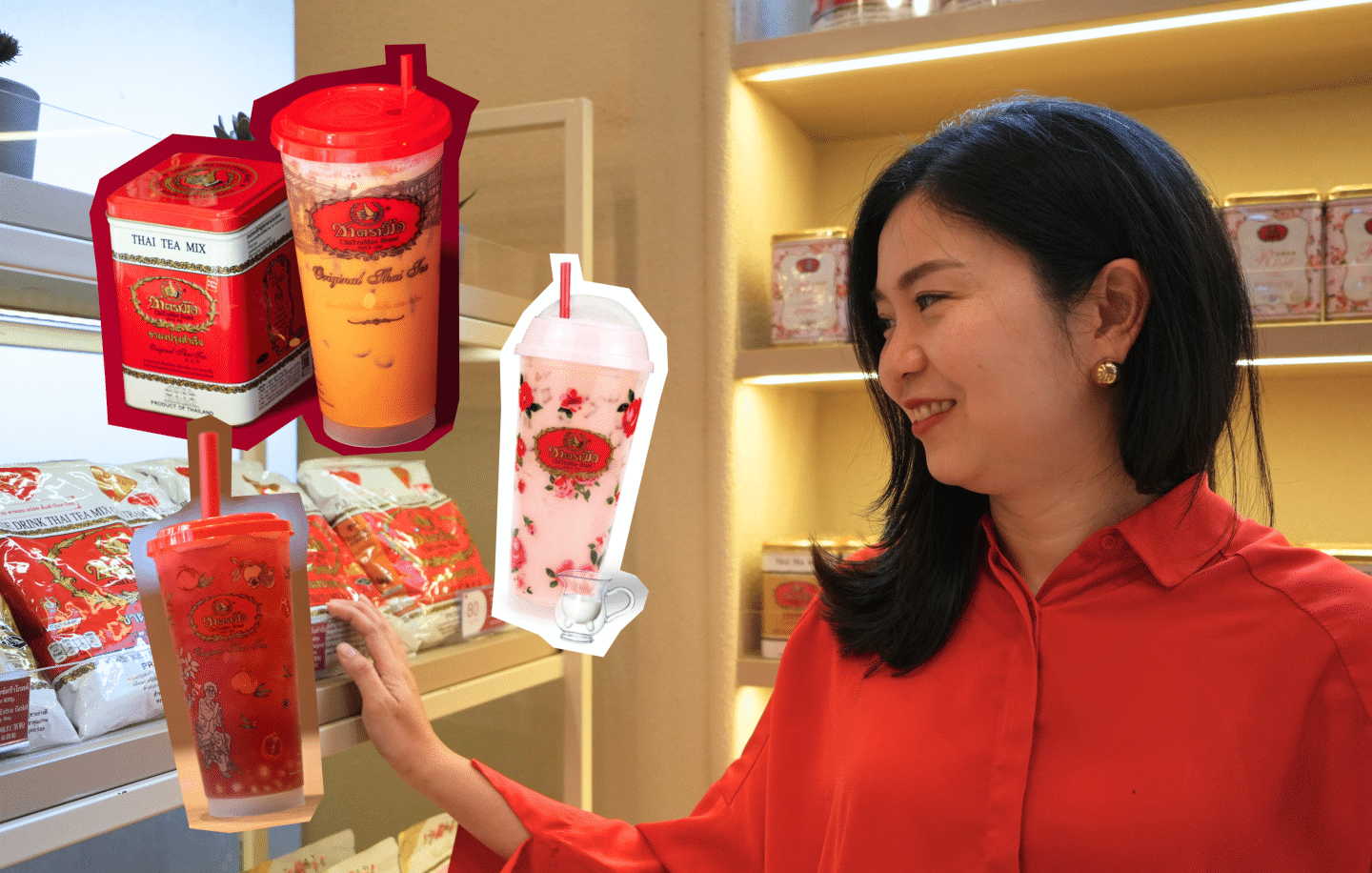
If the first generation brought red tea into Thailand and the second generation shaped what people now know as Thai tea, the third generation marked a new chapter under Praonarin with rose tea. The drink that pushed ChaTraMue into viral culture. The spark came from rose tea, a limited menu released around Valentine’s Day in 2017.
Rose tea had always existed in the family. Her father had developed the recipe years earlier, though it never reached mass production. At the time, rose tea carried a higher price and people rarely drank it with milk or sugar. Praonarin saw a chance to make the drink more approachable, with a price that suited everyday life. The result turned rose tea into one of ChaTraMue’s most talked-about offerings and drew a new wave of fans to the brand.
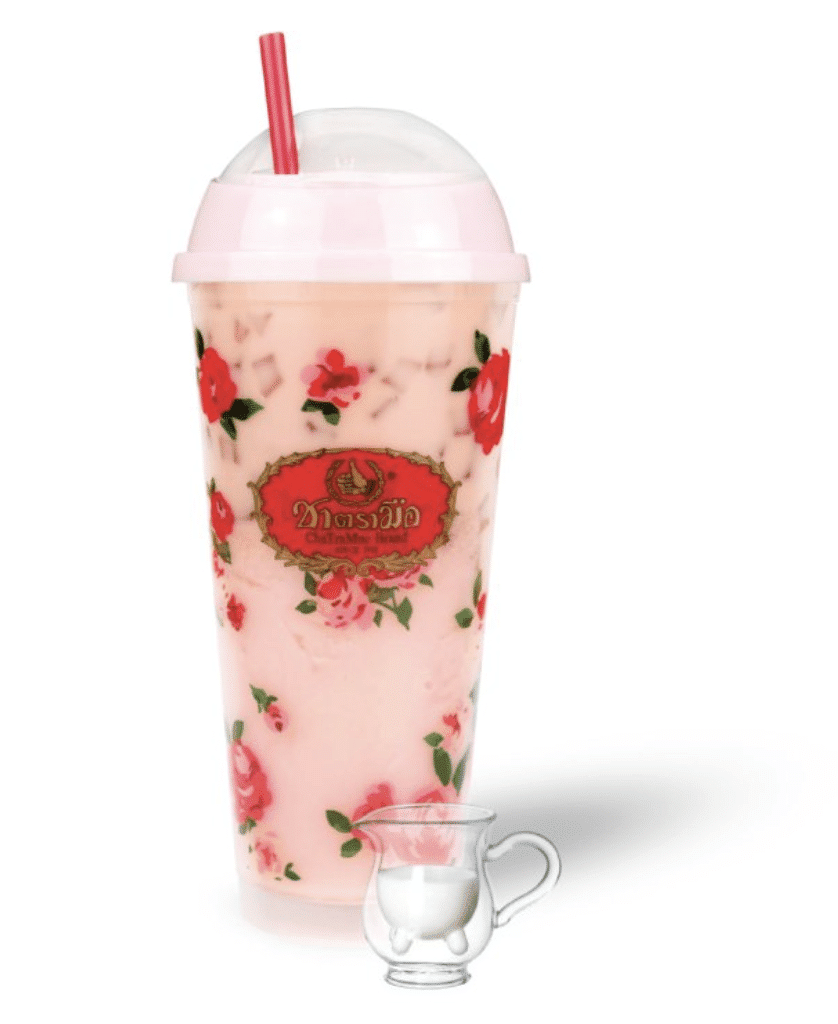
Influencers and customers quickly filled social feeds with content around the drink. Many shared claims about its benefits especially for digestion, which fueled curiosity. Long queues formed in front of stores as more people wanted to try rose tea for themselves.
From that moment, ChaTraMue stayed present in pop culture. Praonarin continued to release new menus to match shifting trends, from Thai tea soft-serve ice cream to pearl toppings across drinks and vegan options using oatmilk that spoke to a younger, health-aware crowd.
When asked about her personal favourite on the menu, she answered simply:
“Thai tea will always be my favourite. It is a familiar taste that I return to every day since I drink tea constantly. I rotate between menus. On days when I want something refreshing, I choose yuzu green tea. Those are my regular choices. Another favourite is Black Tea Latte. I go for that when I want something rich and aromatic, especially because it comes with pearls.”
Listening Into Action
“I believe in growing step by step by truly listening to our customers. For me, sustainable growth comes from honesty with myself, with others and with our customers. It starts with how we feel about what we create. My goal is to offer quality, warmth and value at a fair price.”
Today, Praonarin continues to push ChaTraMue into a wider cultural space through collaborations with brands across food and lifestyle. Recent partnerships include Thai tea coconut drinks with Malee Coco, fried chicken with Thai tea sauce with Chester’s, Thai tea panna cotta with Sushiro, and plant-based protein Thai tea and cocoa with Plantae. Each collaboration places ChaTraMue in new contexts while keeping its flavour identity intact.
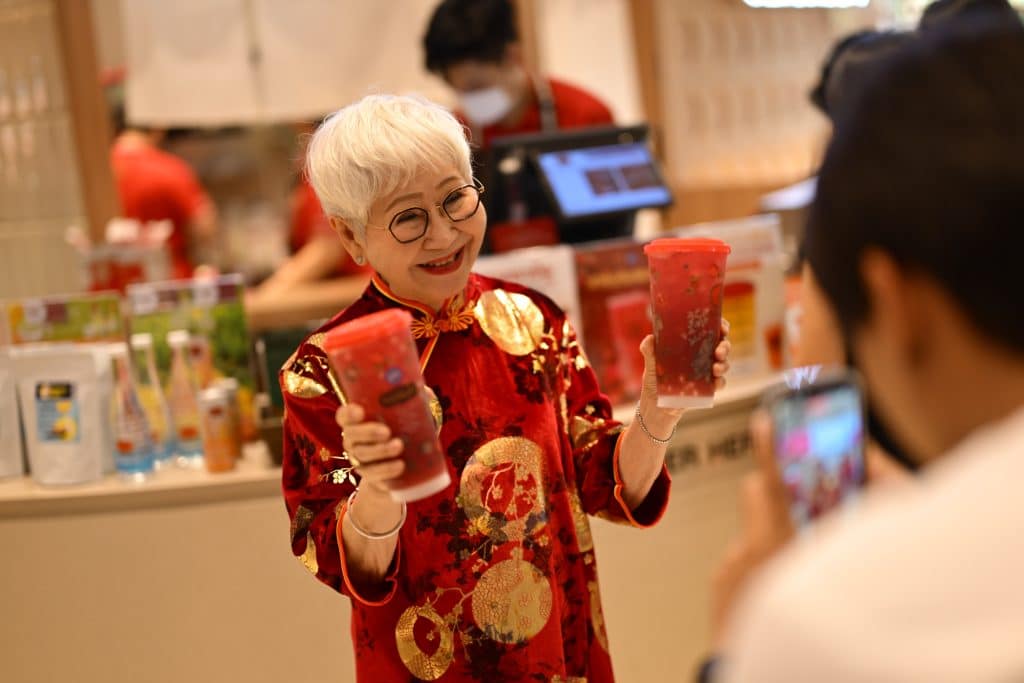
Courtesy of ChaTraMue
Her latest move steps into film culture. The Lahn Mah x ChaTraMue collaboration builds on the success of the movie How To Make Millions Before Grandma Dies (2024). For Chinese New Year, ChaTraMue reinterprets symbols and themes from the film into a limited-edition drink, pomegranate tea.
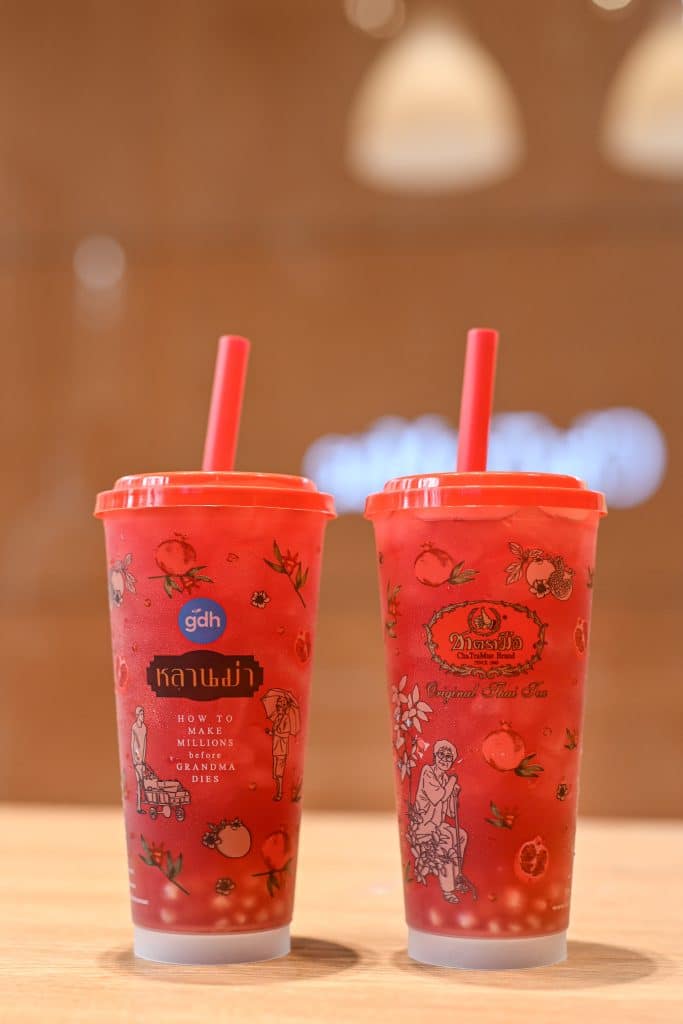
“Through nostalgia marketing, the brand translates emotion into taste. The pomegranate, a key symbol from the film, becomes the centre of the menu and turns a cinematic memory into a drinkable brand experience rooted in remembrance and warmth.”
Through this approach, Praonarin positions ChaTraMue as a brand that evolves alongside its audience. Collaboration becomes a way to listen, adapt and stay culturally relevant, while keeping the brand rooted in familiarity and trust.


Courtesy of ChaTraMue