
Weekend Getaways
7 Must-Visit National Parks in Thailand and How to Explore Them
Escape Bangkok for Thailand’s 7 best national parks. Discover wildlife, culture and ...



At Bangkok Kunsthalle, The Preservation of Fire unfolds across two floors like a cross section between life and death, memory and rebirth.
Below, indigo dyed textiles spread across the floor like traces of burial grounds and inherited memory. Above, a reconstructed Akha house still carries signs of living through smoke stained ceilings, farming tools and the creaking sound of bamboo beneath visitors’ feet.
The two spaces become a reflection on how culture survives through practice, labour and everyday life. Walking through the exhibition during its opening, what stood out most was both the beauty of the objects themselves and the way ordinary acts of living had been embedded into them.


The experience begins on the ground floor. Indigo dyed textiles spread across the space like an archaeological field. Clothes, bags, hats and fragments of fabric lie across the floor carrying traces of lives once lived. Many of the textiles on display originated from people who have already passed away. Traditionally, Akha textiles were buried alongside their owners, remaining with them in death. Ajaw brings these materials back into view, giving them another life beyond the grave.
The textiles are presented less as artefacts and more as vessels of lived memory.

Before written language became widely used within Akha communities, embroidery carried stories, movement and belief. Patterns referenced journeys across mountains, seasons, flowers and butterflies. Cloth became a way of recording experience and passing knowledge between generations.
Ajaw explained that traditionally, many Akha people would own only around three to five sets of clothing throughout their lives. Each piece carried emotional weight beyond everyday use. Embroidery often reflected the care and labour of mothers who hand stitched patterns for their children and family members. The textiles therefore became both personal belongings and records of affection, memory and identity.

The exhibition also reveals how Akha textile patterns have shifted over time through cultural exchange and historical change. Some garments incorporate Lao influences, while others reflect visual changes that emerged as Western culture and Christianity spread more widely through Akha communities. As lifestyles, religion and social structures changed, many traditional weaving and embroidery techniques gradually began to disappear as well.

Upstairs, the reconstructed Akha house standing on the upper floor does not feel like a museum display. It feels inhabited.
The bamboo creaks softly underfoot. Farming tools lean against the walls. Smoke stains remain on the ceiling above the hearth. Every object carries traces of use. The exhibition explores cultural preservation not through static artefacts, but through living practice.

The wooden house becomes a vessel of memory, labour and inherited knowledge. The orientation of rooms follows spiritual beliefs and the movement of the sun. Raised stilts respond to flooding and mountainous terrain. Built in drying racks and the central hearth reflect agricultural life and communal cooking. Even the structural supports respond to strong winds in the highlands. The house quietly records generations of practical knowledge.
As the exhibition suggests, objects and spaces are not decorative. They are memory systems.

Ajaw explained that she had wanted to rebuild an Akha house for many years. Traditional bamboo houses are becoming increasingly rare as many families shift towards concrete homes. Younger generations often grow up without ever living in or even seeing these structures. The house reconstructed inside Bangkok Kunsthalle was transported from Huai Nam Un village in Chiang Rai. The descendants of the original owner are now in their eighties, and the house itself was close to being dismantled completely.
Ajaw also explained that older Akha spiritual beliefs once shaped the structure of domestic life and architecture itself. Traditionally, Akha houses were divided into separate rooms because men and women were not expected to sleep together according to ancestral beliefs tied to cosmology and oral storytelling. In older Akha tradition, these customs were connected to stories about the first Akha mother, a giant spirit figure who lived during a time when humans and spirits coexisted. The story of the giant mother, which still appears in Akha poetry and songs today, tells of how she repeatedly consumed her husbands before seeking guidance from the gods, who instructed her to separate sleeping spaces within the home.
Young children could remain with their mothers while they were still dependent on them, but older children and teenagers would eventually move into smaller separate houses built nearby. Ajaw noted that many modern Akha homes are now built as single room concrete houses, reflecting changing lifestyles and the decline of older ancestral beliefs as communities increasingly adopt Christianity or Buddhism. As a result, many of these spatial traditions have gradually faded from everyday life.


One of the most striking details is that Akha builders traditionally did not use tape measures. Houses were measured using the body itself, particularly the arm span of the builder. In this way, the structure quite literally contains the proportions and presence of the people who made it. Architecture becomes both physical shelter and human record.
Placed inside Bangkok Kunsthalle, the reconstructed house becomes a conversation between inherited ways of living and the pace of contemporary urban life. In a city shaped by speed, concrete and constant redevelopment, the exhibition offers a reflection on forms of knowledge that are often passed down through touch, ritual, craftsmanship and shared memory.
That sense of death and rebirth runs throughout the exhibition. Ajaw described the house and textiles as resembling elderly people carrying long histories through time. Many traditional Akha houses have been abandoned as communities move, rebuild or shift towards modern materials, while older textile traditions have gradually faded alongside changing lifestyles, religions and social structures.
The reconstructed house upstairs was once close to disappearing, while many of the textiles below belonged to people who had already passed away and were originally buried with them. By bringing both into Bangkok Kunsthalle, Ajaw gives these forms of knowledge another life. The exhibition therefore asks viewers to see the house and textiles not simply as beautiful objects, but as cultural practices being revived before they disappear completely.

The exhibition does not present these changes with nostalgia or judgement. Instead, it asks what it means to preserve culture in the present tense. Rather than sealing traditions behind glass, Ajaw works collaboratively with Akha builders, craftspeople and community members to reconstruct forms of dwelling and making that are slowly disappearing.
A line from the exhibition text lingers long after leaving the space: traditions cannot survive simply by being displayed. They remain alive through practice.
The house and textiles exist across two levels like a physical and emotional cross section between life and death. Above sits the house, still carrying signs of living. Below rest the textiles, recalling burial grounds and inherited memory. They transform Bangkok Kunsthalle into a space where culture is not frozen in the past, but continually reconstructed through people, objects and practice.

Escape Bangkok for Thailand’s 7 best national parks. Discover wildlife, culture and ...

Two icons of modern art come together at Dib26’s Muse: Beyond Human, ...
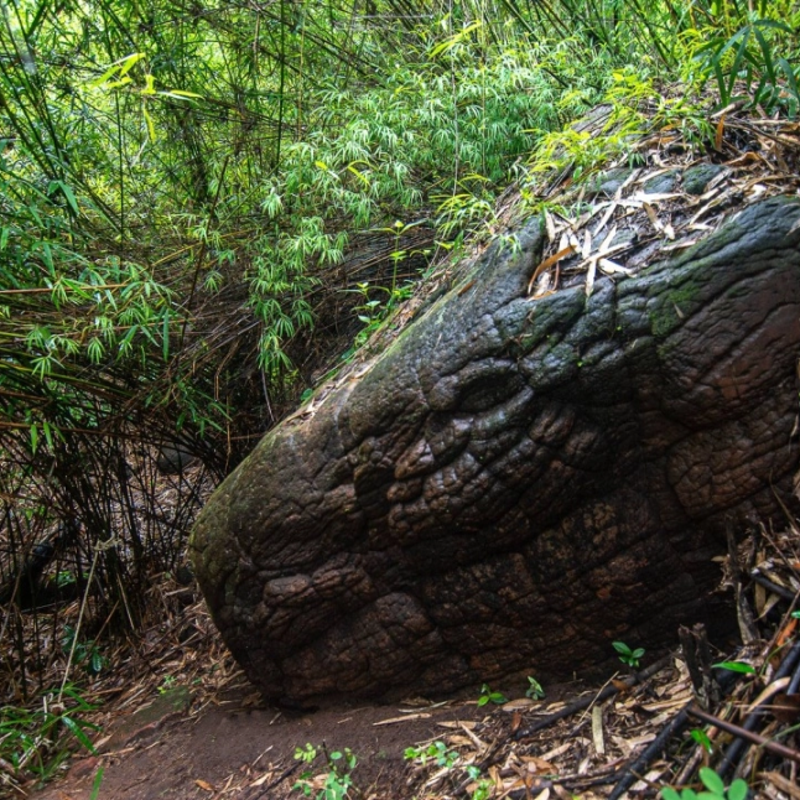
A detailed guide to hiking the Naga Cave, combining physical challenges with ...

Sailorr and Molly Santana’s black grills fuse hip-hop swagger with homage to ...

Treat your favorite furry companion some stylish goods Did you ever think ...

Thai filmmaker Apichatpong “Joe” Weerasethakul receives France’s highest honour, the Legion of ...
Wee use cookies to deliver your best experience on our website. By using our website, you consent to our cookies in accordance with our cookies policy and privacy policy


