Weekend Getaways
7 Must-Visit National Parks in Thailand and How to Explore Them
Escape Bangkok for Thailand’s 7 best national parks. Discover wildlife, culture and ...


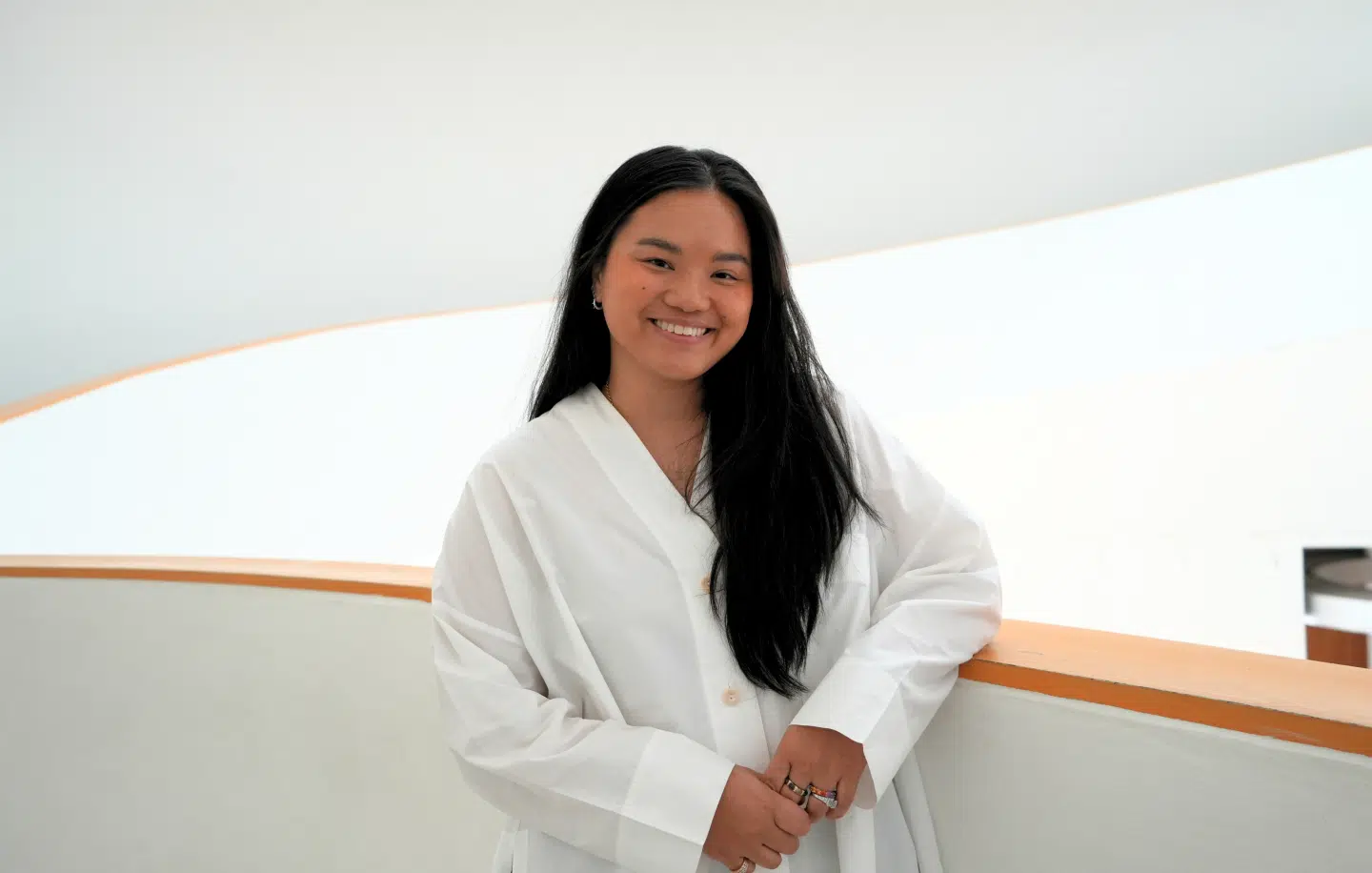

For the past three years, Adulaya “Kim” Hoontrakul has served as Director of the Bangkok Art & Culture Centre (BACC), one of the youngest people to hold the institution’s highest leadership role. She carries the responsibility of one of Bangkok’s most important contemporary art spaces in Bangkok that plays an essential role in the city’s cultural landscape.
Yet when you meet Kim, the first thing you notice is not pressure or authority. It is her calm energy. In a space that shapes the city’s art scene, she leads with confidence and that presence alone earns deep respect.
So today, our story shifts to a more easygoing and inspiring conversation as we get to know her journey and the vision behind her work.

Kim’s curiosity and openness trace back to a childhood between cultures. She often moved schools between Bangkok, London and Paris as her father’s business took the family from place to place. Living between these cities built a natural curiosity about people, places and ideas.
One moment in a Year 9 classroom gave that curiosity and imagination a direction: art history.
“It was all a bit instinctual, to be honest,”
she says.
“I have always loved history. One day we had homework to write about Henry VIII. I wrote about him but through a portrait of the king. I thought I was describing him by describing the painting. My history teacher told me that wasn’t exactly the assignment but he explained that what I had just done was called Art History. That was the first time I heard about the field and he suggested I might study it at university.”
That suggestion stayed with her. Kim later studied History of Art and Archaeology with Music at SOAS University of London, where she completed her bachelor’s degree in 2007. Years later, she returned to deepen that focus with a master’s degree in Asian Art Histories at Goldsmiths, University of London from 2015 to 2017.
“I would say my studies helped me look at everything from a wider angle and to always consider all possibilities. And most importantly to have research and data to inform your decisions and support your actions.”
Before joining the BACC, Kim worked as a freelance art curator, a role she still continues today. Her curatorial work often begins with historical research and she looks for ways to bring reflections from the past into conversation with the present. Over the years, the practice itself gradually took shape through experience.
“As for curatorial work, it’s really something I learnt on the job. Eventually, you naturally find ways to create a space to express your research and ideas through the artwork and practice of the artists you study.”
By her 30s, the idea of leading an arts institution had already crossed her mind. It was part of her long-term vision, though not something she expected to happen so soon. When she first applied to the Bangkok Art and Culture Centre (BACC), it felt more like an introduction to senior figures in the art world, a chance to present her ideas and perspective.

But when the role eventually became hers, that vision took a very real form through exhibitions, programmes and the everyday work of running one of the city’s key contemporary art spaces.
“A typical day for me includes both internal and external meetings. In between, I check in with my team about our programmes, how we approach different projects and of course a lot of problem solving.”
At BACC, Kim also pushes a curatorial direction rooted in Southeast Asian art history. Her approach explores how craft, politics and material culture connect with society, while also bringing attention to exhibition histories, art education and gender studies. A key part of this vision is creating space for artists and voices that have often been overlooked in the region’s art narratives.

“The art world is all about community, which means it’s also about building bridges. I’m quite an introvert, so before taking on this job I had a hard time making acquaintances because I was very shy.”
Kim speaks openly about the personal shift that came with leadership at the Bangkok Art and Culture Centre. The role pushed her beyond research and curatorial thinking into constant communication, team building and management. Curating is never just about selecting artworks for an exhibition. Much of the work happens long before anything reaches the gallery walls.

“At BACC, we start with an overall theme of what we would like to present to our audience. This then becomes a key word that all creative departments can expand on within their own practice. That key word becomes a guiding frame for my heads of departments as they develop their annual programmes.”
The process also relies heavily on dialogue, especially when artists bring ideas that are still rough or experimental.
“For me, it’s all about keeping the conversation honest and constant. It’s also important to let the artist do his work, so the idea can grow organically.”

One of Kim’s memorable projects is Photography Never Lies (2024) at the Bangkok Art and Culture Centre. The exhibition brought together 13 international artists to question how much truth exists in the images we see today. As artificial intelligence becomes increasingly capable of producing images that look real, the exhibition asked audiences to reconsider what “truth” in photography really means, and whether AI should play a role in shaping art.
The intent of that show was to challenge visual perception and create a space and time for a dialogue between the artwork and the audience but also between the viewers themselves.
“My wish is that the audience feels more free to express themselves when looking at art. I believe an exhibition space is for dialogue and so there is no right or wrong way to say things.”
Beyond her role as director at the Bangkok Art and Culture Centre, Kim continues her work as a curator in Thailand and internationally. Her voice in the field also reaches beyond exhibitions. She joined the WA Dialogues panel at the Women’s Pavilion at the World Expo 2025 Osaka Kansai, where she appeared alongside Emiko Ogawa, Maite Alberdi and Kodo Nishimura for a conversation on arts and culture.
Her upcoming work also includes the Bangkok Art Biennale, where she serves as one of the curators. At the same time, she continues to develop her academic research. Kim is currently pursuing a PhD in Art Studies and Curatorial Practice at Tokyo University of the Arts. Her research focuses on decolonisation dialogues and the transculturation of art in the 20th century, with the aim of exploring how artistic ideas move across cultures and reshape the way art is understood today.
“At the end of the day, we are looking at what we consider as “art”. Now that word does not look the same everywhere, so it is important to find the right weight between them for a strong narrative to convey to the audience.”
For Kim, art is never just about what hangs on the wall. What matters more is the conversation it sparks between artists, audiences and cultures. Through exhibitions, research and public programmes, she hopes to create spaces where different perspectives can meet and learn from each other.
“I want guests to feel relaxed and welcomed. The BACC wears many hats but the first and most important thing is that the BACC is a public space. So this space is for everyone and our approach to audience building is exactly that. We believe that art is for everybody therefore our space should reflect that too.”

Escape Bangkok for Thailand’s 7 best national parks. Discover wildlife, culture and ...

Treat your favorite furry companion some stylish goods Did you ever think ...

Japan’s famous Tsutaya Bookstore opens at One Bangkok this October 2026 with ...

From fish sauce cookies to mala ice cream, discover the strange and ...
L’On Art Festival makes its debut in Bangkok with live painting, workshops, ...

From Chanel in Bangkok to Dior with A24, luxury enters new cultural ...
 English English
  Thai
Thai
Wee use cookies to deliver your best experience on our website. By using our website, you consent to our cookies in accordance with our cookies policy and privacy policy


