Weekend Getaways
7 Must-Visit National Parks in Thailand and How to Explore Them
Escape Bangkok for Thailand’s 7 best national parks. Discover wildlife, culture and ...


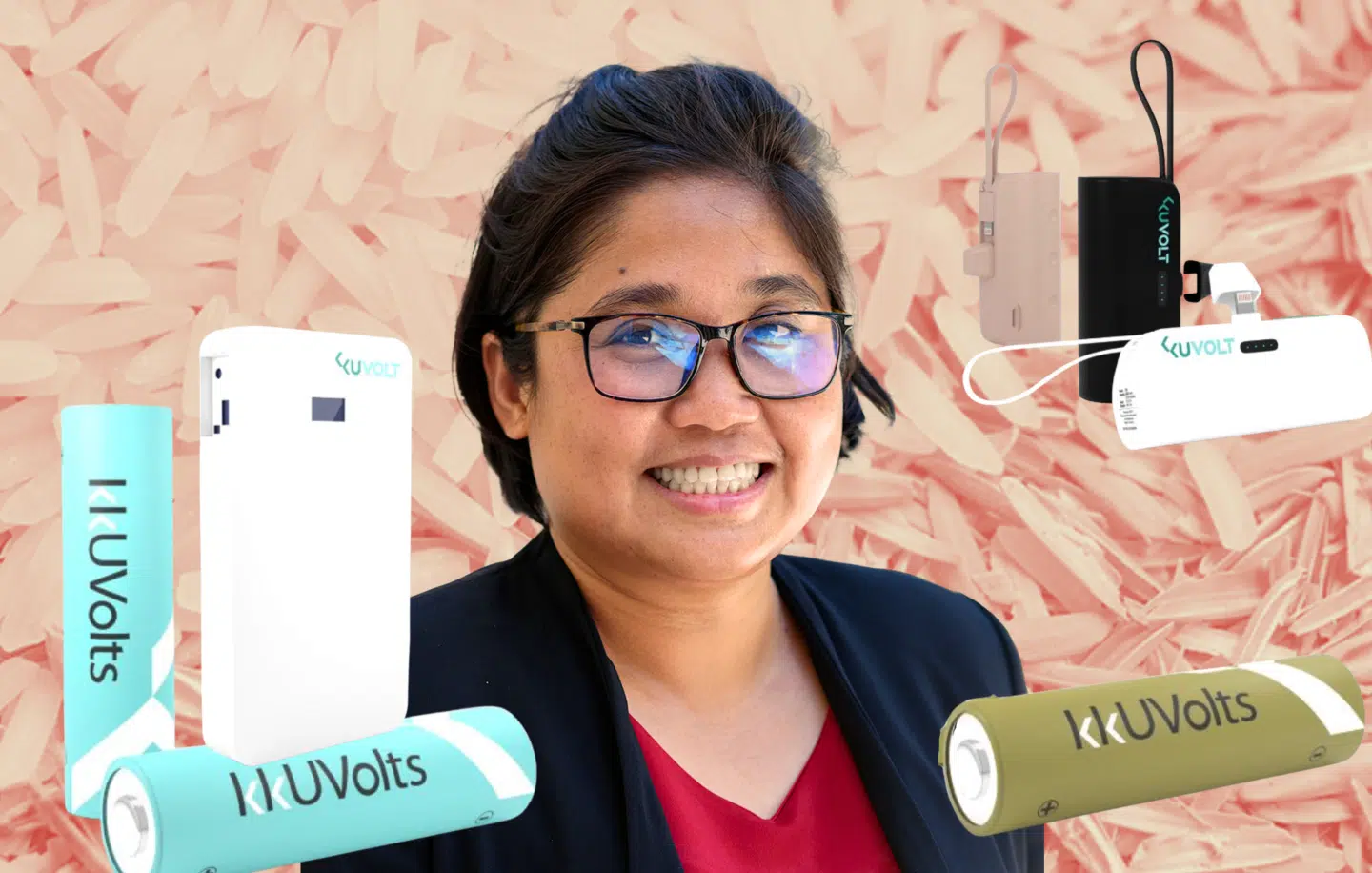

Innovation is often associated with distant resources and complex global supply chains. Yet some of the most promising ingredients for advanced battery technology may be found closer to home. Materials long overlooked can offer lower cost, reduced dependence on imports and benefit to domestic communities. Returning to local production is not a retreat but a strategic advantage.
This belief shapes the journey of Associate Professor Dr Nonglak Meethong, whose work turns overlooked local materials into high-value energy storage solutions and reshapes how Thailand can build its energy future from within.
Who would have imagined that something as ordinary as agricultural residue or common minerals could power the next generation of batteries? Her story shows how a return to what already exists around us may hold the key to a more secure and sustainable future.

The journey of Dr Nonglak started early, fuelled by a genuine love for science. For her, it was never just a subject in a classroom. It was a way of thinking, a way of questioning and a way of building something meaningful. Her curiosity about how materials behave, how they store energy and how ideas can become real technology has shaped every step of her path.
She began her undergraduate academic journey in the United States at Alfred University, where she completed a Bachelor of Science in Ceramic Sciences and Engineering and graduated in 2004.
In the same year, her commitment to scientific inquiry took her to the Massachusetts Institute of Technology, where she began her doctoral studies in Materials Science and Engineering and completed her PhD in 2009. Under the supervision of Professor Yet-Ming Chiang, an accomplished American entrepreneur whose research underpinned several successful companies, she participated in a model of scholarship connected with enterprise. Through this experience, she came to believe that research should move beyond theory into real-world application.

Upon returning to Thailand, she joined the Department of Physics, Faculty of Science at Khon Kaen University as a professor, where she focused her research on commercial lithium-ion and sodium-ion battery solutions for mobility and energy storage applications.
She recognised the fact that Thailand does not produce lithium and relies entirely on imports. However, silicon can be sourced locally from rice husks or recovered from retired solar panels.
This insight redirected her research. Instead of depending on imported materials, she investigated how local resources could replace critical components in battery production. The vision led to the creation of the Battery and New Energy Factory, also known as UVOLT under Khon Khaen University, now Thailand’s leading battery research and development centre uniting product innovation with stringent safety and performance testing. Rooted in local potential, her work reshapes how Thailand can build its energy future from within.


Rice husks have been sold cheaply to biomass plants and burned for heat, with little benefit reaching farmers. Dr Nonglak saw another path. Rice husks are rich in silica, which can be transformed into silicon and used to replace graphite in the negative electrode (anode) of lithium-ion batteries. Instead of waste being burned, it becomes a high-value battery material, which creates greater income potential within the agricultural community.
Under the UVOLT brand, products now extend into everyday life: battery cells, power bank conversion kits, swappable battery packs for electric motorbikes, energy storage systems for homes and battery packs for golf carts.


Courtesy of UVOLT KKU
Designed for fast charging, reliability, high power and long service life at a competitive cost, UVOLT’s swappable battery packs support low-speed electric vehicles with efficiency. Charging speeds are up to four times faster and driving range up to twice as long with safety remaining central to every stage of development.
Dr Nonglak currently serves as Director of the Battery and New Energy Factory at Khon Kaen University, where she leads research and industrial-scale development in advanced energy storage. Under her leadership, the factory has progressed beyond laboratory study into strategic collaboration, forming partnerships with global technology leader Infineon Technologies and regional energy company Banpu NEXT to strengthen battery energy storage systems and accelerate commercial deployment.

Her research has also expanded to retired solar panels. After 20 to 25 years of use, most are dismantled and buried in landfill. Dr Nonglak is exploring how silicon recovered from these panels can replace graphite in the anode of lithium-ion batteries, returning clean-energy waste to productive use. By circulating these materials back into the battery industry, environmental impact can be reduced. This work remains at the research stage.
Beyond replacing graphite, her team is also developing sodium-ion batteries, in which sodium from salt replaces lithium in the positive electrode (cathode). This approach reduces reliance on imported lithium while offering lower cost and improved safety.
She continues to advance clean energy solutions while positioning Khon Kaen University as an active contributor to the global energy transition.

Escape Bangkok for Thailand’s 7 best national parks. Discover wildlife, culture and ...

Treat your favorite furry companion some stylish goods Did you ever think ...

Japan’s famous Tsutaya Bookstore opens at One Bangkok this October 2026 with ...

From fish sauce cookies to mala ice cream, discover the strange and ...

From Chanel in Bangkok to Dior with A24, luxury enters new cultural ...

L’On Art Festival makes its debut in Bangkok with live painting, workshops, ...
 English English
  Thai
Thai
Wee use cookies to deliver your best experience on our website. By using our website, you consent to our cookies in accordance with our cookies policy and privacy policy


