
Weekend Getaways
7 Must-Visit National Parks in Thailand and How to Explore Them
Escape Bangkok for Thailand’s 7 best national parks. Discover wildlife, culture and ...

As a Zoomer born in the early aughts, I have a hard time believing 2016 was 10 years ago. Nostalgia is a double-edged sword. Sometimes it’s a lovely trip down memory lane, although those thoughts of sweeter and more innocent times can bring darker remembrances.
Certain trends tend to reappear, taking on new forms and haunting the present as if they had never left. In retrospect, 2016 was a year of earnestness and cringeworthy moments. But not in a post-ironic kind of way. We were less conscious about self-expression and perceptions of ourselves on the Internet.

Perhaps unsurprisingly, the children of TikTok are yearning for 2016, as indicated by the phrase “2026 is the new 2016”, which has gained substantial momentum over the past few weeks on social media. In honour of the way we used to do things back then, here are seven things that are echoes of the seemingly recent past.
Less a game of skill than one of chance, the bottle flip challenge was a favourite pastime among high schoolers in 2016. If you managed to flip a water bottle and have it land upright, you would command instant respect from your peers.
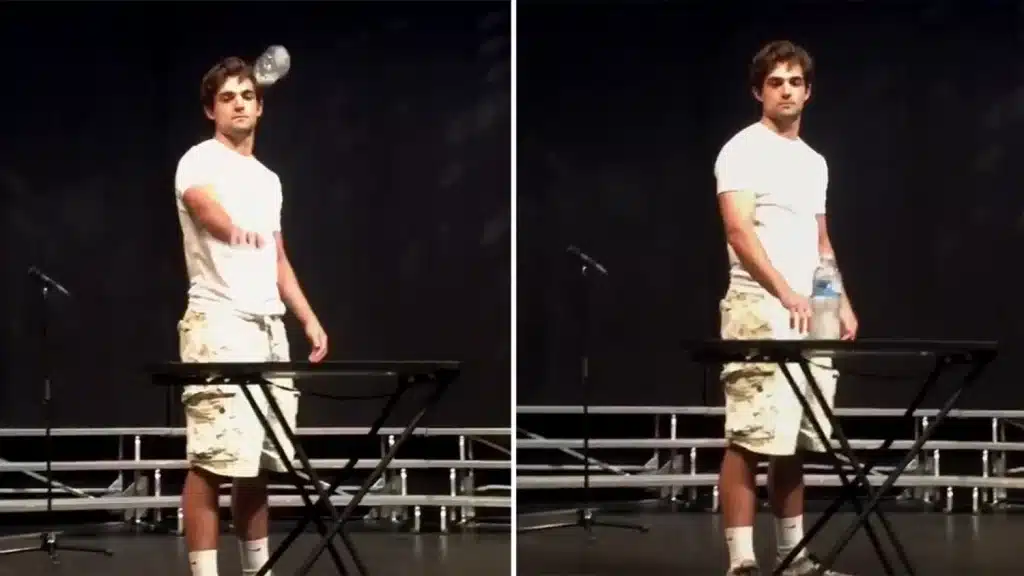
It’s sometimes associated with eSports culture, particularly the ‘Major League Gaming’ (MLG) meme aesthetic, whose frenetic editing style and lurid colour mixing made the accomplishment seem more important than it actually was. Although the ensuing celebration was done mostly in tongue-in-cheek fashion, it didn’t take away from the general impressiveness of a bottle being successfully flipped.
@dorian.0905 2026 is the new 2016💯🔥 #resetmemes2026 #2016 #bottleflipchallenge #thuglife #lowqualitymeme ♬ sonido original – Pau
We all have blemishes on our faces that we would like to hide, acne scars that we would like to get rid of. Snapchat filters offer a great way to do just that with a touch of mild hilarity. A nice rule of thumb: If we’re funny, we won’t come across as self-conscious in our ephemeral selfies. The most popular one at the time was the dog filter. The user’s face would be adorned with cartoonish dog ears and a tongue that would stick out if the user opened their mouth.

Celebrities from Ariana Grande to Kendall Jenner all made it look cute. It’s a mix of the adorable qualities that tiny puppies possess, and Snapchat’s built-in digital enhancement that made it an essential feature whenever we wanted to remind our followers what our so-called face looked like. It wouldn’t be our natural face, of course.
Another one that is making a comeback is the rose-tinted filter. I know we’re already talking about viewing a particular time through a rose-hued lens, but this is a literal rose-tinted filter (also known as “Rio de Janeiro”) that signifies not only youthful carelessness but also the need to maximise every ordinary moment of daily life as much as possible.

While Gen Xers have their slacker culture that is defined by tedium (as epitomised in indie rock), Millennials and Zoomers look at life a little bit differently. The rose-tinted filter provides much-sought-after comfort in the post-COVID era, a world upturned by the tumults of a global pandemic.
At one point in history, there were not four seasons but one: summer. It seemed to go on forever. The operative word is “seemed”. Pop music was morbidly obsessed with summer and never-ending parties. Before the phrase “the song of the summer” was memed to death on TikTok, artists like The Chainsmokers and Calvin Harris were putting out hits that would top Billboard charts every week.
Looking back at it now, if 2016 seemed like a happy year (despite Trump’s ascendancy, Brexit, etc.), it’s mainly because the soundtrack that accompanied it never once mentioned sadness, grief or the anxieties of the times.

The Chainsmokers’ “Closer” (feat. Halsey), Sia’s “Cheap Thrills” (feat. Sean Paul), Desiigner’s “Panda”, Drake’s “One Dance” (feat. Wizkid and Kyla), Justin Timberlake’s “Can’t Stop the Feeling”, Mike Posner’s “I Took a Pill in Ibiza” (the remix version) – these are some of the songs that lengthened the summer of 2016. Justine Bieber was at his peak, with hits like “Sorry” and “What Do You Mean?”.
Granted, there were certain hits like Adele’s “Hello” that erred on the side of introspection. But we were so captivated by Adele’s mezzo-soprano register that we didn’t even think of what the song was trying to convey. Its content was also overlooked due to the memeability of the music video itself, with YouTube parodies making fun of the overly dramatic way she delivered the chorus.

But one song in particular took the world by storm. It was “Black Beatles” by Rae Sremmurd. (That’s “Ear Drummers” spelt backwards.) The group consisted of Slim Jxmmi and Swae Lee, the latter of whom would go on to make a name for himself in the music industry with the 2018 hit “Sunflower”.
The popularity of the song gave rise to the mannequin challenge, in which kids (and adults who desperately wanted to be hip with the kids) tried to remain still to the best of their abilities, appearing as if frozen in time. The camera would go around the room and catch their funny facial expressions.
The phenomenon reached wider circles. American politicians like Michelle Obama and Hillary Clinton also participated in the challenge to appeal to young voters. Needless to say, it was an ineffective strategy, though not as painfully awkward as Clinton’s “Pokémon go to the polls!” joke. It is unclear as to why “Black Beatles” was chosen as the de facto background music. Perhaps it’s the compelling instruments, the overall vibes, or the elusive zeitgeist that made it the right song at the right time.
@raesremmurd 2016 energy only 🕺🏽🔥
♬ original sound – Rae Sremmurd
Yes, you’ve heard that right. Skinny jeans are making a comeback. Deemed to have been out of fashion for some time, slim-legged denim is hitting the fashion world like a brick to a glass house. If every action produces a reaction proportionate to its magnitude, then skinny jeans can be viewed as a response to contemporary hip-hop fashion and the puffiness of it all: baggy jeans, oversized T-shirts, and huge sweaters.
@_kimberlypham I love this so much #2016 #2016makeup #2016throwback #skinnyjeans #chokernecklace ♬ suono originale – Jr Stit
Another item that has been making waves on the internet is the choker. Rihanna, Beyoncé, Gigi Hadid, and other high-profile celebrities all displayed them around their necks in 2016. They’re bold and beautiful, perhaps with a touch of edginess, sure, but they also signal membership in some subcultures, particularly goth subculture. From elite circles to the brooding goth aesthetic, chokers can go either way.

Can one be nostalgic about nostalgia? Stranger Things, which premiered on Netflix in 2016, has recently concluded its story with the final season released last year. Some fans are already nostalgic about the show, which ironically was fuelled by nostalgia of a different time: the 1980s. When viewed through the lens of popular culture, time seems to expand and contract at will. The Internet, with its interconnectedness and annual throwbacks, is definitely messing with our conception of time.
2016 was also the year Marvels’ Captain America: Civil War hit movie theatres. The film was seen as a big deal at the time because of its large cast. Superhero crossovers were new, and the phrase “cinematic universe” had only begun to gain currency.
It was a different time back then. Streaming has since become a predominant force, a real threat against movies planned to be shown in theatres. Although the Marvel Cinematic Universe’s relevancy is fading fast, blockbusters have never gone anywhere, despite news of their imminent decline. (Avatar: Fire and Ash [2025], for example, is making over one billion dollars worldwide.)

Some may feel that the present-day Internet is a swarm full of AI-generated slop and brainrot memes. “6-7” jokes and Italian brainrot are alienating net surfers young and old alike. For them, these memes are too incomprehensible, too niche to appeal to broader audiences. It’s not surprising then that the Great Meme Reset movement has gained traction recently on TikTok.

Focusing on organic growth and a sense of humour that doesn’t rely on irony (or the blurred lines between irony and sincerity), the movement seeks to “reset”, as it were, the entire memescape. But how one could go about doing that is a matter up in the air. Perhaps it’s a futile gesture, but the longing surely expresses something deeper within our human nature: our need and ability to connect with others.
@erdoking07 The good old times are coming back again🤩. We will have the second 2016 year!🗿#nostalgia #thegreatmemereset #memes #viral ♬ Originalton – Kashikoi

Escape Bangkok for Thailand’s 7 best national parks. Discover wildlife, culture and ...
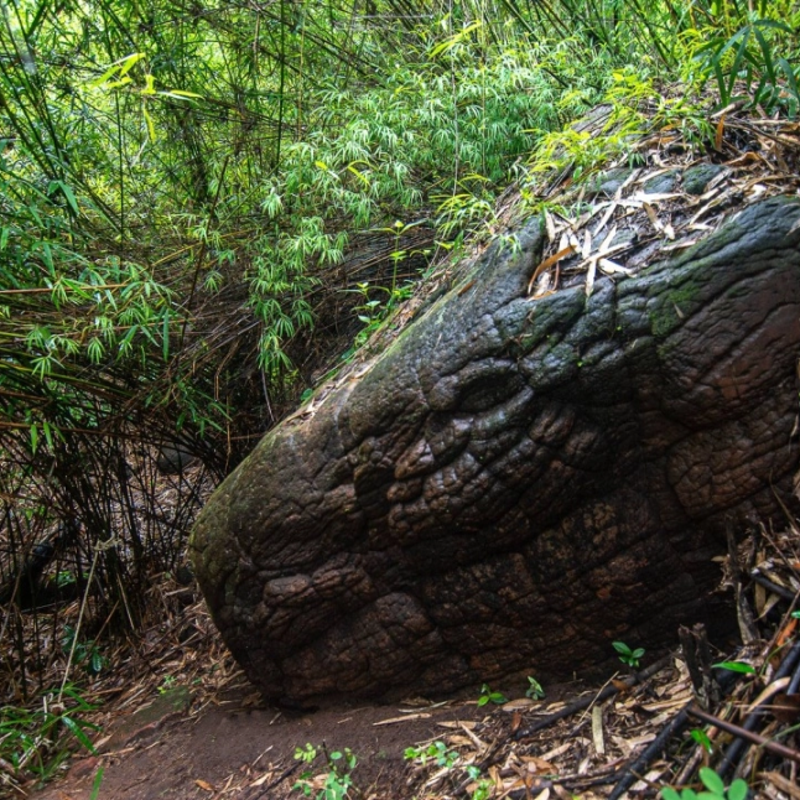
A detailed guide to hiking the Naga Cave, combining physical challenges with ...

Sailorr and Molly Santana’s black grills fuse hip-hop swagger with homage to ...
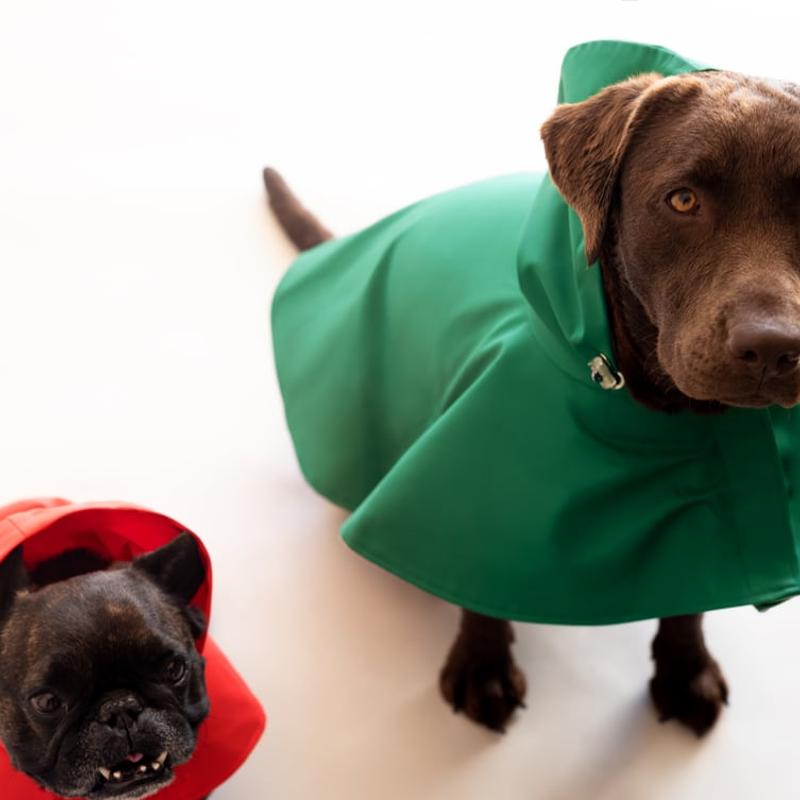
Treat your favorite furry companion some stylish goods Did you ever think ...

Thai filmmaker Apichatpong “Joe” Weerasethakul receives France’s highest honour, the Legion of ...

Explore seven Bangkok spots for cured beef sandwiches, from wagyu pastrami and ...
Wee use cookies to deliver your best experience on our website. By using our website, you consent to our cookies in accordance with our cookies policy and privacy policy


