
Weekend Getaways
7 Must-Visit National Parks in Thailand and How to Explore Them
Escape Bangkok for Thailand’s 7 best national parks. Discover wildlife, culture and ...



With this year’s return of Bangkok Outdoor Cinema (or as it’s known in Thai, ‘Krung Thep Klang Plang’), which runs from 17 January to 1 February, many cinephiles, like myself, can barely contain their visceral excitement.
A joint enterprise between the Thai Film Director Association, the Thai Film Archive, and happening mag, the multi-day festival is as much about celebrating the art form as it is about community building.

The concept of outdoor cinema is simple enough: people from all walks of life sitting next to each other to watch a movie in the open air. It’s sort of like a communion without the religious overtone, still magical nevertheless.
This year’s screenings in particular feel like a crash course in the long history of Thai cinema. Ranging from the award-winning How to Make Millions Before Grandma Dies (2024) to the pioneering Salween, Gunman II (1993), the programme offers more than just frivolous entertainment. ‘Cinema enlightens,’ according to the official adage of the Thai Film Archive.
There is just one problem, though. Bangkok is slowly sinking under PM2.5 smog, and city dwellers’ nostrils are constantly assailed every which way. Although entry to the festival is free of charge, audiences might be expected to pay with their deteriorating sense of well-being instead. But is it all worth it?
In recent years, we have witnessed new trends that push the boundaries of what Thai cinema and moviegoing in general are capable of. Yet, it seems like we need to be reminded now and again of the importance of films in everyday life. But we do need storytelling to make sense of our lives, don’t we? Fortunately for us, there’s in fact much to look forward to in the near future.
The proliferation of micro-cinemas has seen continual support from people in the creative industry, now part of a mobilised effort known as Micro Cinema Thailand. And with the much-anticipated relocation of Doc Club & Pub., the horizon of cinematic possibilities is renewed with a vigour unencumbered by previous legal hurdles.
(Sidenote: Doc Club & Pub. was forced to shut down last year after failing to acquire a cinema license because the 1979 Building Control Act only recognises big theatres as operable venues.)
On the policy side of things, THACCA, a government agency that promotes Thailand’s ‘soft power’ by way of subsidisation, has done an excellent job introducing the public to the wonders of cinema, whether through workshops conducted by film critics or production grants for emerging directorial voices.

Additionally, last year’s Bangkok International Film Festival was a spectacular success, attracting many inbound visitors to the world of auteur cinema as well as to the city of Bangkok. Cinephilia ran rampant as the metropolis subtly revealed itself through the journey.
All this to say: moviegoing requires not only sitting inside a movie theatre but also travelling to and fro, from home to the box office, or from one venue to another. The city is just as important as the cinema. And what would be a better way to fuse the two than screening films outdoors?
But with the challenges posed by PM2.5, the question of outdoor moviegoing becomes one that is tied to urban governance. It seems the government-backed ongoing promotion of the country’s soft power, with its cultural signifiers of Thainess, doesn’t begin abroad, but at home.
Outdoor cinemas are outdoors for a reason. The cityscape of Bangkok merges seamlessly with the actions going on in the silver screen, providing a serene yet lively ambience hard to replicate elsewhere.

As of this morning, most of the dust readings provided by the Bangkok Metropolitan Administration are at the ‘beginning to affect health’ level, with Pathum Wan reaching 60.8 μg/m³. One of the venues of this year’s Bangkok Outdoor Cinema is at the Bangkok Art and Culture Centre, which is in the district.
It remains to be seen how the organisers will go about screening the films. One thing we know for sure is that, despite the name of the festival, one of the group screenings will take place inside the historic Sala Chaloem Thani, a wooden movie theatre from a bygone era, bypassing the problem of heavy air pollution.
But if you plan to go, don’t forget to take your N95 masks with you. Support the movies and be safe out there! Here’s the screening schedule.
Bangkok Art and Culture Centre
Sala Chaloem Thani
Asawin Contemporary Art and Culture Space (Asawin Cinema)

Escape Bangkok for Thailand’s 7 best national parks. Discover wildlife, culture and ...

Two icons of modern art come together at Dib26’s Muse: Beyond Human, ...

Sailorr and Molly Santana’s black grills fuse hip-hop swagger with homage to ...
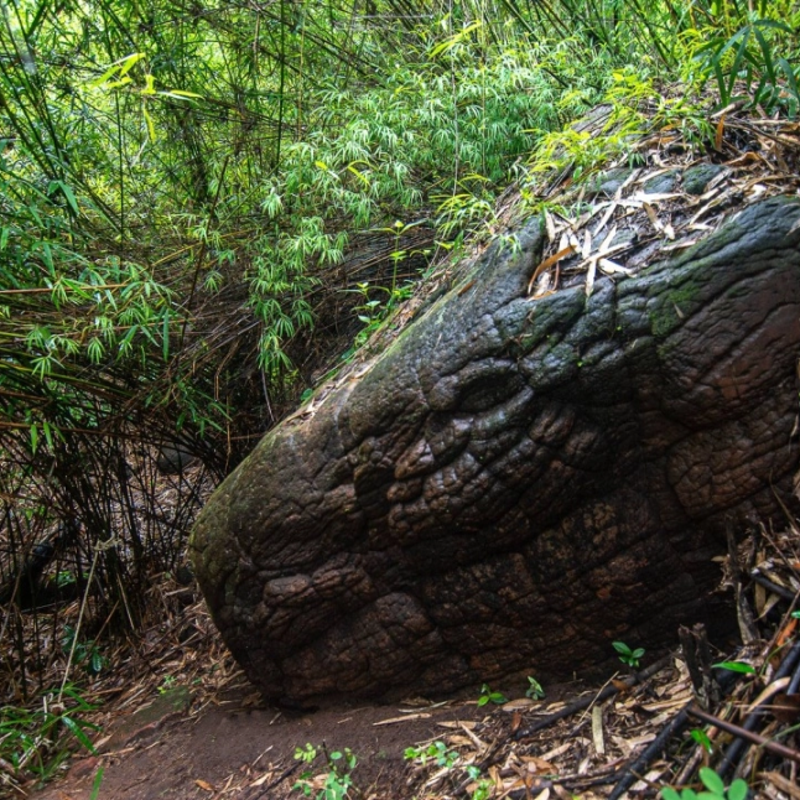
A detailed guide to hiking the Naga Cave, combining physical challenges with ...

Treat your favorite furry companion some stylish goods Did you ever think ...

Thai filmmaker Apichatpong “Joe” Weerasethakul receives France’s highest honour, the Legion of ...
Wee use cookies to deliver your best experience on our website. By using our website, you consent to our cookies in accordance with our cookies policy and privacy policy


