
Lifestyle
A Thousand Worlds Within River City Bangkok
Inside River City Bangkok, a thousand worlds emerge through art, antiques, architecture, ...


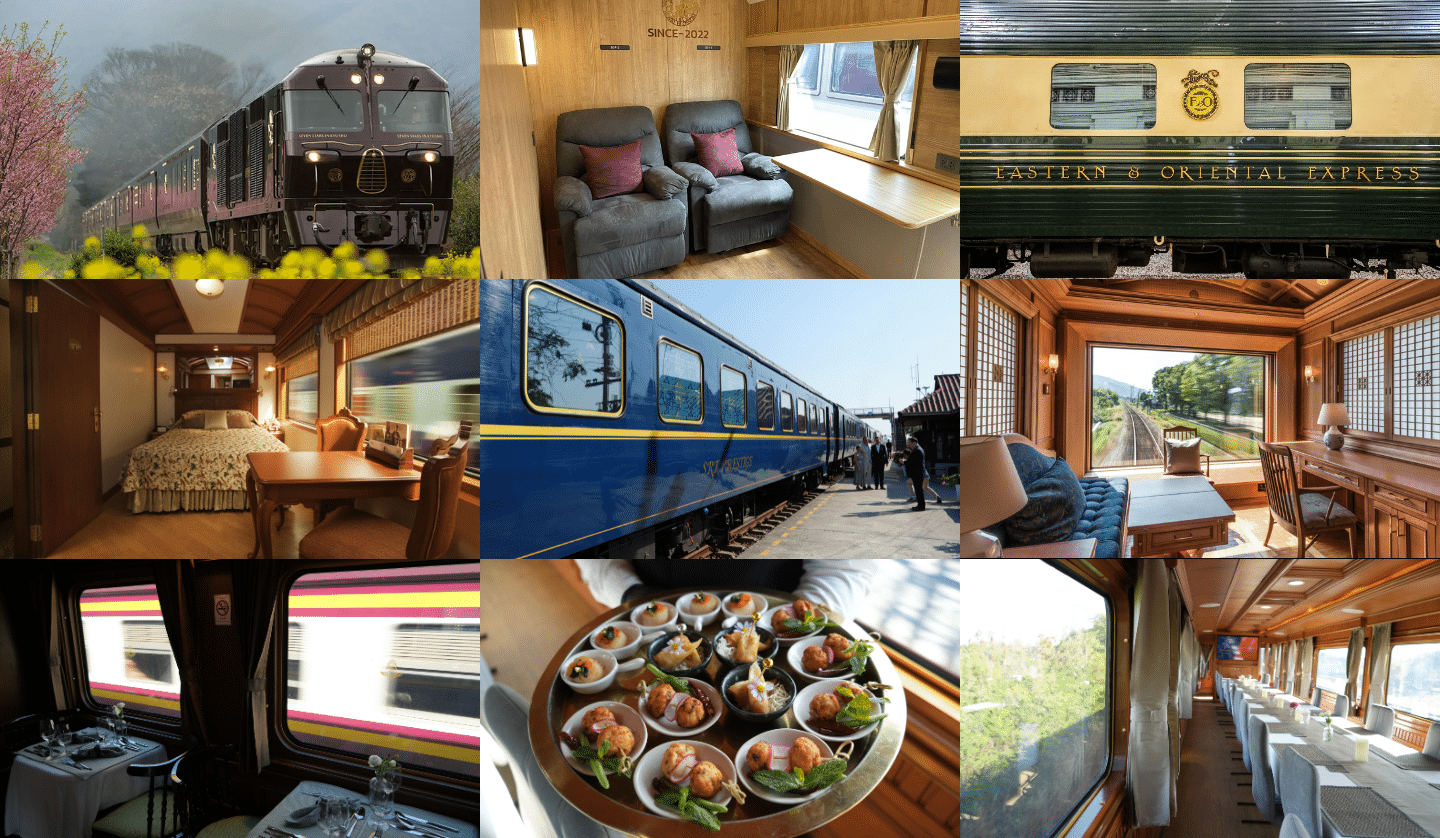
For eminent travel writer Paul Theroux, long-distance train journeys offer a glimpse into human nature in much the same way great literature does. “Anything is possible on a train,” he writes in his influential 1975 travelogue The Great Railway Bazaar, “a great meal, a binge, a visit from card players, an intrigue, a good night’s sleep, and strangers’ monologues framed like Russian short stories.”
Perhaps the popular adage is true: it’s about the journey, not the destination. As a metaphor for the vicissitudes of life, it works surprisingly well and can provide temporary comfort during times of confusion. But taking things a little more literally, it applies directly to rail travel, whose resurgence in Asia has been a long time coming.
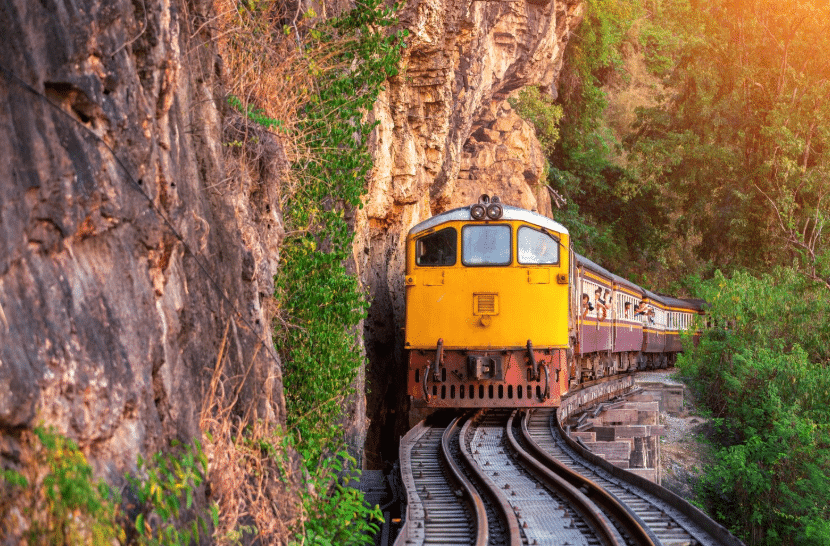
From January to October of last year, China’s railway system broke records after reaching 3.95 billion passenger trips, according to the figures released by China State Railway Group. And as reported by The Economic Times earlier this month, India’s production of affordable, unair-conditioned coaches has set a new benchmark in the country’s history, providing more access to the mode of transport.
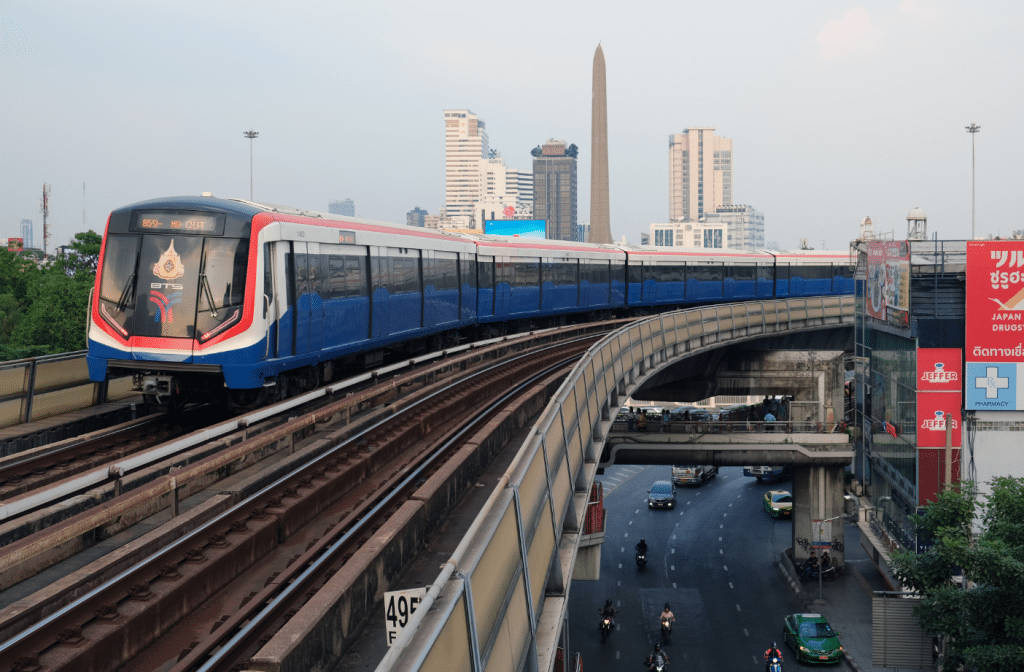
In Bangkok and the surrounding provinces, the BTS Skytrain is the main lifeline for white-collar workers and those without a car. Their daily commute depends on it. Adventures may not be as intense as the ones that took place on Theroux’s train, but there’s a subtle charm to the way most of us participate in the rhythm of Bangkok’s lively rush hour.
Travelling by train also beats flying and driving in terms of lower carbon emissions and sustainability. According to Nature, a weekly scientific journal, rail transport produces only one-fifth of the emissions of car transport, and could further reach zero emissions if powered by renewable electricity altogether.
As observed by Lauren Keith in her article for National Geographic, contemporary rail travel is not so much a nostalgic portal to a sepia-coloured past as it augurs a new era of mobility in which flying is frowned upon. As the globe heats up and hazy clouds of particulate matter beset major cities, rail travel seems to be the only viable option in the long run.
But what about long-distance train travel? What could it possibly offer besides the obvious perks of sustainability? Could rail tourism set a precedent for how we travel from now on? For romantics like Theroux, long-distance train journeys usually offer the unexpected, the surprisingly wholesome. But with luxury trains, it’s not simply about encountering new experiences, but also about travelling in style.
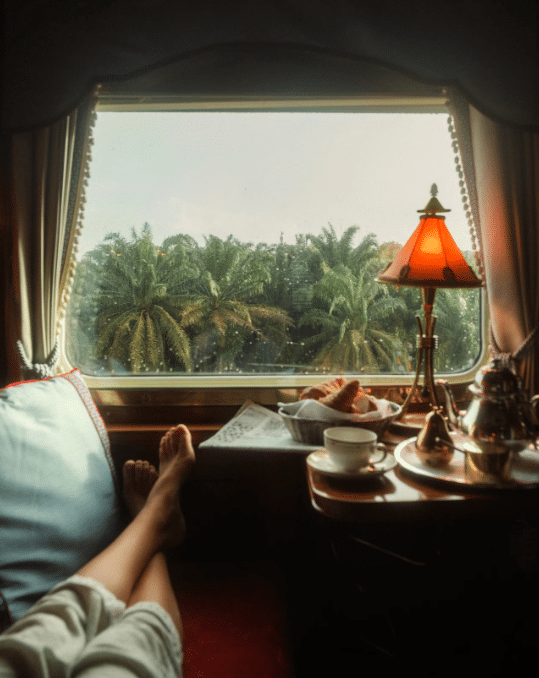
Luxury trains in Asia play an important role in promoting national tourism, local cuisines and cultures. As travellers journey through historic routes, they are often met with scenic views of rivers, mountains and forests. These are experiences that exist outside of capital cities such as Bangkok. Every once in a while, wanderlust prompts you to pack your bags and travel to destinations unknown. But travelling by luxury train is a lifestyle in itself, highlighting our inevitable need to slow down as much as our desire for world-class comfort.
Japan is often regarded as a trailblazer in rail travel. The bullet train (Shinkansen), debuting in the year 1964, just days before the Tokyo Olympic Games, has been etched into the collective imagination as a symbol of Japanese efficiency, an epitome of aerodynamic design. But they also know how to take things slow as well.
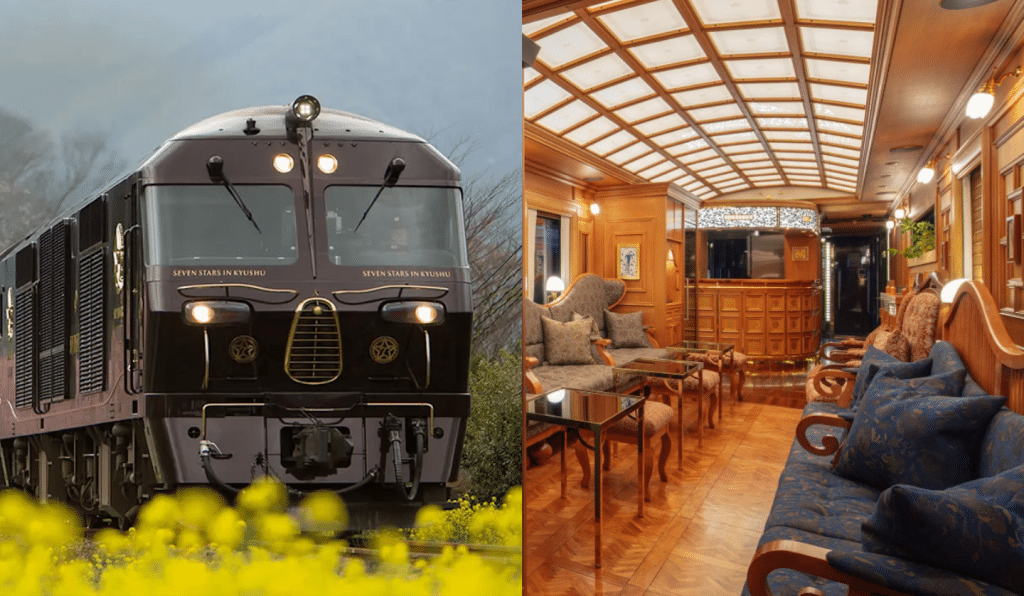
The Seven Stars Cruise Train, which consists of seven coaches, gives tourists a chance to thoroughly explore Kyushu, an actively volcanic island southwest of Japan. Yes, the title refers to the number of coaches, but it also refers to the seven prefectures of the island, all of which are tourist destinations. Designed by Eiji Mitooka, the wooden interiors and the chosen furnishings are a unique combination of Eastern and Western influences.
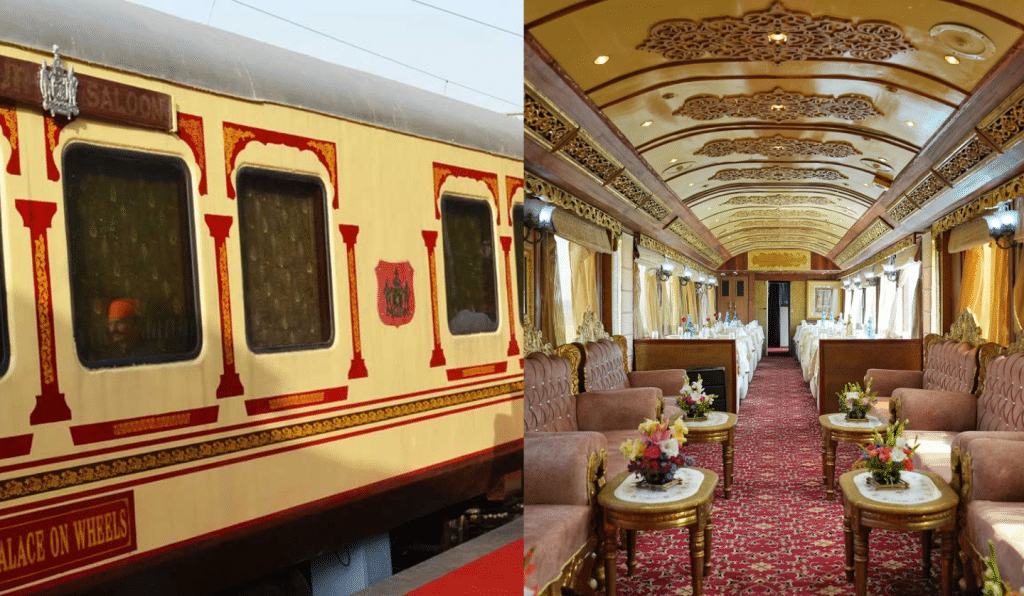
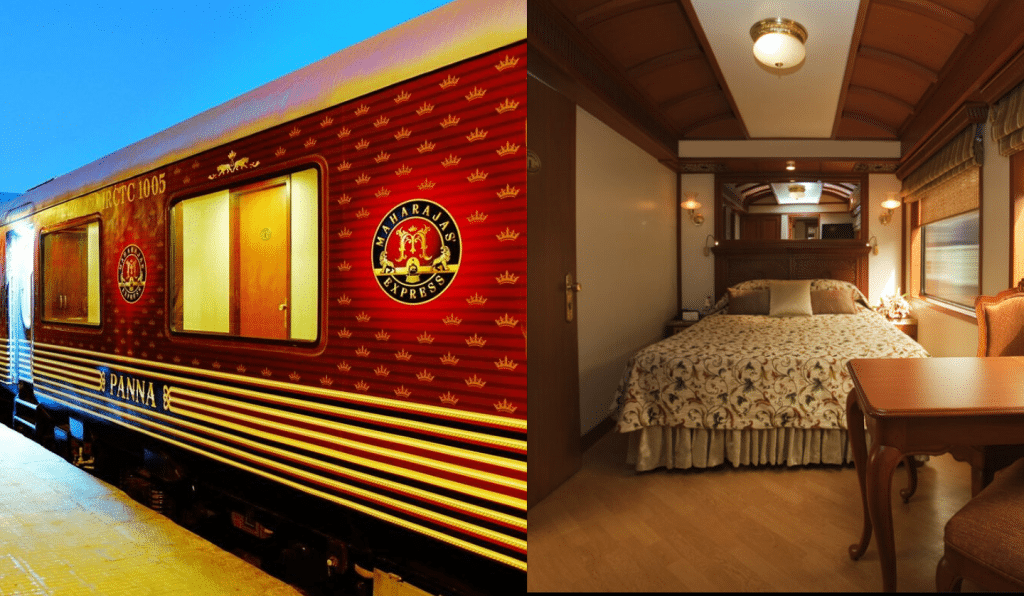
In India, the overall aesthetic of luxury trains is primarily inspired by royal carriages, blending heritage with modern design. From the Maharajas’ Express to the Palace on Wheels, these luxury trains are embellished floor-to-ceiling with gold ornate patterns. They are unapologetically bold, and many of the indulgences to be had inside the carriages match the regal vibes perfectly. Although these are carriages seemingly fit for kings and princes, tourists can get to experience them as well – but for a price.
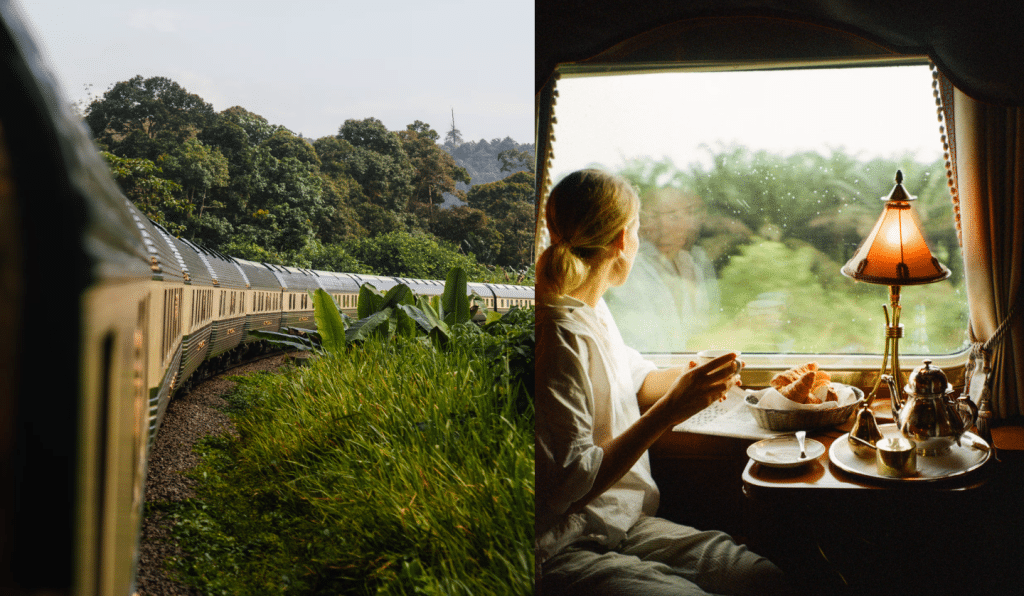
The Eastern & Oriental Express, operated by the Belmond group, offers three-day journey programmes through Singapore and Malaysia. From urban centres to exotic jungles, the green-and-cream carriages run across paper-thin borders, providing a seamless if not in-depth tour of Southeast Asia. The transnational nature of the trips is its main selling point.
It stopped all operations in 2020 due to COVID-19, but was brought back into service in February 2024. The deluxe train used to run through Thailand but unfortunately not at present. However, train enthusiasts in Thailand need not fret. You don’t need to begin your journey abroad because the country also has luxury trains of its own.
Thailand has a long railway history, dating back to the period of modernisation under the reign of King Rama V. Established in 1893, the Paknam Railway, which connected Bangkok with Pak Nam in Samut Prakan, became the country’s first railway line. Today, it no longer exists. As trains and other technologies evolve, an emphasis on quality also shifts: from efficiency to comfort, and from comfort to luxury.
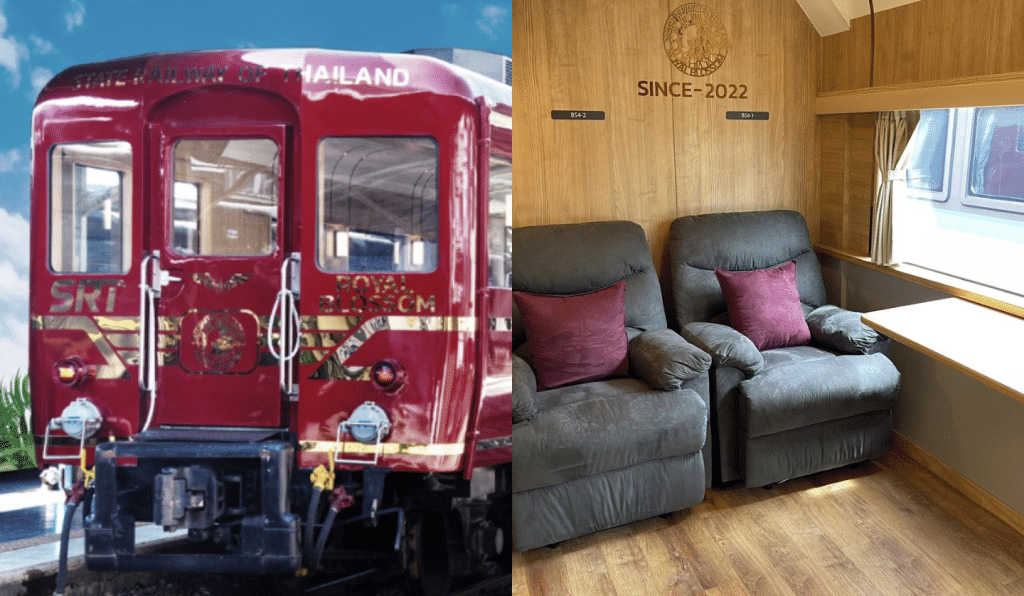
The Royal Blossom, painted cherry red and adorned with gold accents, is one of Thailand’s most renowned luxury trains. While its exterior evokes a sense of nostalgia, the interior is distinctly modern, featuring plush velvet cushions and warm cedarwood tones. It normally operates on short, single-day routes to destinations such as Chachoengsao, Kanchanaburi and Hua Hin.
However, there is now another contender. The name given to the newly-revived sleeper train is Blue Jasmine, and with the recent media buzz it has gotten over the past few months, it certainly seems luxury train travel is here to stay.
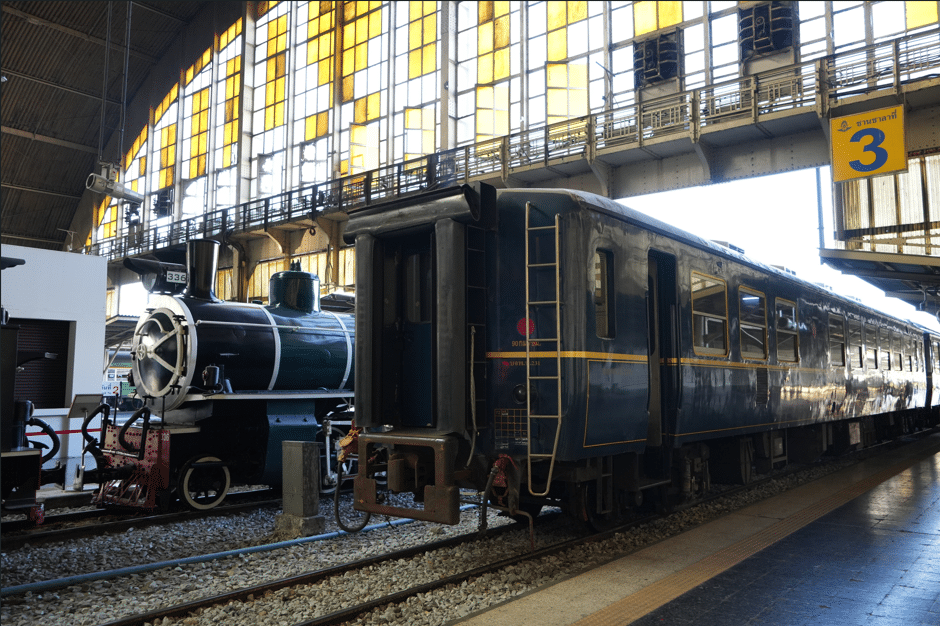
This classic train was built in 1960s Japan. The fact that it was put together in a country where industrial engineering and design were (and still are) at their cutting edge should tell you about its sturdiness and efficiency. Japan gifted the train to the Thai government in the early 2000s and it has since been a property of the State Railway of Thailand (SRT).
The recent restoration of the Blue Jasmine, which began last year, is an effort between DTH Travel and Jim Thompson. (The deal closed within weeks because, I’ve been informed, they intimately shared the same vision.) The programme, advertised on Jim Thompson’s website as “A Timeless Rail Journey Through Thailand”, is a nine-day return trip from Bangkok to Chiang Mai stopping at Uthai Thani and Sukhothai, with nights also at hotels and immersive cultural experiences in between. It is part of Jim Thompson’s Beyond Silk strategy, marking the brand’s exciting foray into rail travel.
According to Stefan Bruns, the General Manager of DTH Travel Thailand, they intend not to promote it as a “luxury” train, preferring the adjective “premium” to describe the overall experience. On the culinary side, a decision was made to hire young chefs rather than Michelin-starred talent. At the helm is award-winning chef Patipat Lakthong, who has made a name for himself as Commis II at Sindhorn Kempinski Bangkok. Travellers can expect delightful Thai cuisine with a modern twist.

The programme begins in Bangkok, where guests are greeted by a five-course dinner at the Jim Thompson Heritage Quarter, followed by a tour of the Jim Thompson House and its iconic store. The informal gathering offers guests a chance to socialise with fellow passengers and the tour manager. They stay overnight in Bangkok and board the train the next morning at Hua Lamphong Station to Ayutthaya. Activities there include a tuk-tuk ride around ancient temples and lunch by a peaceful lotus pond. You can find the full programme in detail here and here.
But what I find fascinating is that some of the locations are deliberately picked to represent Thailand’s heritage at its most unfamiliar. In other words, some of these places are not your typical “touristy” spots that align with the stereotypical vision of Thailand. It’s not just one old capital to another. As one member of staff confided in me, Uthai Thani, for example, is often overlooked. He also revealed, at least to a certain extent, that a big surprise is waiting for guests in Chiang Mai, even though he wouldn’t go into detail. Most of the planned venues are closed-off, making them exclusive events.
Collaboration with local communities is also given top priority. As explained by Stefan Bruns, local performers are hired to showcase the dramatic arts important to their culture, and apparently, they’re very eager to do so. (In Sukhothai, according to Bruns, they have to take a one-hour trip to the designated venue.) The subtleties of traditional Thai dance under a starry sky will surely move anyone who appreciates the country’s heritage. This is one of the ways luxury train travel can help boost regional tourism. By interacting with local cultures, visitors are not mere spectators on a moving train, but participants in the vibrant tradition that has been passed down from one generation to the next.
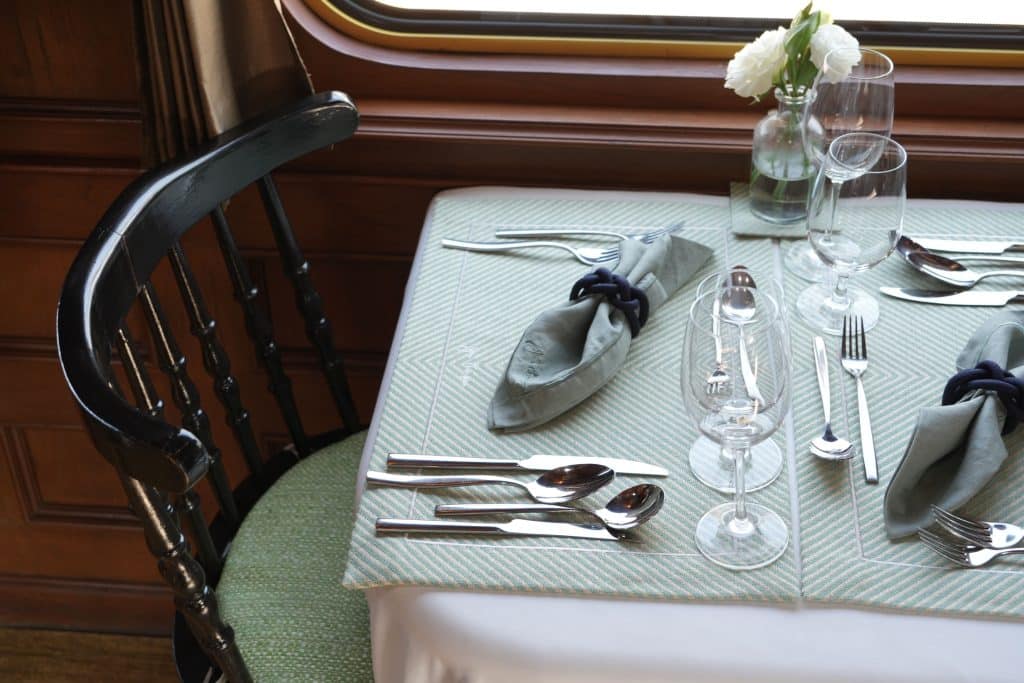
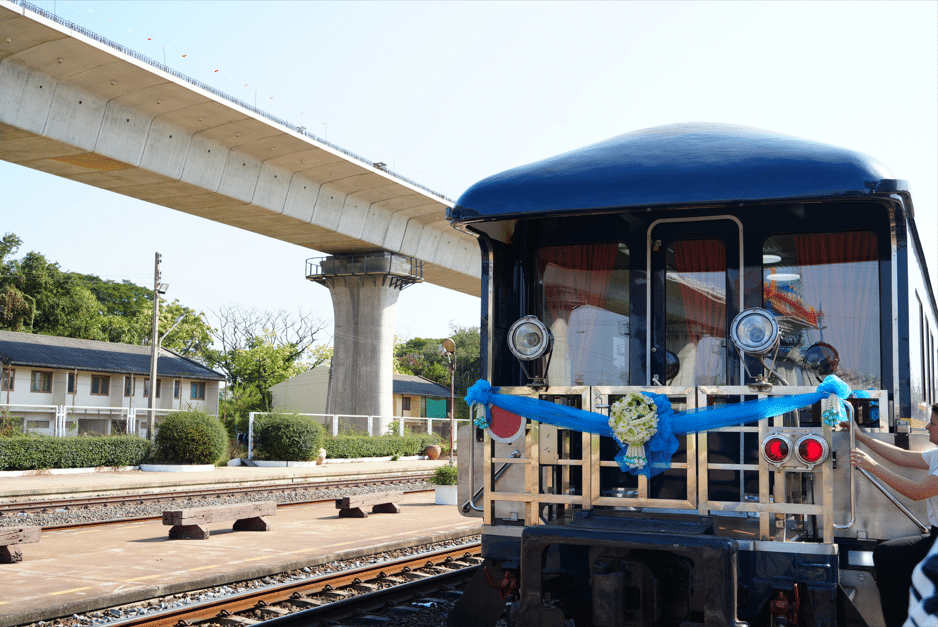
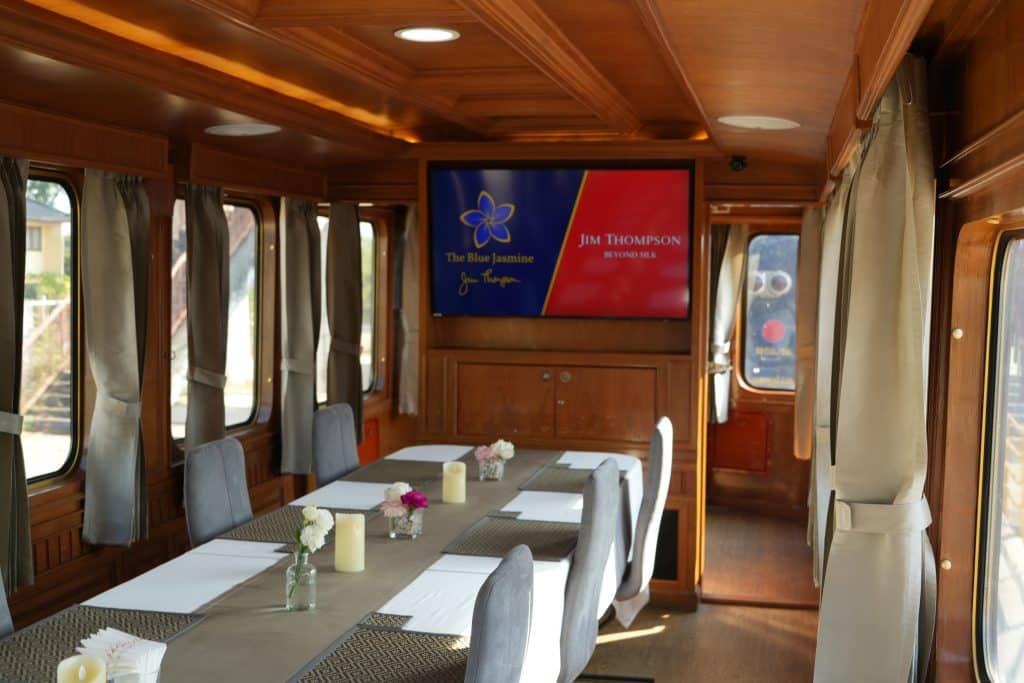
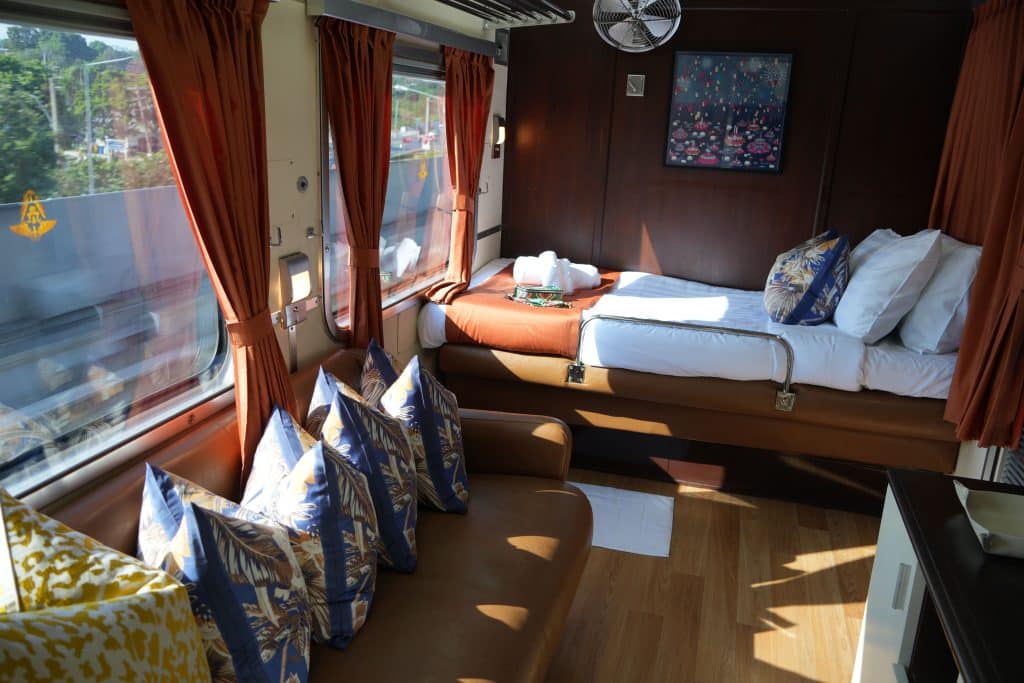
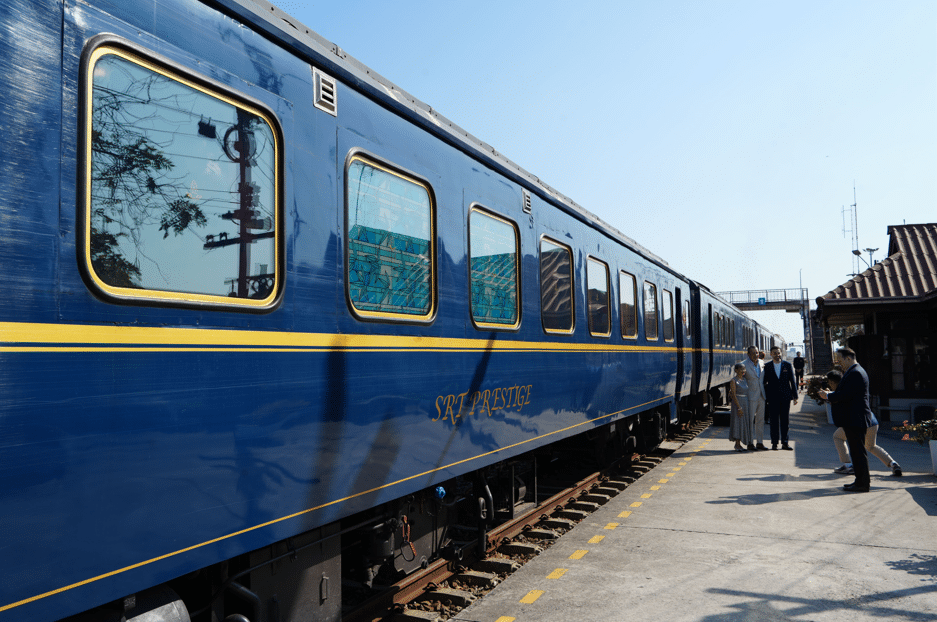
Now, let’s discuss the coaches themselves. The exterior is painted deep blue, with strips of gold running across and red signs of the SRT logo placed between wide windows to emphasise colour contrast. With sleek wood finishes and curtains made of Jim Thompson’s signature silk, the atmosphere inside is welcoming and strongly representative of the brand’s identity. All the interiors and products – from table cloths to bed runners to amenity kits – are naturally by Jim Thompson.
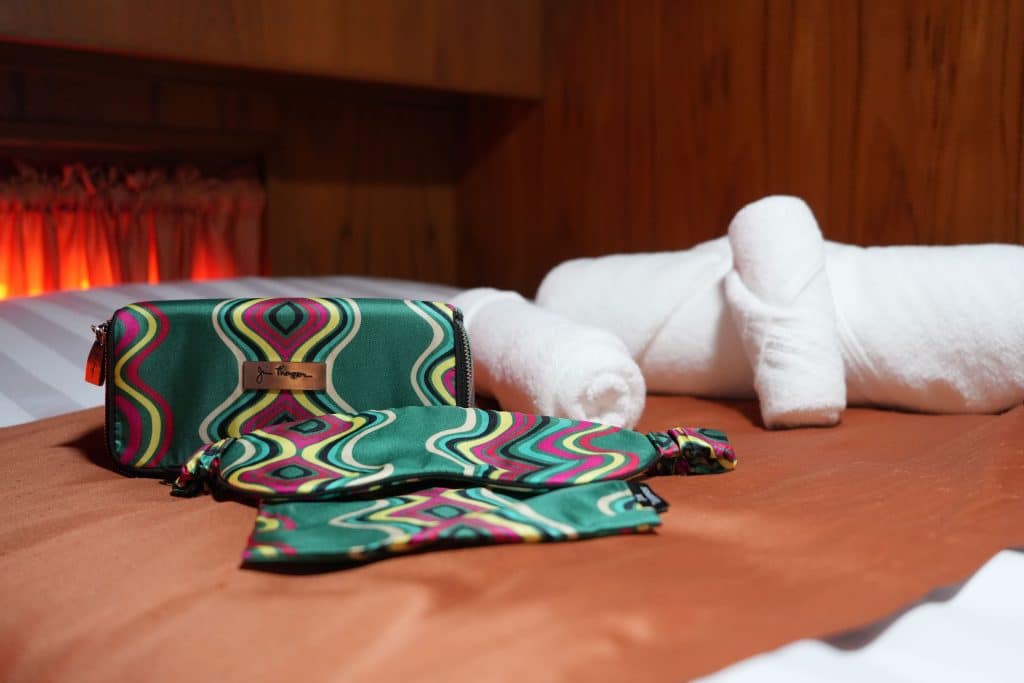
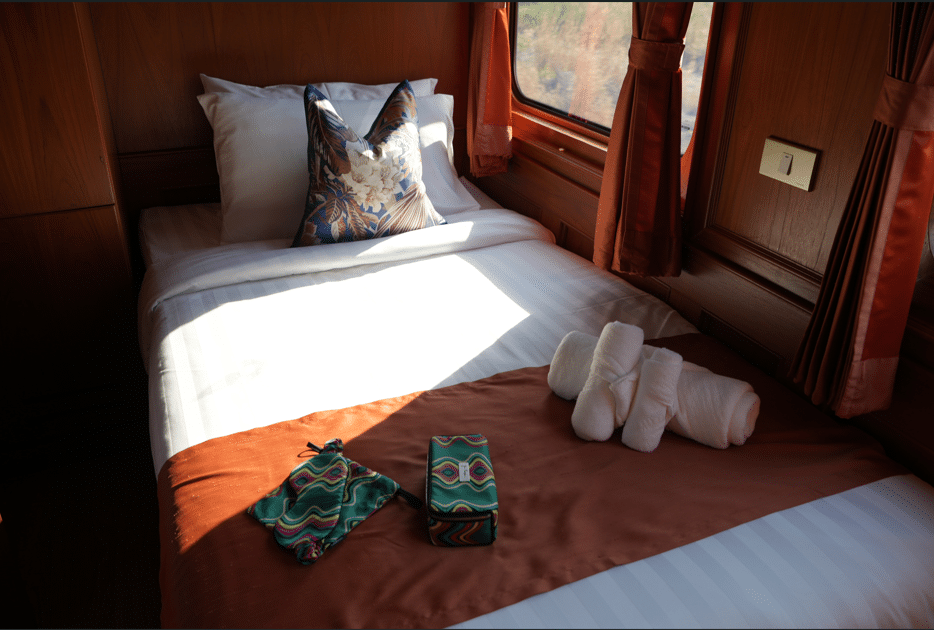
There are 10 wagons in total with a maximum capacity of 37 passengers, keeping numbers on each journey to less than that to avoid overcrowding. The 19 cabins are subdivided into three categories: 12 Classics, four Premiums and three Premium Suites, with varying price points ranging from 245,000 to 413,000 baht for the nine-day journey. For those who pay either for a Premium or a Premium Suite, they also get privileged access to the Panorama Suite lounge and the open-air Balcony, with the latter offering real hair-blowing-in-the-wind moments as features of the landscape vanish one by one.
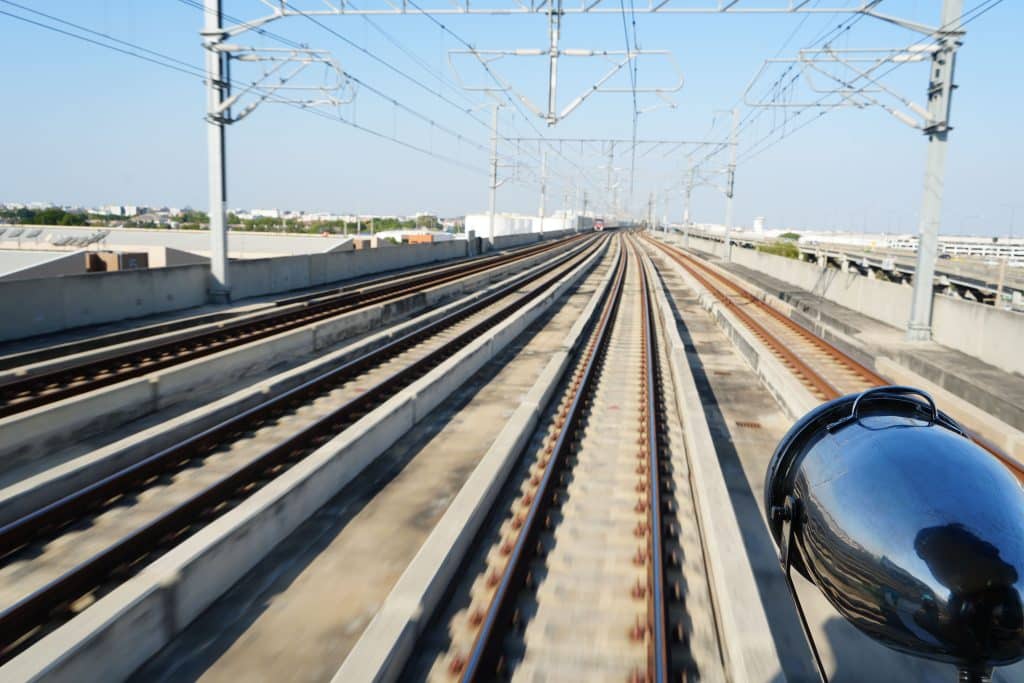
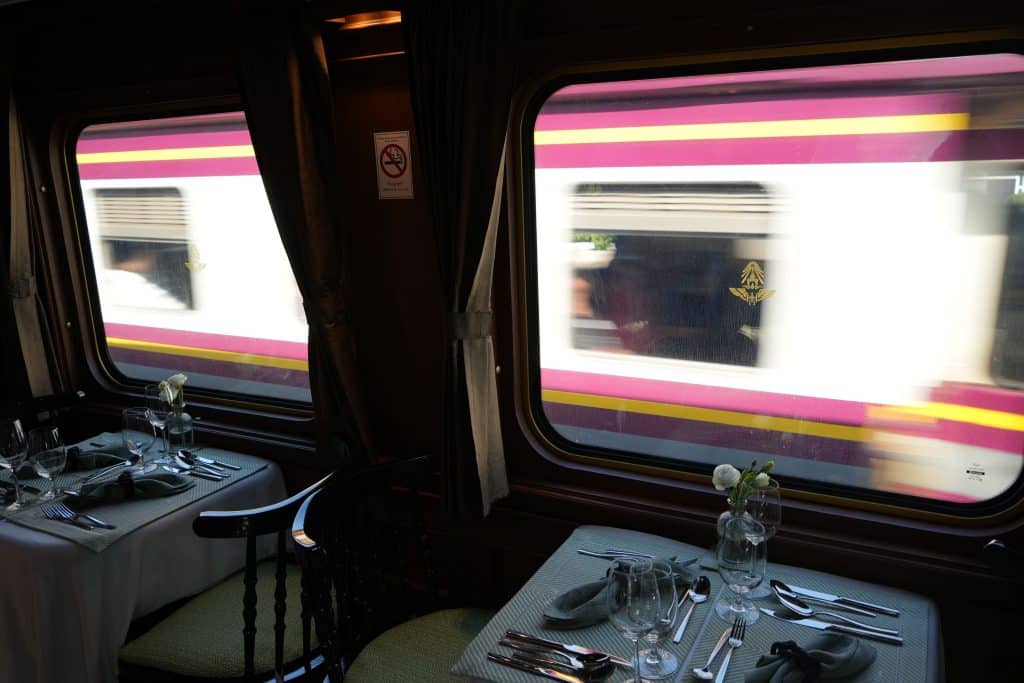
Classic passengers dine in the dining car, which resembles a banquet hall with soft lighting overhead, whereas Premium and Premium Suite passengers get to enjoy their privacy in the club car, where cocktails and other delicious drinks are crafted at the bar. But all are treated to panoramic views of Thailand’s impressive scenery.
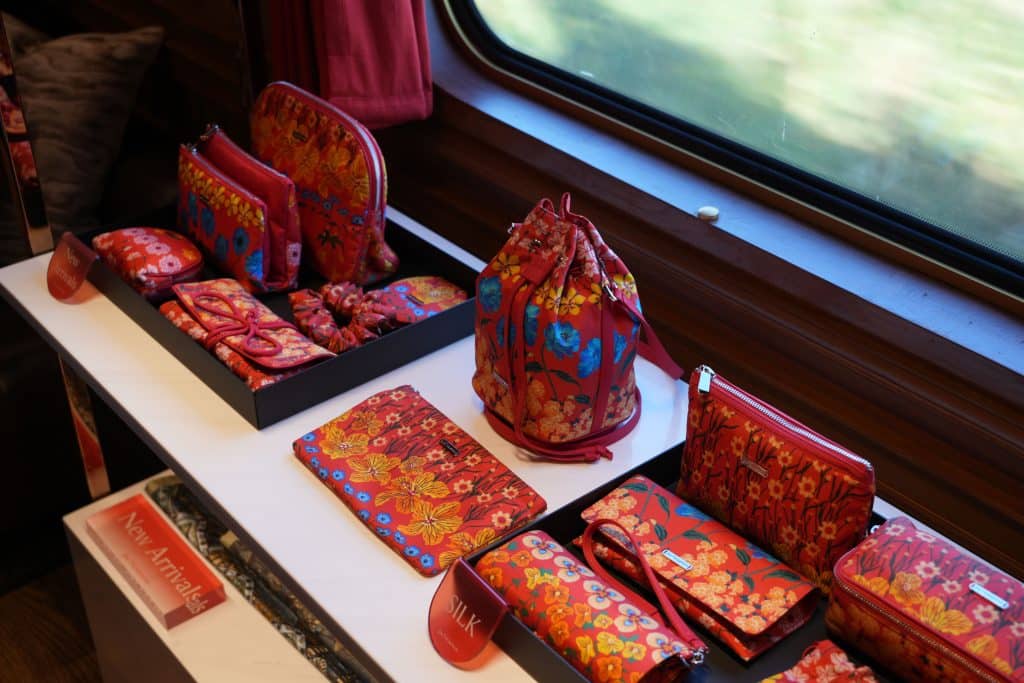
The highlight is undoubtedly the Jim Thompson Showroom. With curated items ready to be purchased via QR codes, it serves as a first-ever onboard boutique in which Jim Thompson’s history as a daring explorer is reflected in colourful and imaginative silk patterns. From bags to scarves, the room is lined with iconic products from Jim Thompson, which is lit naturally during the day by a large window. Delivery of orders is made at the end of the journey.
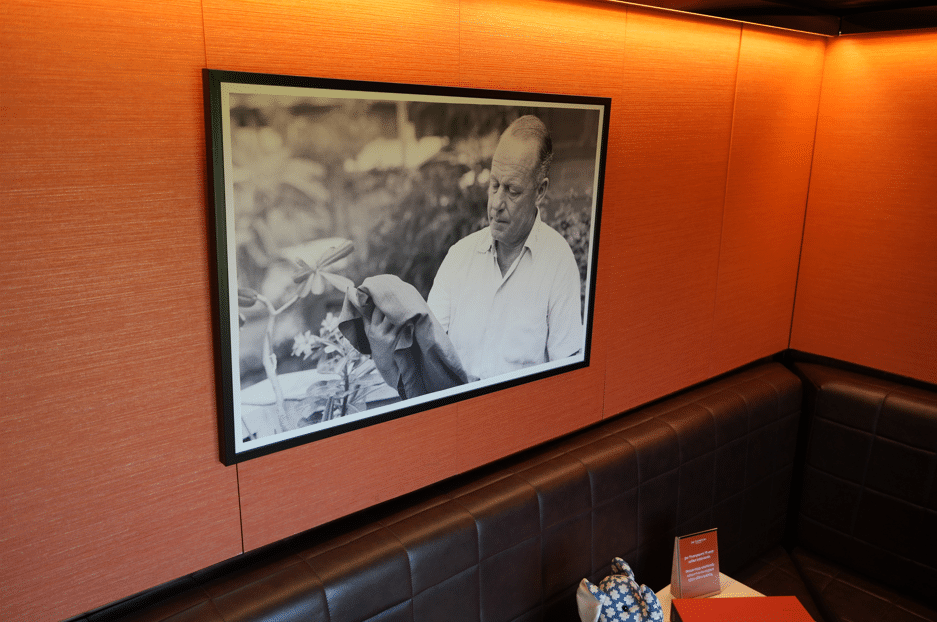
I boarded the train last Friday for a mini preview. We travelled by bus from Hua Lamphong Station to get on the train at Bang Pa-In Railway Station (which has a historic pavilion built in 1896) and were welcomed with canapes and beverages. The ride back to Hua Lamphong took about one-and-a-half hours, during which time we were taken on a tour of the facilities and had a chance to chat with the management team.
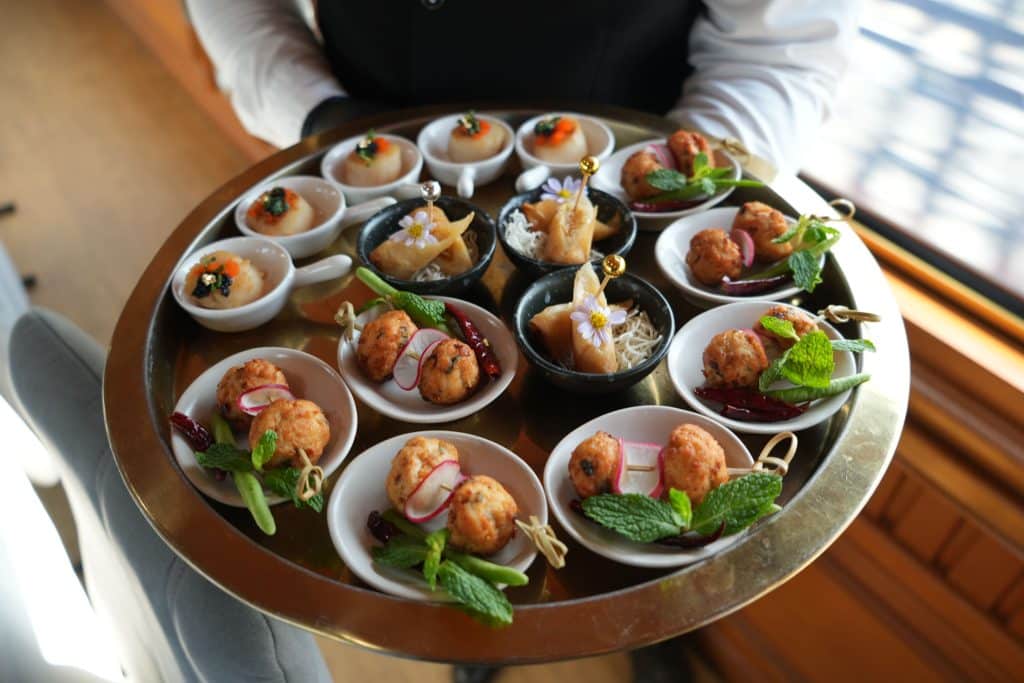
Although I got a taste of the Blue Jasmine, my experience is not representative of the entire programme and I cannot comment on whether the pricing is at an acceptable level. However, the opportunity to enjoy the historical, cultural and natural wonders of Thailand from a different perspective could be an incomparable experience well worth the price for those who can afford it.
For more information, please visit: https://www.thebluejasminetrain.com/
Inside River City Bangkok, a thousand worlds emerge through art, antiques, architecture, ...

In Emerald Fennell’s adaptation of Wuthering Heights, colour is not decorative. It ...
Wandering around the globe, try out the signature tastes of cultures across ...
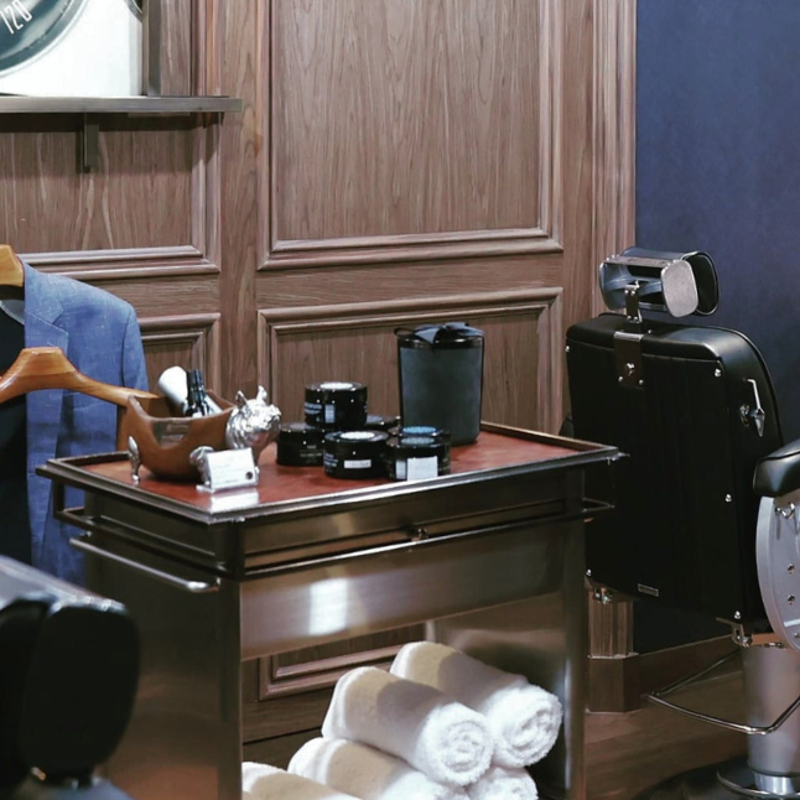
These top 5 barber shops in Bangkok are where gentlemen can elevate ...

Sailorr and Molly Santana’s black grills fuse hip-hop swagger with homage to ...

From 26 March to 6 April, the Thai Book Fair is back, ...
Wee use cookies to deliver your best experience on our website. By using our website, you consent to our cookies in accordance with our cookies policy and privacy policy


