Lifestyle
A Thousand Worlds Within River City Bangkok
Inside River City Bangkok, a thousand worlds emerge through art, antiques, architecture, ...


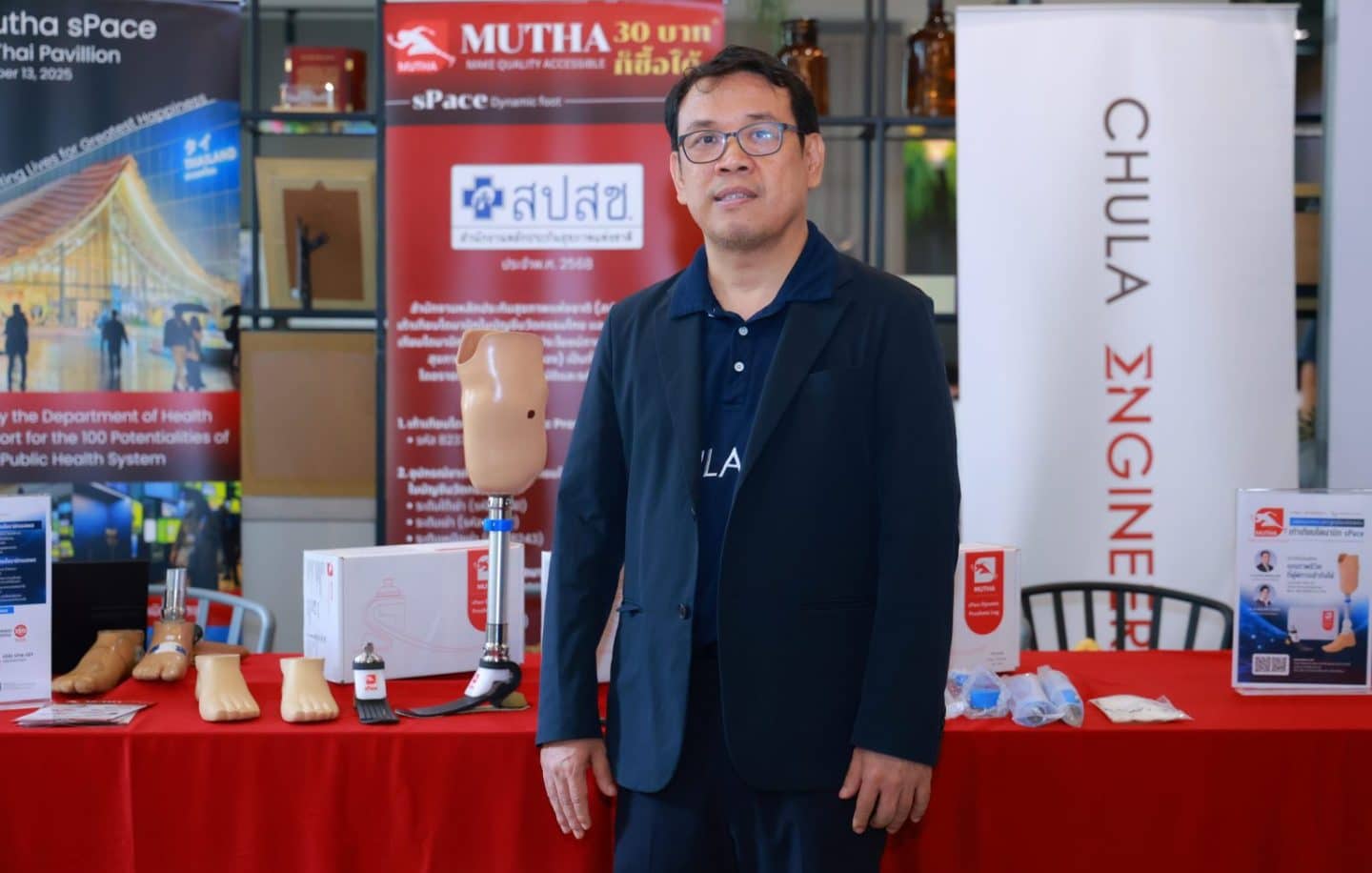

This edition explores Thailand’s research labs, where innovation advances in step with the hospital system. While new technology offers hope, healthcare still relies heavily on international solutions that raise costs and limit accessibility. Around 4.19 million people in Thailand live with disabilities, and many continue to face barriers to care and assistive support.
Within this landscape, small breakthroughs can create meaningful change. One such example comes from Assoc. Prof. Pairat Tangpornprasert, Ph.D., whose work on dynamic prosthetic feet shows how locally driven research can reduce both financial and physical barriers. It is only one side of Thailand’s healthcare story, yet it offers insight into how innovation can make a real difference.

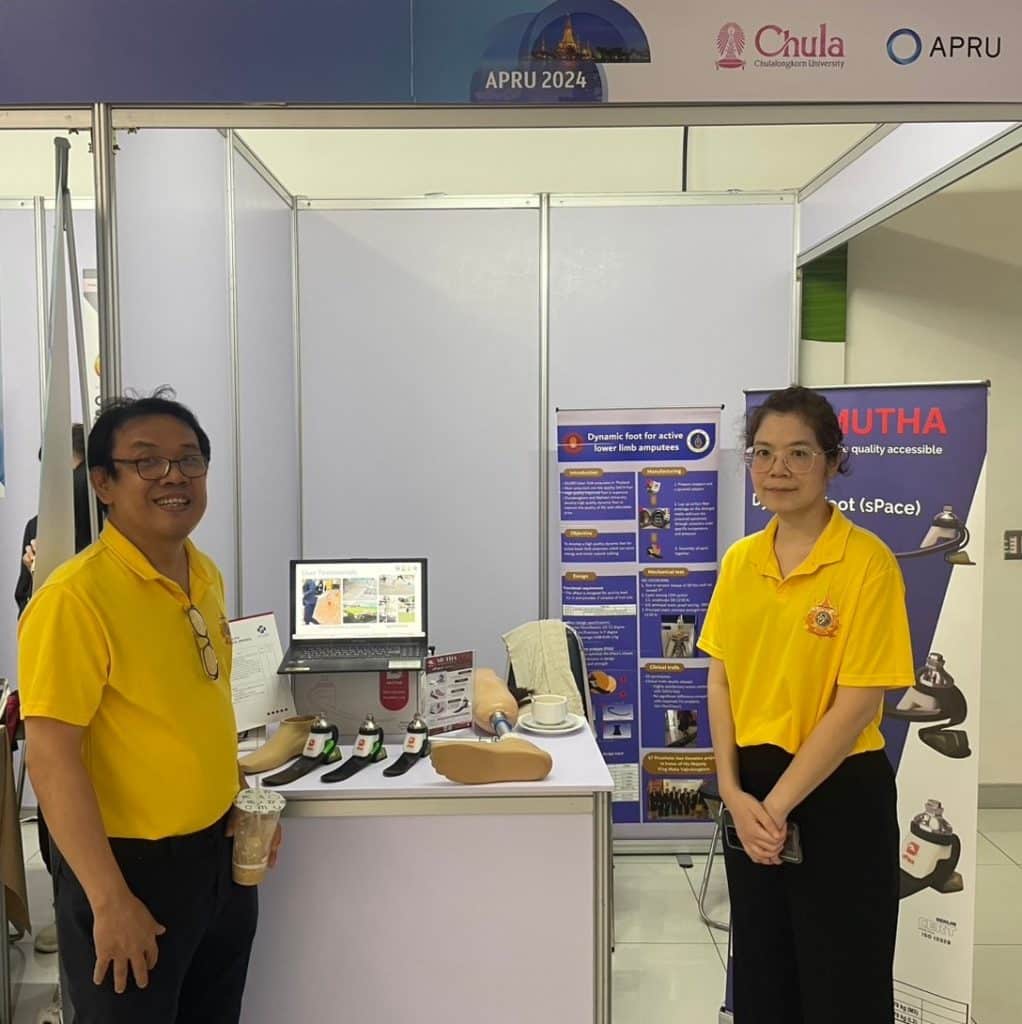
Dr. Pairat serves as an associate professor in the Department of Mechanical Engineering at Chulalongkorn University. He leads a research team from the Faculty of Engineering to develop high-quality dynamic prosthetic feet that offer flexibility, controlled bending and the ability to store energy for movement.
The project received funding from the National Research Council of Thailand as part of the Prosthesis and Orthosis for the Disabled initiative under the “New Beginnings with Research and Innovation” programme, launched to commemorate the coronation of King Rama X.
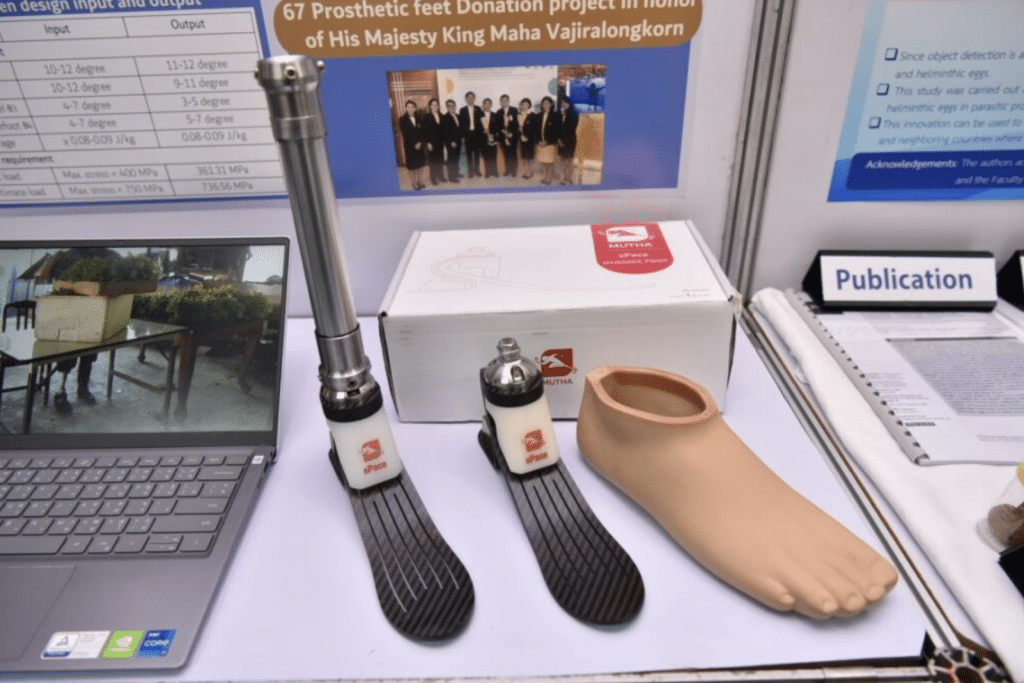
Research findings highlight a pressing need with Thailand currently home to 39,647 people with lower-limb loss and more than 95 per cent relying on prosthetic feet that lack ankle joints, carry excess weight and limit mobility, which affects poorly the daily quality of life.
To advance this research with support from Chulalongkorn University, Dr Pairat helped establish MUTHA, a company dedicated to create prosthetic feet. The name MUTHA comes from Sanskrit, meaning joy and inner uplift, and reflects a hope to restore movement and a renewed sense of possibility for those who rely on prosthetic care.
Under his leadership, a multidisciplinary team of engineers, doctors and prosthetists came together to create a dynamic prosthetic foot that responds to the realities faced by amputees in Thailand.
This new generation of product, known as Dynamic Prosthetic Feet or sPace, offers flexibility and movement close to that of a natural foot. The design allows the foot to bend, twist and provide propulsion while remaining lightweight, which enables users to walk, jog and run with greater ease. Made from carbon fibre, the prosthetic foot combines strength with low weight and can store energy to support forward motion. As the foot meets the ground, it stores around 0.1 J/kg of energy, then releases it during the forward step. This helps create a walking rhythm closer to natural movement, especially for users with good physical strength.
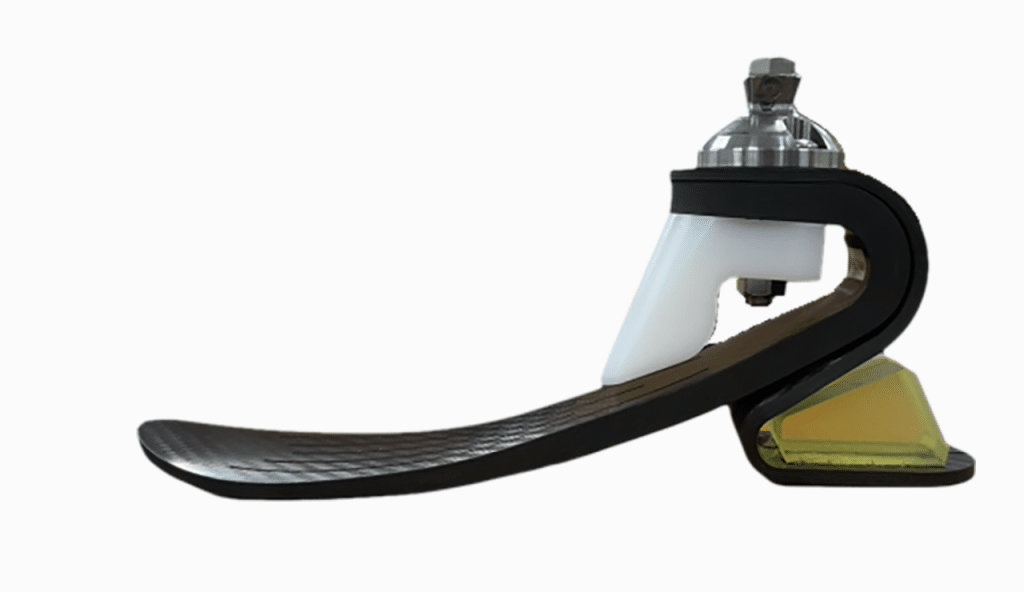
The sole features a longitudinal groove that allows controlled twisting of the foot. This design enables a small degree of inversion and eversion, around five to six degrees, which improves stability on uneven surfaces. The heel and forefoot sit as separate components, joined at the upper section, so each part carries load at different moments of the walking cycle.
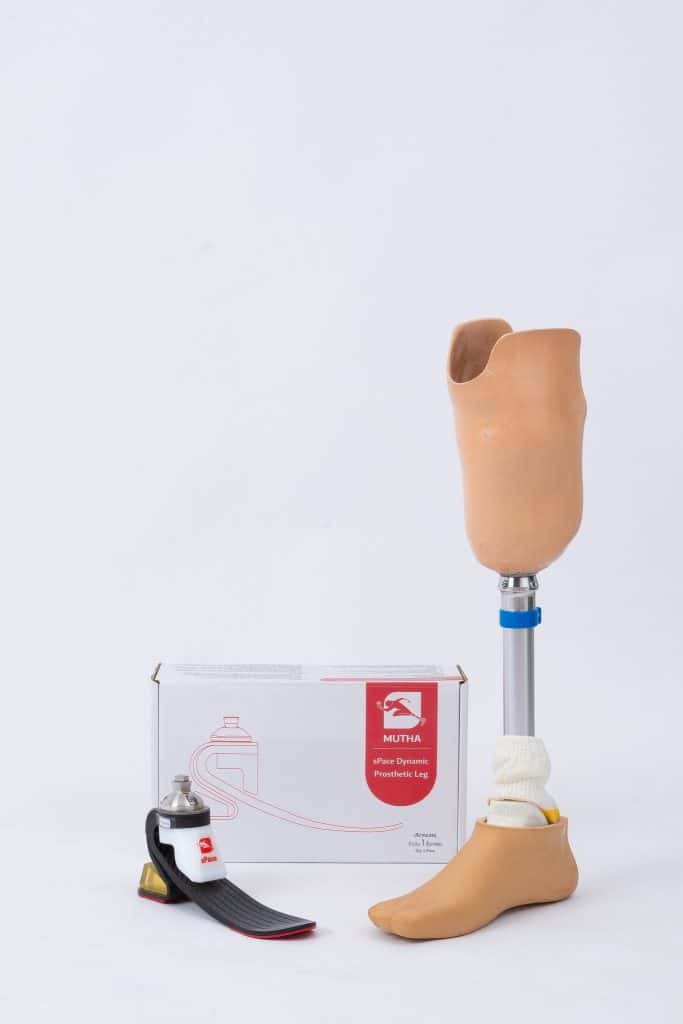
Assoc. Prof. Pairat explains that the sPace foot matches the performance and quality of imported models at a lower cost of three to five times. He has developed 10 versions across K1 to K4 levels to suit different physiques and lifestyles. Current K2 to K4 models serve active users and athletes, while a K1 version for less active users and older people remains under development.
The prosthetic foot also required comparison with international standard models. The evaluation used a blind test method, where participants tested both types without knowing their origin. Dr Pairat’s team worked with medical lecturers and clinicians at Siriraj Hospital to carry out comparative tests between this model and versions imported from overseas.
What stands out is the way the performance reveals itself through everyday movement. Dr. Pairat observed comfort and effort across varied conditions, from steady treadmill walks to slopes, uneven surfaces and sharp changes in direction. Measurements of oxygen use showed the body worked no harder with his model than with imported models, which confirms comparable performance without measurable difference.
The device has passed international strength tests under ISO 10328 standards from Germany and has received ISO 13485 quality management certification. Clinical trials with 20 amputees showed highly satisfactory results, with most participants adapting within two weeks. When compared with imported dynamic prosthetic feet, the locally developed version delivers comparable performance at a much lower cost. For Dr. Pairat, the aim goes beyond technology, with a focus on restoring mobility, dignity and quality of life while strengthening Thailand’s capacity for medical innovation.
This outcome signals progress for Thailand’s medical research. Under his direction, the sPace proves comparable in quality to imported models, while its key strength lies in cost. Priced at around 30,000 THB, it remains more affordable than overseas options, which often reach 120,000 to 150,000 THB.
Reflecting on the project, Assoc. Prof. Dr Pairat Tangpornprasert shared that the development of dynamic prosthetic feet as a medical device required close collaboration between doctors and prosthetists who exchanged experience and expertise across disciplines. This shared effort created a strong foundation of knowledge and led to a product that meets international standards and works in real life. He spoke with pride about seeing the prosthetic used to help amputees return to everyday life with confidence and dignity.
To date, 67 dynamic prosthetic feet have been donated to amputees across 13 hospitals nationwide. The project has since reached an important milestone, with the dynamic prosthetic foot now included as a benefit under Thailand’s Universal Health Coverage scheme. This step allows wider access and marks a meaningful improvement in quality of life for people with limb loss.

Inside River City Bangkok, a thousand worlds emerge through art, antiques, architecture, ...

In Emerald Fennell’s adaptation of Wuthering Heights, colour is not decorative. It ...

Wandering around the globe, try out the signature tastes of cultures across ...
These top 5 barber shops in Bangkok are where gentlemen can elevate ...

Sailorr and Molly Santana’s black grills fuse hip-hop swagger with homage to ...

From 26 March to 6 April, the Thai Book Fair is back, ...
Wee use cookies to deliver your best experience on our website. By using our website, you consent to our cookies in accordance with our cookies policy and privacy policy


